
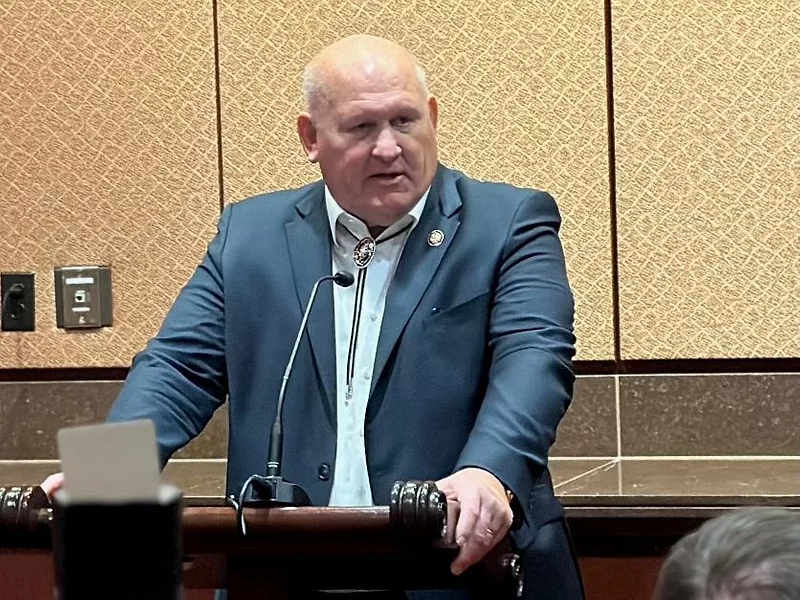
House Ag Committee Chair Glenn Thompson is stepping back from saying that tariff revenue could be used for emergency farm aid. He also thinks the final price tag for the aid, however it’s funded, could be north of $20 billion.
Thompson, R-Pa., told Agri-Pulse last week that he wanted to use tariff revenue to fund an aid package. But he told reporters Thursday it now didn’t appear that would be legally possible. “We're just looking at the statutes surrounding it, and it's just hard to do,” Thompson said.
It’s also possible that USDA could use its Commodity Credit Corp. (CCC) spending authority to make farm payments. That’s what the first Trump administration did to compensate growers for the impact of the trade war with China in 2018 and 2019. But Thompson acknowledged that the CCC account would first have to be replenished by Congress, and it’s not clear when that will happen. “It’s pretty well spent down,” he said.
As for the cost: House Ag member Rick Crawford, R-Ark., told Agri-Pulse he believed as much as $20 billion in emergency aid would be needed. “I wouldn’t doubt it,” Thompson said, when asked about the $20 billion figure.
Senate Rs clear path for nominees
Senate Republicans are changing the rules to speed the confirmation of the President Donald Trump’s nominees, several of whom are awaiting votes to join USDA.
The Senate voted along party lines, 53-43, Thursday to invoke cloture on a plan to allow the Senate to vote on nominees as a package. A final vote on the rules change is set for Monday.
Grocery group blames input costs, ‘market uncertainties’ for inflation
A group representing the nation’s largest supermarket chains says an uptick in food inflation last month is likely due to “significant production cost increases” in July.
Cut through the clutter! We deliver the news you need to stay informed about farm, food and rural issues. Sign up for a FREE month of Agri-Pulse here.
“Food price inflation continues to experience challenges driven by input costs and market uncertainties,” says Andy Harig, vice president of tax, trade, sustainability and policy development for FMI-The Food Industry Association.
The Consumer Price Index for food eaten at home jumped 0.6% in August, driven in part by higher prices for produce and strengthening beef prices.
Looking ahead: Harig says that tariff exemptions for some imports could help control inflation. Those exemptions will be limited to products U.S. farmers can’t produce. So, it certainly won’t help with beef.
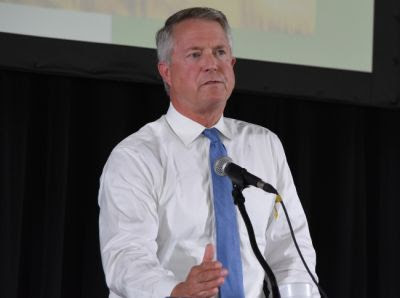 Sen. Roger Marshall, R-Kan.
Marshall welcomes MAHA strategy as ‘first step’
A leading congressional ally of the Make America Healthy Again movement, Sen. Roger Marshall, says the MAHA Commission report released this week is an “incredible first step” toward promoting regenerative agriculture practices.
Speaking on this week’s Agri-Pulse Newsmakers, the Kansas Republican says, “You know, what I've believed is that healthy soil is where agriculture meets MAHA — that if we have healthy soil, it's gonna lead to healthy, nutrient-rich food.”
The report steered clear of criticizing specific pesticides and instead encouraged research and funding for conservation practices and precision agriculture.
By the way: Marshall also talks about Trump’s nominee for surgeon general, Casey Means, a leading MAHA figure and a harsh critic of pesticides and seed oils. Marshall says the “jury’s still out” on Means. Marshall hasn’t met with her yet but says he’s read several of her books and encourages others to do so.
Newsmakers will be available today at Agri-Pulse.com.
Lack of Chinese sales shifts focus for U.S. railroads
With no new progress in soybean sales to China, U.S. railroads have begun shifting focus on transporting goods toward other nations, says North Dakota State University’s latest agricultural trade monitor.
According to the report, major railroads have "cut posted rates to Gulf ports," while leaving rates for Pacific Northwest ports alone. The repricing creates “a cost advantage for southbound movements over traditional China-oriented” routes along the West Coast.
"This repricing reflects railroads repositioning capacity and logistics networks to serve Mexico, the EU, and other non-Asian markets rather than maintaining the [Pacific Northwest]-focused infrastructure that historically served Chinese demand,” the report says.
Take note: The current shift “compounds existing basis weakness and could persist even if Chinese purchases eventually resume, as rail networks optimize around new demand patterns rather than maintaining unused China-oriented capacity,” the report says.
Rollins heads to Oklahoma
Agriculture Secretary Brooke Rollins will be in Oklahoma today to visit a feedstock cattle producer.
She is expected to make an announcement on New World screwworm (NWS), according to a USDA media advisory.
Bovine vet leader: ‘Everything possible’ must be done to combat screwworm
The leader of a national group representing bovine veterinarians says all options should be on the table in fighting the screwworm.
The flesh-eating parasite has been found in Mexico, leading to an extended ban on cattle imports from south of the border. A month ago, Rollins announced $100 million in “viable innovations” to augment a new sterile fly facility in Texas.
The funding could be used for therapeutics should NWS reach the U.S.
“I think we have to just say we're going to consider everything possible to combat this threat,” Fred Gingrich, executive director of the American Association of Bovine Practitioners, told reporters during the group’s annual conference.
“I don't think it's just going to be flies that are going to be effective,” he said. “I think we're going to have to make sure that we are conducting research and then implementing that in the field.”
In addition to new therapies, which could be difficult for ranchers to administer “on thousands of acres of open rangeland,” Gingrich said vaccines need to be considered. “We have these amazing vaccine platforms now that can be utilized to potentially help,” he said.
“I think it is scary for producers, but I think that we are going to be prepared,” Gingrich added. “And I think
the one thing you can say about cattle veterinarians and producers is that they step up to the challenge every time. They don't shy away from anything.”
Final word
"The farm safety net only works as well as those administering it. If we keep holding back USDA's ability to move forward and implement these programs, it's going to have an effect." — Mike Stranz of the National Farmers Union, on this week’s edition of Agri-Pulse Newsmakers.
Steve Davies and Noah Wicks contributed to this report.


