
President Donald Trump and senior administration officials head to the United Kingdom today for the president’s second state visit to the sovereign state.
Over the next couple of days, Trump will head to Windsor Castle to meet and banquet with the royal family and sit down with U.K. Prime Minister Keir Starmer. But the visit will also provide opportunities for engagement by U.S. industries, including the agricultural sector.
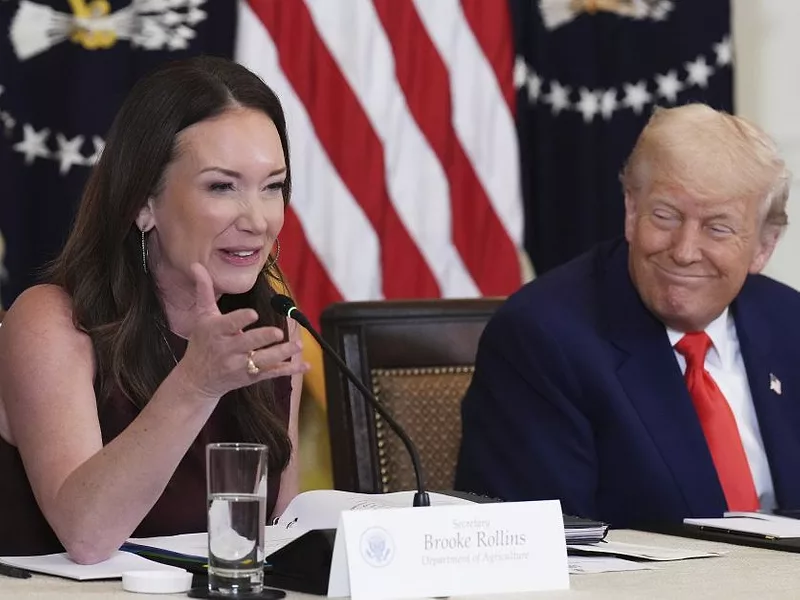
Agriculture Secretary Brooke Rollins, who will accompany the president on the visit, said Monday that U.S. ethanol producers will join her to meet with potential buyers.
As part of a trade framework agreed on earlier this year, the U.K. said it would eliminate duties on a quota of U.S. ethanol exports. The administration is looking to help U.S. producers secure deals with U.K. buyers “very, very quickly,” Rollins said.
Officials tout successful China talks — but punt on trade
Top U.S. and Chinese officials are walking away from discussions in Madrid with a “framework” deal on how to proceed with TikTok’s ownership but left many pressing trade issues for future talks.
A tariff truce is set to expire on Nov. 10 unless the two sides agree to an extension. China has also pulled back from buying a slate of U.S. agricultural commodities in what many see as an effort to enhance its negotiating position.
But U.S. Trade Representative Jamieson Greer told reporters Monday that the officials “deferred discussion” on trade issues like tariffs “to another time.”
Cut through the clutter! We deliver the news you need to stay informed about farm, food and rural issues. Sign up for a FREE month of Agri-Pulse here.
“We were very focused on TikTok,” Greer said, although he stressed that the U.S. remains “open” to extending the tariff truce “if the talks continue in a positive direction.”
Trump will hold a call with Chinese President Xi Jinping on Friday to discuss the TikTok deal, according to the president. Treasury Secretary Scott Bessent said the two negotiating sides would meet again in around a month’s time.
The White House did not respond to a question from Agri-Pulse on whether U.S. ag exports featured in Sunday and Monday’s discussions. A USTR official said they did not know.
Take note: The president on Saturday called for NATO allies to collectively impose tariffs of up to 100% on China over its continued purchases of Russian oil.
Rollins talks farm relief at NASDA
USDA is “undertaking a review of fertilizer markets, ranging from ensuring input suppliers are giving farmers a fair shake to exploring options to provide relief,” Rollins told state ag directors Monday at the annual meeting of the National Association of State Departments of Agriculture.
Rollins acknowledged that farmers are in a difficult spot, contending with low commodity prices, a lack of export markets and elevated input costs.
“Unfortunately, these increased input costs are not limited to fertilizer,” she said. “The Federal Reserve continues to stick its head in the sand while our producers are forced to borrow money at elevated interest rates. In 2025 farmers and ranchers are projected to spend more on interest in any year since 1988, and that's after adjusting for inflation.”
Rollins also said, as Agri-Pulse reported Monday, that the administration is working with Congress to determine the impact of the current trade situation on producers. The expectation is that the Trump administration will again compensate farmers for lost sales, as the president did during his first administration.
Read more in our article here.
HPAI confirmed in Nebraska dairy herd
Highly pathogenic avian influenza (HPAI) has been detected in a Nebraska dairy herd, marking the first case in a cow ever seen in the state.
HPAI dairy cases have slowed over the summer, with the Animal and Plant Health Inspection Service confirming only seven since the beginning of June.
The central Nebraska herd carried a strain of HPAI similar to those detected in California herds and has been quarantined, according to the Nebraska Department of Agriculture.
Tyson getting HFCS out of sausages, other products
Tyson Foods is getting into the spirit of the “Make America Healthy Again” movement. The chicken giant plans to stop using high-fructose corn syrup, sucralose, BHA/BHT and titanium dioxide in a number of branded products.
They include Tyson-branded products but also Jimmy Dean and Hillshire Farm.
In a news release, the company says it removed petroleum-based synthetic dyes from its domestic branded products earlier this year. All the products being removed are “FDA-approved and safe to use,” Tyson says.
Retail leaders highlight ‘phenomenal growth’ in organic sales
The organic food business continues to see rapid growth as consumers focus on health concerns. “Organic is the North Star,” Todd Tillemans, chief commercial officer for Perdue Farms, told members of the Organic Trade Association on Monday. “It's about 25% of our business, growing four times faster than the rest.”
Tillemans said the demand is largely driven by organic chicken demand.
Lundberg Family Farms CEO Craig Stevenson said the company is experiencing "phenomenal growth” in the organic and regenerative organic business, driven by consumers’ desire to align their dietary choices with their beliefs.
“Younger consumers have so many different platforms where they can actually find information about where their food is sourced, how it's grown, how it cares for the environment. We have to be communicating to them in ways that break through,” Stevenson said.
Jack Sinclair, CEO of Sprouts Farmers Market, noted that customers with specific dietary preferences are often consistent in their purchasing habits regardless of how the economy is doing. “Our customers — the vegetarian, the vegan, the people who are very interested in organic — they tend to stick with this,” Sinclair said. “The price of gas going up doesn't affect whether they're going to stay vegan or not.”
Final word
“It's important to know that we didn't get here in a day, and we're obviously not going to fix it in a day or a month or a couple of months. What farmers, ranchers and rural communities are experiencing today is the consequence of decades of bad policy and neglect.” — Agriculture Secretary Brooke Rollins in a speech at NASDA’s annual meeting on Monday.
Steve Davies, Lydia Johnson, Oliver Ward and Noah Wicks contributed to this report.


