
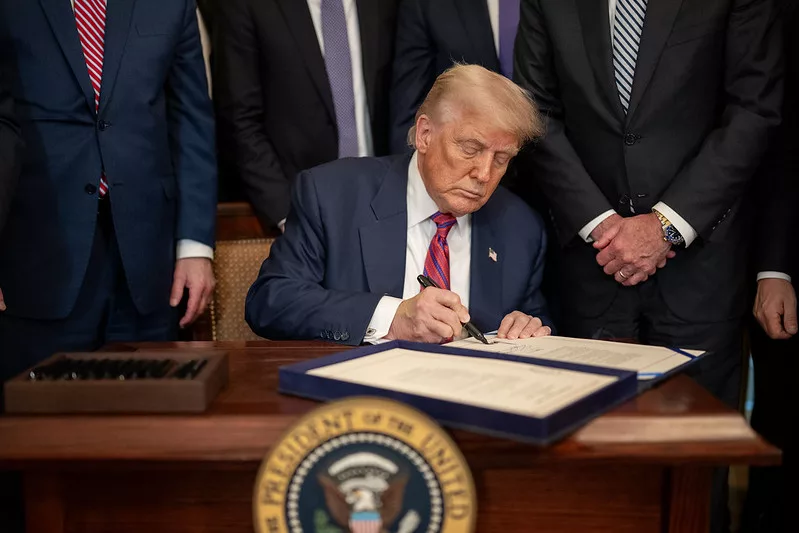
President Donald Trump says he will meet with Chinese President Xi Jinping multiple times in the coming months.
Trump said on his social media platform that a call with Xi on Friday was “productive.” Both leaders will meet at the sidelines of a summit in Korea next month, scheduled just days before a U.S.-China tariff truce is set to expire.
In addition to the Asia-Pacific Economic Cooperation leaders’ summit rendezvous, Trump said he would travel to China early next year and that Xi would visit the U.S. “at an appropriate time.”
Take note: Trump said in his post that Xi had approved a deal on the ownership of TikTok, and that the two also talked trade, fentanyl and Ukraine. A readout from the Chinese embassy made no mention of a finalized deal or future meetings between the two leaders.
Groups say farm bill 2.0 needs to reverse SNAP cuts
Nearly 600 groups that say they represent “millions of individuals, farmers, workers, and families whose lives and livelihoods are impacted by the farm bill” are urging Congress to enact a skinny farm bill that addresses hunger in the U.S.
“We will only support a farm bill that provides adequate and accessible SNAP benefits to families and individuals, makes our food safer, healthier, and more affordable; that supports good, family-sustaining jobs for food workers; and that supports family farmers and their communities,” says a letter from the groups to congressional leaders today.
The One Big Beautiful Bill Act “includes devastating impacts to nutrition assistance and [SNAP] that will exacerbate hunger for millions of Americans, including children, older adults, and veterans.”
The groups that signed the letter include the National Sustainable Agriculture Coalition, Food Research and Action Center, American Heart Association, the James Beard Foundation and a wide variety of other groups.
USDA’s hunger survey coming to an end
USDA is ending its annual survey of household food security even as the SNAP come into play.
Over the weekend, USDA announced that the 2024 survey will be the last. Data from that report will still be released as scheduled Oct. 22, but ending the survey means there will now be no data starting with the Trump administration.
In a release, USDA alleges the questions in the survey are “entirely subjective and do not present an accurate picture of actual food security.” The department says the survey wouldn’t reflect “the lower poverty rates, increasing wages, and job growth under the Trump Administration.”
Eric Mitchell, president of the Alliance to End Hunger, urged USDA to reconsider the decision. “Hunger will not disappear simply because it is no longer tracked,” he says in a statement.
Keep in mind: Food insecurity had jumped sharply as food inflation took off during the Biden administration, going from 10.5% in 2020 to 13.5% in 2023, according to the survey.
States don’t have to disclose SNAP data – for now
A federal judge has blocked USDA from obtaining personal data of SNAP participants.
USDA has threatened to cut off SNAP funds to states that don’t comply with its records request. But U.S. District Judge Maxine Chesney in California found that the states would suffer irreparable harm if that threat were to be carried out.
Twenty-one plaintiff states submitted declarations from their respective agency officials who said losing SNAP funding would likely require them to cut staffing “and otherwise greatly reduce their ability to comply with their obligations under the SNAP Act to administer benefits,” Chesney wrote in her temporary restraining order.
USDA argued it needed the data to investigate waste, fraud and abuse in the program. But Chesney said the states were likely to succeed on the merits of their claim that the request violates the SNAP Act.
White House reconsiders Reclamation nominee amid Colorado River dispute
The White House has asked Ted Cooke, a former Arizona water official, to withdraw as the nominee to lead the Bureau of Reclamation. Upper Colorado River lawmakers allegedly raised concerns about his impartiality due to his lower basin background.
The official reason Cooke was given was paperwork issues. But he told Agri-Pulse the White House decision was likely due to pressure from officials in Colorado, New Mexico, Utah and Wyoming, which are currently at odds with California, Arizona and Nevada over a future framework for water cuts.
Don’t miss a beat! It’s easy to sign up for a FREE month of Agri-Pulse news! For the latest on what’s happening in Washington, D.C. and around the country in agriculture, just click here.
Read more at Agri-Pulse.com.
House lawmakers mount push to scrap coffee tariffs
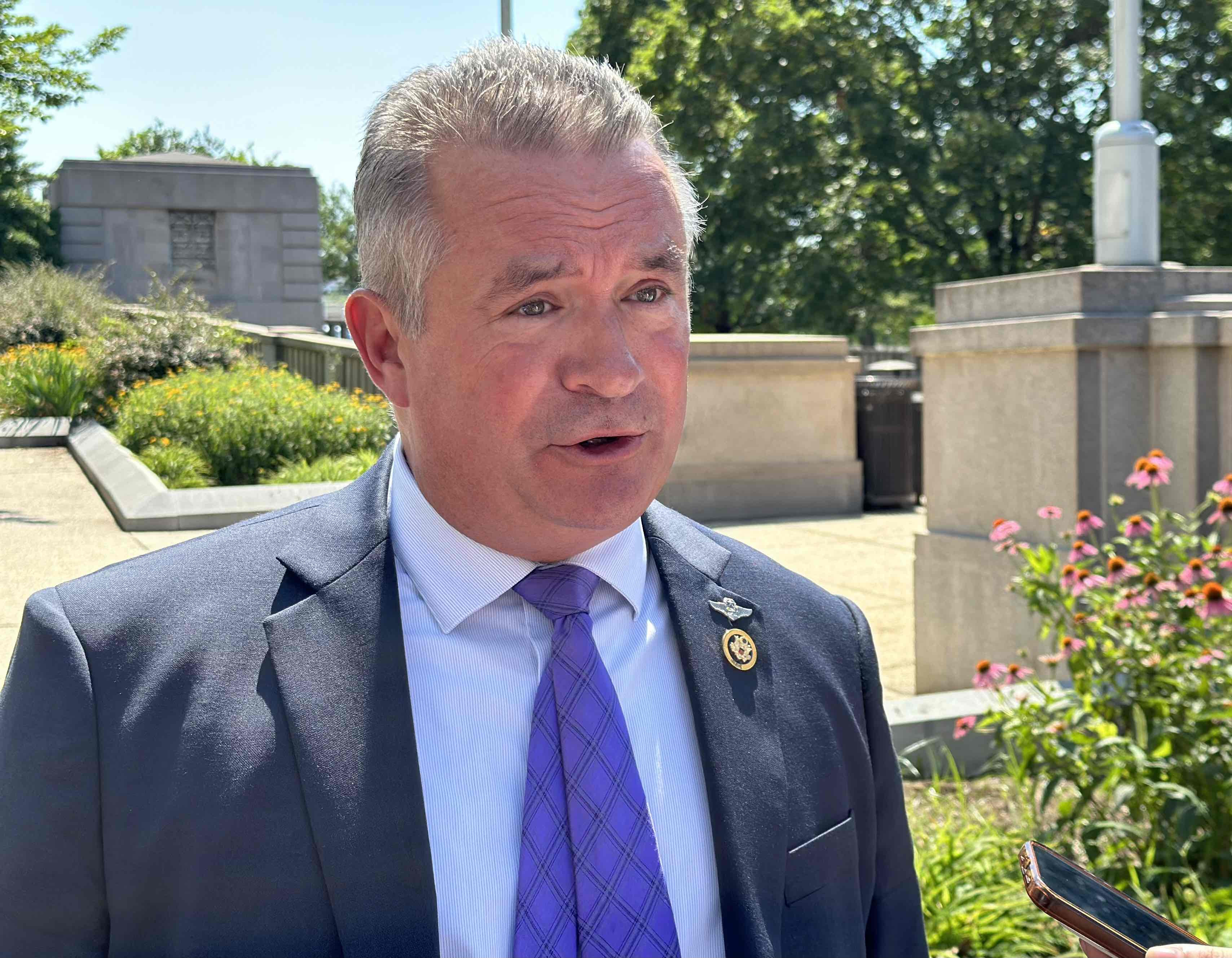 Rep. Don Bacon, R-Neb. (Bacon photo)
A bipartisan group of House members has introduced legislation to remove the Trump administration’s new tariffs on imported coffee. The “No Coffee Tax Act” would reset tariff levels on coffee to the rates they stood at before Trump took office for his second term.
“Americans started a revolution over a tax on tea,” Rep. Ro Khanna, D-Calif., said in announcing his bill. “U.S. coffee prices have increased significantly in the last year, in part due to Trump’s tariffs. If you drink coffee every morning, how can you not be mad about that?”
House Agriculture Committee member Don Bacon, R-Neb., is also leading the effort.
Take note: Coffee was not included in an initial batch of products exempted from sweeping tariffs unveiled in April or more recent Brazil tariffs. But Trump signed an executive order earlier this month that included coffee among a 71 -page list of products that the president “may be willing” to drop tariffs on.
Final word
"It's really sad that this is happening at a time when the Colorado River Basin in particular can barely withstand such an event. There's new guidelines that need to be in place by this time next year, and it just makes it a whole lot harder to not have someone at the helm at Reclamation." — Ted Cooke, nominee for commissioner of the Bureau of Reclamation who has been asked to withdraw his name from consideration.
Philip Brasher, Oliver Ward and Noah Wicks contributed to today’s Daybreak


