
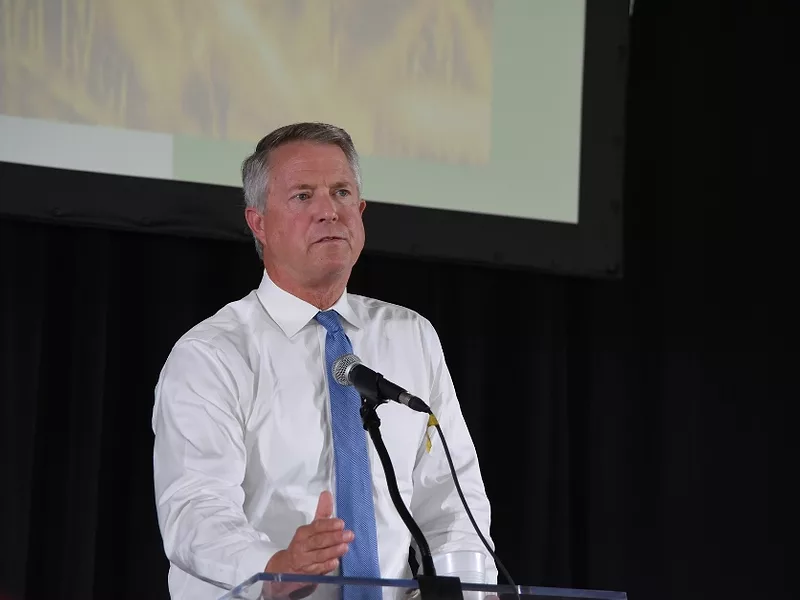
Sen. Roger Marshall, R-Kan., says trade is not a cure-all for American agriculture.
“If you think that trade is going to solve all our woes, I think you're wrong,” he told attendees of the annual Ag Outlook Forum sponsored by the Agricultural Business Council of Kansas City and Agri-Pulse Communications.
The senators said he supports the Trump administration’s effort to strike deals with trading partners. But he added, “Regardless of what happens on trade, American agriculture is going to succeed when we pass year-round E15, when we promote 45Z, when we turn corn into beef, or soybeans into chickens or whatever it is, right? That's when American agriculture is going to succeed.
“Anyone that's sitting there, and I think some of the national groups got this wrong, anyone that's sitting there thinking, Oh, if we get all these trade deals done, that's going to solve all our problems, is amok,” Marshall said.
“If we went to year-round E15, we would increase corn consumption by two and a half billion bushels of corn,” he said.
“American agriculture needs to realize what Brazil is doing … from a production level, what the rest of the world is doing.” He said. “I can't make Brazil produce less, but what we can do is try to tell China – look, if you want us to buy all your TVs, then you need to buy corn from from Kansas or from America,” Marshall said.
The Kansan, who started the Senate’s Make America Healthy Again caucus, also discussed the MAHA movement’s concerns about seed oils, which MAHA adherents such as Health and Human Services Secretary Robert F. Kennedy Jr. have said contribute to inflammation.
Cut through the clutter! We deliver the news you need to stay informed about farm, food and rural issues. Sign up for a FREE month of Agri-Pulse here.
“As far as I know, there's nothing unhealthy about seed oils, I think that's the bottom line,” he said. “I do have concern about ultraprocessed foods, which have a lot of seed oil in them.” However, he said he thinks the problem with those foods is is “the salt and the sugar, the preservatives in them. That’s the real problem.”
The senator outlined legislative priorities that could be addressed in a skinny farm bill, including bills that would preserve the use of pesticides and fertilizers for farmers “so the EPA could never take them away from us” and another on biostimulants – “natural organisms … that we can put in the soil that will grab the nitrogen in the soil, or maybe grab more carbon out of the air, those types of things.”
He said ag leaders, including Ag Secretary Brooke Rollins, were able to have more input into the final MAHA strategy released by the White House, which did not call for limits on pesticide use as advocated by many in the MAHA movement.
“Over 250 agriculture groups went to the White House, spoke with the people” who wrote the final report, he said.
Marshall talked up regenerative farming, which was featured in the MAHA strategy. While not providing a full definition, he said it involves minimal tillage, the use of manure from dairies and feedlots, and implementation of practices such as cover crops to reduce dependence on fertilizer.
“I think that it's time for agriculture to embrace regenerative agriculture and make this world cleaner, healthier and safer than we found it,” he said.
For more news, go to Agri-Pulse.com.

