
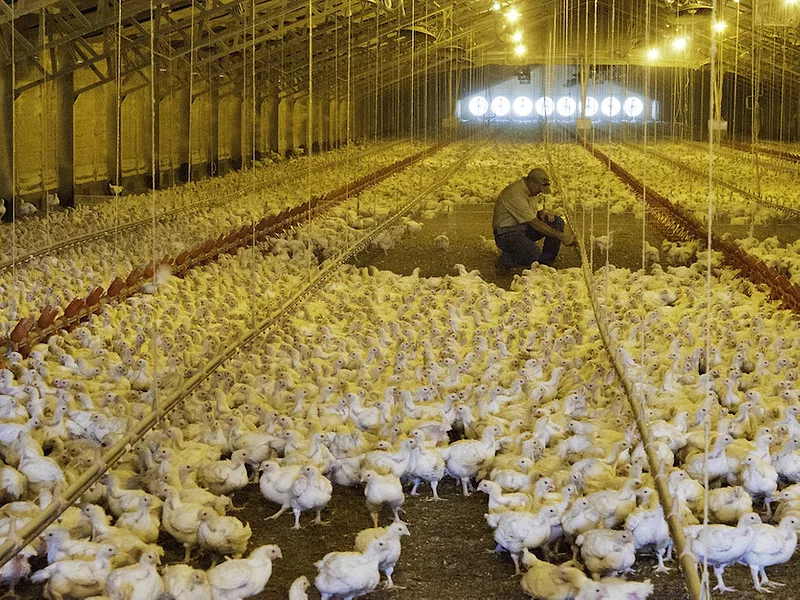
Cases of highly pathogenc avian influenza in commercial poultry flocks are on the rise as wild birds fly south for the winter. So far, the numbers are not at the crisis levels seen at this time last year, but industry observers and experts say that could change, and producers must remain vigilant.
USDA's prevention plan, which includes farm biosecurity assessments, should limit HPAI’s spread and effects, experts say.
HPAI cases have popped up since late-September in South Dakota, North Dakota, Iowa, Minnesota and Wisconsin, and there’s been one case in Utah. Avian influenza, or bird flu, is lethal for poultry, forcing producers to cull their flocks, which can lead to higher prices for chickens, turkeys and eggs.
In addition, turkey producers are facing the threat of avian metapneumovirus (AMPV), which is not usually fatal, but does reduce egg-laying.
American Farm Bureau Federation economist Bernt Nelson says AMPV offers a potential double whammy for producers. “It's not as lethal as avian influenza, but it still causes a lot of problems, like reduced egg production. And fewer eggs mean less capacity to replenish flocks devastated by HPAI,” Nelson says. “Recent detections have affected over 4 million birds, including 640,000 turkeys. Despite this, Thanksgiving turkey supplies should be sufficient.”
 Bernt Nelson (AFBF photo)
While 4 million birds are a lot, it’s far less than the approximately 50.4 million commercial birds that died in 2024 from HPAI or were culled to prevent it from spreading, according to USDA estimates. Those numbers included approximately 3.8 million turkeys.
Ron Phillips, senior vice president of policy at the Animal Health Institute, says it's still too early to know how widespread HPAI will be this fall. “You know, we're just coming into the migration season, and I think everybody's going to be interested to see if the number and severity of outbreaks is higher or lower than in recent years,” Phillips says.
There are some bright spots in this year’s HPAI situation. Steve Boren, vice president of livestock at Boehringer Ingelheim, says poultry producers are potentially in a better place this year thanks to the biosecurity plan announced by Agriculture Secretary Brooke Rollins back in February. “I mean, when the birds are impacted by the disease, it's as dire as it ever has been,” Boren says. “But expanded biosecurity is allowing us to hopefully slow down and stop the disease.”
USDA’s HPAI plan includes promoting biosecurity practices, offering financial assistance and conducting biosecurity audits to prevent and control the spread of HPAI. Nelson recommends that producers take advantage of the programs.
“They'll go through your property, your premises, and they'll check for any vulnerabilities,” Nelson says. “They'll provide the assessment, they'll show you the vulnerabilities, and that gives you the ability to fix them. There is money available for these sorts of things.”
Cut through the clutter! We deliver the news you need to stay informed about farm, food and rural issues. Sign up for a FREE month of Agri-Pulse here.
Another potential weapon in the fight against HPAI are vaccines, but that is a complicated issue. One problem, says Nelson, is that vaccinating the nation’s 750 million poultry is costly and labor intensive. “If you have to give each of them two shots at 96 cents apiece, that’s close to over a billion dollars,” Nelson says. “You're also talking about giving 750 million chickens injections and we don't have the labor or the manpower to do it.”
Another issue is the potential effect on trade due to vaccinating the U.S. poultry flock. The broiler industry is particularly concerned about the loss of export markets.
Widespread HPAI vaccination could face significant challenges from trade partners, making final approval a complex policy decision. But despite trade and cost issues, Phillips says vaccine research should be pursued. “I think what this disease challenge demonstrates is the importance of having these preventative vaccines available,” Phillips says. “It's important for not only animal health, but it certainly has a big impact on producers’ bottom lines.”
Along with money for biosecurity, USDA's HPAI strategy includes $100 million for a variety of other measures, including vaccines and therapeutics. The Animal and Plant Health Inspection Service is reviewing vaccine candidates for poultry and cows.
For more agriculture news, go to: www.Agri-Pulse.com

