
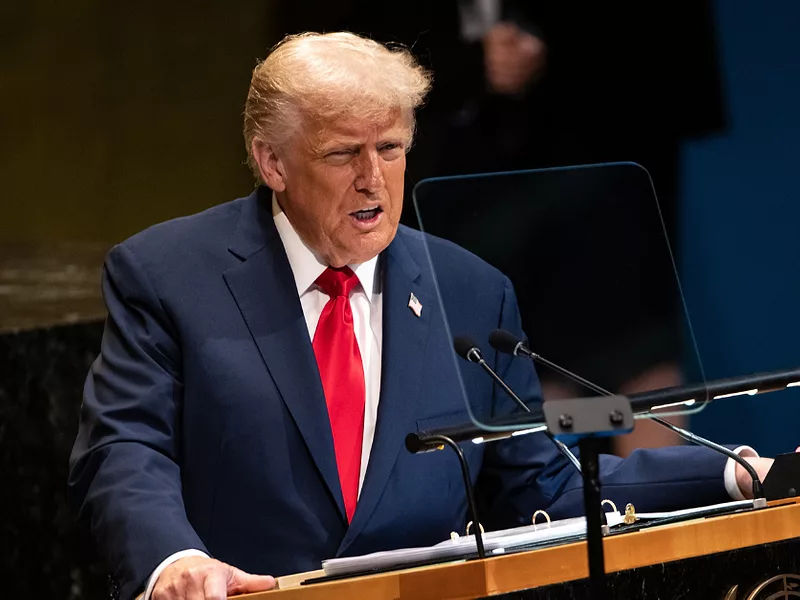
Trump leaves door open to alternate USMCA arrangements
President Donald Trump says the U.S., Canada and Mexico could “renegotiate” The U.S.-Mexico-Canada Agreement, also known as USMCA…or “do different deals.”
Speaking to reporters in the Oval Office with visiting Canadian Prime Minister Mark Carney, Trump reiterated his trade concerns with Canada, including high out-of-quota dairy tariffs.
“Canada was charging us very high tariffs on our agricultural things,” Trump said.
USMCA is up for review next year, when the three nations will decide whether to extend the deal, reform it or let it expire.
“We can renegotiate it, and that would be good, or we could just do different deals,” Trump said. “We might make deals that are better for the individual countries.”
Both the U.S. and Canada agreed to continue trade and tariff discussions, Canadian Minister Dominic Leblanc said after Tuesday’s meetings between U.S. and Canadian officials. Efforts will be focused to “quickly land deals” on existing steel, aluminum and energy tariffs, he noted.
Take note: U.S. Trade Representative Jamieson Greer said last week that he expects “one-on-one” conversations will form a significant part of USMCA review talks.
“The U.S.-Canada relationship is so different from the U.S.-Mexico relationship in so many ways,” he told Maria Bartiromo at the Economic Club in New York.
WIC getting funding extension
The White House is using tariff revenue to keep the Women, Infants and Children food assistance program, or WIC, from running out of money due to the government shutdown.
“The Democrats are so cruel in their continual votes to shut down the government that they forced the WIC program for the most vulnerable women and children to run out this week, Whie House press secretary Karoline Leavitt, said in a post on X Tuesday.
Cut through the clutter! We deliver the news you need to stay informed about farm, food and rural issues. Sign up for a FREE month of Agri-Pulse here.
“Thankfully, President Trump and the White House have identified a creative solution to transfer resources from Section 232 tariff revenue to this critical program.”
Georgia Machell, National WIC Association president and CEO, welcomed the new funding but said “families need long-term stability, not short-term uncertainty. We still don’t know how much funding this measure provides, how quickly states will receive it, or how long it will sustain operations.”
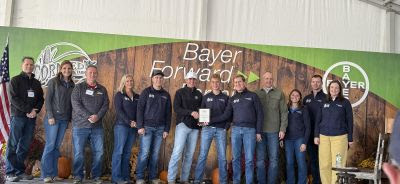 CornFed Farms, a fourth-generation Marengo, Iowa farm, operated by the Mohr family, was designated as the first Bayer ForwardFarm in the U.S. yesterday with recognition from Bayer's Brian Naber, Iowa Secretary of Ag Mike Naig and other ag leaders. The farm family, which grows corn, soybeans, hay and cattle, will plant CoverCress and camelina this fall and employ other innovative practices. (Agri-Pulse photo)
Administration signals it may not pay furloughed workers
Furloughed federal workers aren’t automatically entitled to back pay when the government reopens, the Office of Management and Budget’s top lawyer says.
In a memo reported by numerous news outlets and made available by The Washington Post, OMB General Counsel Mark Paoletta said according to a 2019 law, any funding bill ending a shutdown must specify that furloughed workers get back pay.
“The government does not incur obligations for furloughed employees’ salaries, because they are not performing services for the government while furloughed,” Paoletta said in the memo.
About 750,000 federal workers are furloughed, including approximately 42,000 employees at USDA – about half the department’s workforce.
Two more USDA nominees get Senate OK
Ag Secretary Brooke Rollins is adding to her team. The Senate on Tuesday confirmed Devon Westhill as assistant secretary for civil rights and Michael Boren as undersecretary for natural resources. Boren will oversee the Forest Service in his new role.
Free trade group: Use targeted tariff relief to ease input prices
In the wake of Secretary Rollins announcement of a joint USDA-Justice Department effort to scrutinize farm input costs, a farm trade group is asking why officials won’t look at their own tariff policy.
Brian Kuehl, executive director of Farmers for Free Trade, said Tuesday that the trade conflicts of Trump’s first term helped raise input costs, and that new tariffs will do the same. Any effort to lower costs for farmers, he argued, should include targeted tariff reductions for farmers.
“We should definitely be looking to reduce tariffs on farm inputs,” Kuehl said, including fertilizer, farm equipment and parts, and steel and aluminum products.
“Grain bins or cattle guards or fencing, all of those are steel and aluminum-intensive products,” he added.
Farmers for Free trade event in Michigan was part of a 14-state, 2,500-mile tour across the U.S. to host discussions on trade agreements and opportunities. The “Motorcade for Trade” will end in Washington, D.C., in November.
Pesticide advisory committee won’t meet in November
The Pesticide Program Dialogue Committee, or PPDC, won’t meet next month as scheduled, EPA said Tuesday.
“While undergoing its biennial review required by law, the charter for PPDC has temporarily expired as the agency makes some minor adjustments,” the agency’s Office of Chemical Safety and Pollution Prevention said in an update.
The PPDC includes a mix of pesticide stakeholders, including representatives from grower, farmworker and environmental groups.
The last meeting was in June. EPA said it would schedule a meeting sometime after it finishes changing the charter.
Farmers, food companies backing state animal welfare laws create new group
The American Meat Producers Association, or AMPA, which represents food companies and farmers supporting state animal welfare laws, will launch today at an event in Washington.
About 200 hog farmers, meat companies and retailers from 30 states will hold a press conference at the National Press Club, followed by a tractor and truck demonstration at the Capitol on Thursday.
“They're tired of not having a seat at the table and policymakers only listening to some special interest groups and not listening to them,” American Meat Producers Association President Holly Bice told Agri-Pulse.
House Ag Committee Chair Glenn Thompson, R-Pa., supports addressing Prop 12, which requires that pork sold in California not come from pigs raised in gestation crates. The National Pork Producers Council, the nation’s largest group representing pork producers, also supports a Prop 12 legislative fix.
Inaugural AMPA members include True Story Foods, ButcherBox, Perdue Farms and Niman Ranch.
AMPA says repealing state standards would “devastate” small farms who have invested in crate-free systems, remove consumer choice, and reverse progress toward humane farming practices.
Final word
"This notion that if we just deal with short-term pain, we'll have long-term gain, I think, is fundamentally flawed. If we don't do this right, we can lose markets forever, and we can find ourselves in a much weakened competitive position, and there is not a long-term gain." – Brian Kuehl, executive director of Farmers for Free Trade, on Trump's agricultural trade policy.
Lydia Johnson, Oliver Ward and Noah Wicks contributed to today’s Daybreak


