
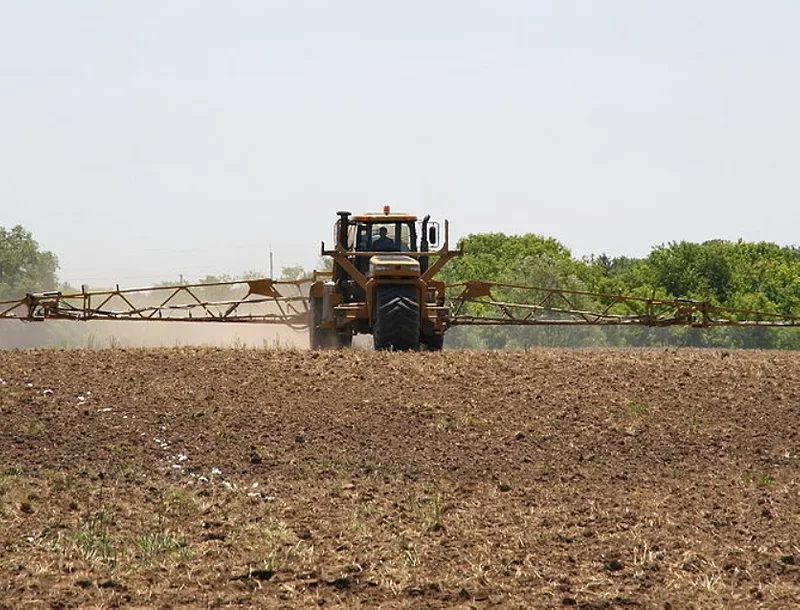
Seed and fertilizer to be discussed at Judiciary Committee hearing
Input costs will be the focus of a Senate Judiciary Committee hearing today.
The hearing’s title gives some idea of what to expect from Judiciary Committee Chair Chuck Grassley. It’s called, “Pressure Cooker: Competition in the Seed & Fertilizer Industries.”
Corey Rosenbusch, CEO of The Fertilizer Institute, and Andy LaVigne, president and CEO of the American Seed Trade Association, will testify, as will Caleb Ragland, president of the American Soybean Association.
The congressional scrutiny comes as the Trump administration says it will look at what’s behind higher production costs facing farmers, including potential antitrust issues.
The Fertilizer Institute on Monday called for a national policy to boost domestic crop nutrient production to help growers facing unstable global fertilizer supply chains. TFI said it also wants a full-time fertilizer economist at USDA to help monitor the market and improve transparency.
The hearing can be viewed here.
Also, see our Agri-Pulse Newsmakers featuring Andy LaVigne here.
 Agri-Pulse chart (click for larger image)
Japan boosts U.S. rice imports following tariff deal
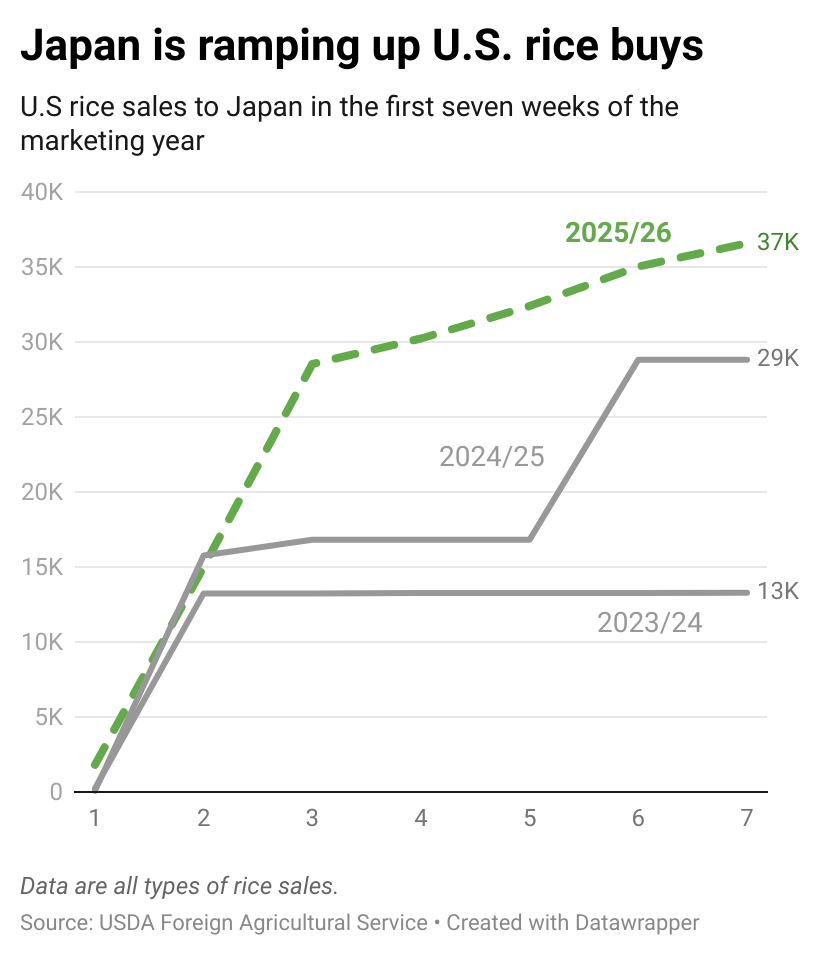
Japan is quietly increasing imports of U.S. rice following a commitment this summer to boost purchases by 75% as part of its tariff deal.
“They've started the process of implementation without talking about it,” an industry source told Agri-Pulse.
In the first seven weeks of the 2025/2026 marketing year, beginning Sept. 1, Japan bought more than 37,000 metric tons of U.S. rice. The previous year it bought around 29,000 after buying just 13,000 the year before.
President Donald Trump is in Japan today, where he earlier met with new Prime Minister Sanae Takaichi. Both sides still must finalize how a vehicle to drive Japanese investment in the U.S. will work. The president says he’s also open to hearing proposals for updating the deal.
The industry source said that they aren’t anticipating any adjustments to the rice purchase commitment, however.
“Rice is somewhat minor in the scheme of things,” they added.
Malaysia deal touted: The National Pork Producers Council issued a news release praising Trump’s trade deal with Malaysia.
The agreement announced last week allows exports to the Southeast Asian nation from all U.S. facilities included in the Food Safety and Inspection Service Meat, Poultry and Egg Product Inspection Directory. It also won’t impose additional product or facility registration requirements and will ensure acceptance of the standard FSIS export certificate.
Cut through the clutter! We deliver the news you need to stay informed about farm, food and rural issues. Sign up for a FREE month of Agri-Pulse here.
The same provisions are in the agreement with Cambodia.
“U.S. pork exports to Malaysia hit record levels of over $24.5 million in 2024, a significant amount given that only eight U.S. plants are currently eligible for export,” NPPC said. “Exports to Malaysia have increased over 1,700% in the last five years.”
Senate Dems warn of adverse market impacts from beef imports
Senate Democrats are warning of the fallout from the U.S. announcement to boost imports of Argentinian beef – and are urging a U-turn.
“This announcement has already had tangible market impacts felt by cattle producers across the country, at a time when cattle producers are looking for long-term stability to rebuild their herds,” 16 senators wrote to U.S. Trade Representative Jamieson Greer.
The senators, led by Ag Committee Ranking Member Amy Klobuchar of Minnesota, and Senators Catherine Cortez Masto of Nevada and Martin Heinrich of New Mexico, also expressed concerns about diseases.
“This plan could also introduce serious animal health threats,” they warn, citing Argentina’s history of foot-and-mouth disease and New World screwworm.
But, but, but: While the FMD virus can remain in beef products, screwworm lives in live animals and not in processed beef products.
Take note: Cattle futures fell again on Monday amid news that Mexico’s agriculture minister will be in Washington this week to push to reopen the border to livestock imports. It was the sixth straight day of falling prices.
MAHA supporters call for USDA to increase conservation, organic program support
Some “Make America Healthy Again” movement supporters are asking Agriculture Secretary Brooke Rollins to expand conservation support for farmers, give the National Organic Program more staff and resources and reinstate Regional Food Business Centers.
Leaders of several groups – including Farm Action, the MAHA Mom Coalition, the American Agriculture Movement and United We Eat – asked Rollins to “turn the MAHA vision into tangible results” and listed priorities that include, among other things, more support for federal organic and conservation programs. They said “recent cuts to key USDA conservation and local procurement and infrastructure programs” have left farmers vulnerable.
Take note: The groups also asked USDA to consider specialty crop and organic farmers when making plans for economic assistance, noting that these types of growers “have been consistently left behind in federal relief efforts."
Bird flu continues to hit poultry flocks
Two Minnesota turkey operations totaling nearly 170,000 birds have been hit with avian influenza as detections tick upward as birds fly south.
Along with those detections, the Animal and Plant Health Inspection Service recently reported infection of a commercial broiler flock in Georgia including 139,000 birds. APHIS also reported HPAI on three farms in Lancaster County, Pennsylvania, with 49,000 birds.
In the last 30 days, APHIS said 3.57 million birds have been infected in 30 commercial flocks and 34 backyard flocks.
Chicken news: A report from the group Farm Forward says chicken contaminated with salmonella “likely” has been purchased by public nutrition programs and called for stronger standards for the industry.
“Despite clear risks to health and mortality, current regulations fail to protect the public,” the group said.
Asked for comment, National Chicken Council spokesperson Tom Super called the Farm Forward document “an unscientific 'report' from an activist organization whose stated goal is to end commercial chicken farming.”
Super said producers “have worked to drive Salmonella levels to all-time lows, meeting or exceeding performance standards set by USDA, who has the authority to pull inspection at any establishment that is not producing safe, wholesome and properly labeled products. All chicken is safe to eat when properly handled and cooked."
Final word
“We urge you to ensure that a meaningful share of these funds – including DoD Fresh purchases – goes to independent producers offering organic foods and pasture-based, humanely raised meat that is free from antibiotics and growth-promoting drugs.” – Letter from Moms Across America, Farm Action, United We Eat and others to Secretary Brooke Rollins, discussing USDA’s $5 billion commodity procurement budget.
Kim Chipman, Oliver Ward and Noah Wicks contributed to today’s Daybreak.
.webp?t=1762183428)


