
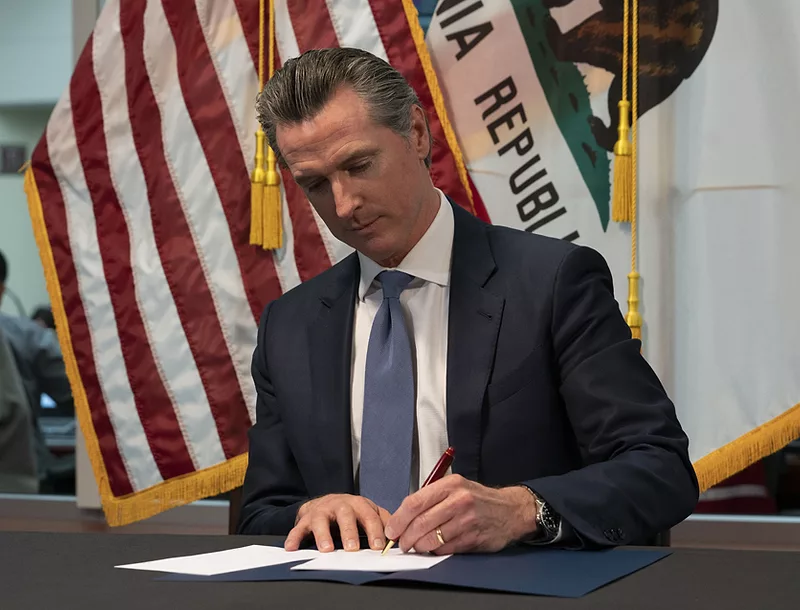
Gov. Gavin Newsom on Wednesday signed a bill making California the first state to ban ultra-processed foods from public school meals. The new law sets in motion a decade-long effort to identify and phase out products containing certain additives and chemical ingredients from school breakfasts, lunches and on-campus sales.
Under Assembly Bill 1264, the state Department of Public Health will establish scientific criteria to define “ultra-processed foods of concern” by June 1, 2028, based on evidence linking specific products to health risks such as obesity, Type 2 diabetes, and metabolic or behavioral disorders.
Schools will begin removing those foods from menus in 2029, with vendors prohibited from selling them on campuses by 2032. By 2035, no breakfast or lunch program may serve the identified products, except for limited fundraising exemptions.
The law applies only to food sold or served in public schools and does not affect grocery stores, restaurants or labeling standards.
During a press conference in Los Angeles on Wednesday, Newsom bashed conservative news outlets that had criticized his progressive school nutrition policies in the past, and he stressed the bipartisan support for AB 1264. He also pointed to the paradox of California agriculture supplying much of the nation's fruit and vegetables while communities throughout the state suffer from inadequate nutrition.
“After all, this is the breadbasket. This is California,” said Newsom. “The idea that we have food from overseas that is processed and comes back here — when we have this abundance in our own backyard — seemed rather absurd."
The measure, authored by Assemblymember Jesse Gabriel, D-Encino, builds on California’s 2024 ban on several synthetic food dyes and preservatives. Gabriel said the new law will help protect students from foods “engineered for profit rather than nutrition.”
“This new law will help California students by bringing more real, healthy, nutritious foods into our cafeterias,” said Gabriel. ”And it will incentivize manufacturers in ways that will have impacts far beyond our classrooms and beyond our borders."
Gabriel added that California has being protecting public health since "well before the MAHA movement," which has also targeted ultraprocessed foods.
Consumer Reports, the Environmental Working Group and other groups applauded the law as a landmark public health step. They point to studies showing diets high in ultra-processed foods are associated with increased risks of cancer, depression, and heart disease.
Cut through the clutter! We deliver the news you need to stay informed about farm, food and rural issues. Sign up for a FREE month of Agri-Pulse here.
“Harmful ultraprocessed foods that put students’ health at risk and interfere with learning have no place in our schools,” said Brian Ronholm, director of food policy at Consumer Reports. “These foods don’t provide kids with the nutrients they need and are deliberately engineered to be addictive, which encourages unhealthy eating habits and overconsumption.”
Agricultural and food industry groups say the law’s success will depend on how the state office defines ultraprocessed. Throughout the legislative process, several of the industry associations raised concerns that the criteria could inadvertently capture minimally processed items like olive oil, nut butters, or canned fruits.
After a series of amendments over the summer, a coalition of agricultural groups moved to a neutral position, while two prominent fruit organizations actively backed the bill. Yet cattle, dairy, egg, poultry and wheat producers remained opposed, along with the California Farm Bureau and the Consumer Brands Association.
The California Grocers Association, American Beverage Association and other trade groups have also warned of potential compliance challenges for school food vendors and manufacturers, arguing schools need more funding and time to adapt menus and supply chains.
Gabriel’s office has said those concerns will be addressed through the regulatory process, which will include public input and stakeholder consultations before any foods are classified as restricted. Implementation will roll out over the next decade, giving school districts and suppliers time to prepare for the changes.
Nutrition advocates say California’s model could influence federal school meal standards and inspire similar action in other states. The Center for Science in the Public Interest described AB 1264 as a milestone in protecting children from the harms of industrial food processing.
The measure’s broad scope and long timeline leave room for debate over cost, practicality and science. As implementation begins, lawmakers and regulators will face pressure from both health advocates and food producers to strike a balance between public health goals and agricultural realities.
Correction: A previous version of this article stated the Office of Environmental Health Hazard Assessment would establish the criteria for a definition. Amendments to the bill had changed that to the public health department.
For more news, go to Agri-Pulse.com.

