
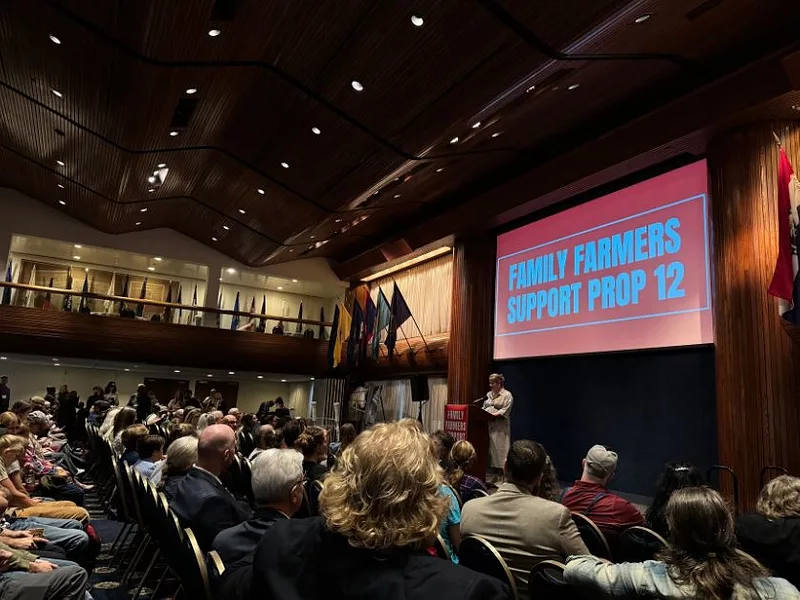
A coalition of farmers and food companies launched the American Meat Producers Association to defend state animal welfare laws like California’s Proposition 12, complicating efforts by House Ag Committee Republicans to include federal preemption in an upcoming farm bill.
The American Meat Producers Association, or AMPA, argues that repealing or preempting state animal welfare standards would “devastate” small farms that have invested in crate-free systems, remove consumer choice, and reverse progress toward humane farming practices.
Family farmers are “tired of not having a voice in Washington. They're tired of not having a seat at the table and policy makers only listening to some special interest groups and not listening to them,” American Meat Producers Association President and CEO Holly Bice told Agri-Pulse. Bice is the sole leader or staff member listed on the group's website. AMPA's board of directors is current being built.
“The point of this organization is to give a voice on policy issues and protect state laws that are good for family farmers, like Prop 12 and [Massachusetts] Question Three," Bice said.
Proposition 12, a ballot initiative approved by California voters seven years ago and upheld by the Supreme Court in 2023, requires pork sold in the state – regardless of where it was raised – come from the offspring of sows not housed in gestation crates. Massachusetts’ Question 3 goes further, barring the sale or transport of noncompliant pork through the state.
Rep. Ashley Hinson, R-Iowa, introduced the Save the Bacon Act – a rebrand of the Ending Agricultural Trade Suppression Act – in July to prohibit state and local governments from regulating livestock production beyond their borders. It would effectively preempt state laws that set animal welfare standards for products sold in a state with a federal standard, overriding state laws like Prop 12 and Question 3.
Responding to the launching of AMPA, the National Pork Producers Council said it is confident "our organization works on behalf of all our nation's 60,000-plus pork producers.” NPPC is the largest trade group in Washington representing pork producers that has long pushed for a preemption to Prop 12.
“Pig farmers are united in caring about how their pigs are raised and maintaining access to markets to sell their pork products, yet a patchwork of state sow housing laws benefits no producers. NPPC continues to oppose a patchwork of state housing laws on their behalf,” the group said.
Cut through the clutter! We deliver the news you need to stay informed about farm, food and rural issues. Sign up for a FREE month of Agri-Pulse here.
Key organizers of the coalition include crate-free pork companies True Story Foods, Niman Ranch, and direct-to-consumer brand ButcherBox.
Farmer members of the coalition include Brent Hershey of Clemens Food Group pork supplier Hershey Ag, Missouri pork producer and head of farm partnerships for True Story Foods Russ Kremer, and Virginia livestock and poultry producer Joel Salatin with Polyface Farms, among others.
House Ag hearing fuels momentum
The association’s formation follows a House Agriculture Committee hearing in July that examined the implications of Proposition 12. The six invited witnesses, two of whom represented NPPC, largely opposed the law, citing potential economic harm to producers and cautioned about creating a patchwork of state regulations.
A letter from Ag Secretary Brooke Rollins to House Ag Committee Chair Rep. Glenn Thompson, R-Penn., on July 21 estimates rebuilding or retrofitting facilities to be Prop 12 compliant costs an average of $3,500 to $4,500 per sow depending on region, existing infrastructure and scale of the operation. 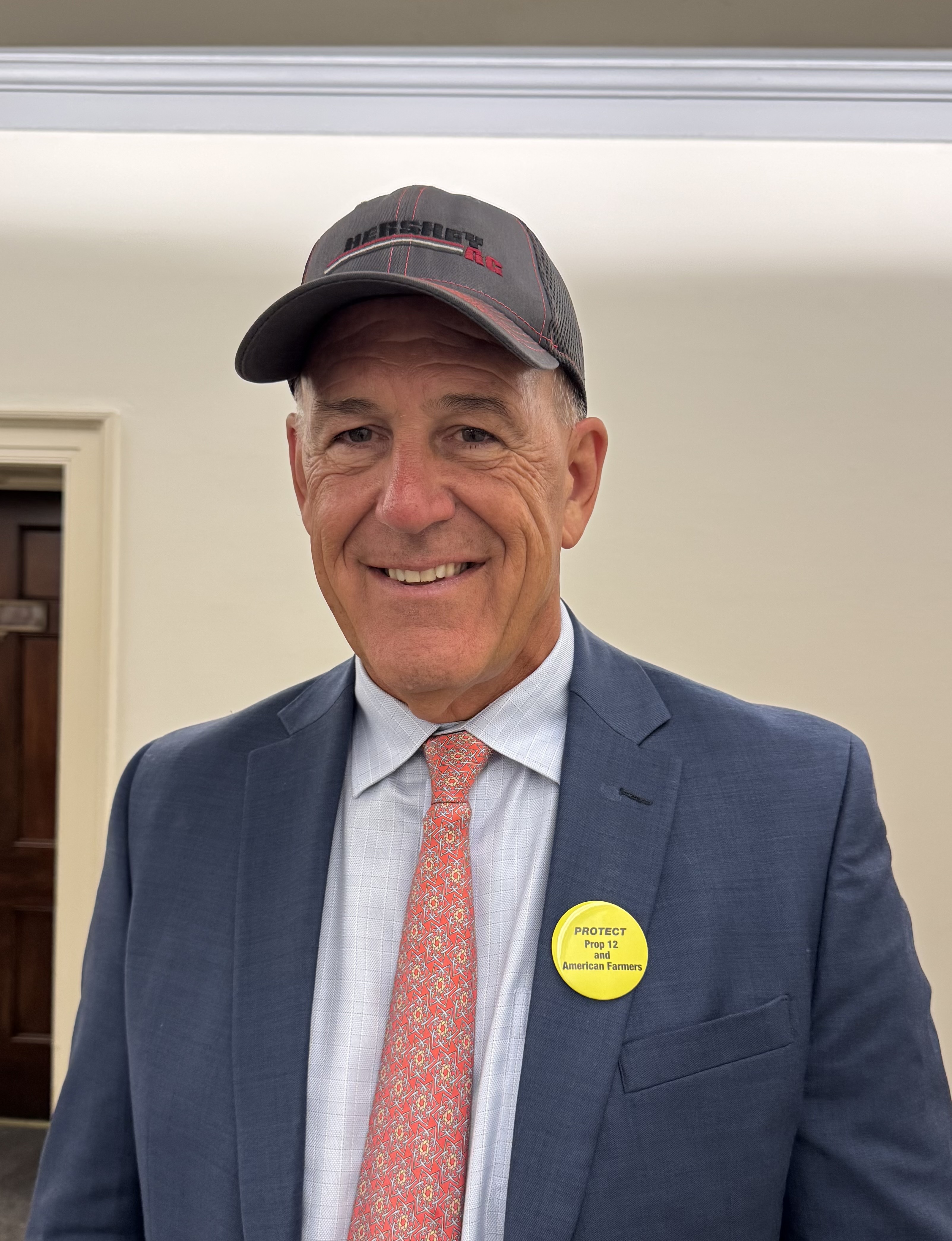 Brent Hershey (Agri-Pulse photo)
Prop 12 compliant Pennsylvania pork producer Brent Hershey, a founding AMPA member, said the hearing and subsequent meetings with lawmakers on Capitol Hill “fired up the base” to launch the American Meat Producers Association.
Since July, more than a dozen House Republicans have come out against including language addressing Prop 12 in the skinny farm bill. “We have a lot of Republican support beyond what's on that letter,” Bice said.
Retailer members back stable markets under Prop 12
Retailers and consumer-facing meat companies say Prop 12 has provided market stability and met growing consumer demand for crate-free pork.
ButcherBox, a direct-to-consumer meat and seafood company, has “seen the demand for responsibly raised protein grow” among its 420,000 members, said Kelly Hilovsky, the company’s senior director of impact and sustainability. The company sources products exclusively from partners that raise animals that are never given antibiotics or added hormones and are never confined to feed lots, crates, or cages.
About 27% of U.S. pork producers are Prop 12 compliant, according to a letter from USDA submitted for the record at the July House Ag Committee hearing.
Illinois pork producer Jared Schilling, who supplies Prop 12 compliant pork to Coleman Natural Foods, said the state law has created valuable market certainty.
“I think the biggest thing for us is that it solidified the marketplace we were already in and to change it now would be destabilizing,” Schilling said.

