
Many of the threats that have faced the global produce industry over the last two years, including geopolitical risks, tariffs, inflation, labor and artificial intelligence, remain key challenges, but the International Fresh Produce Association is ramping up advocacy efforts and making progress on several fronts in the “Fight for Fresh.”
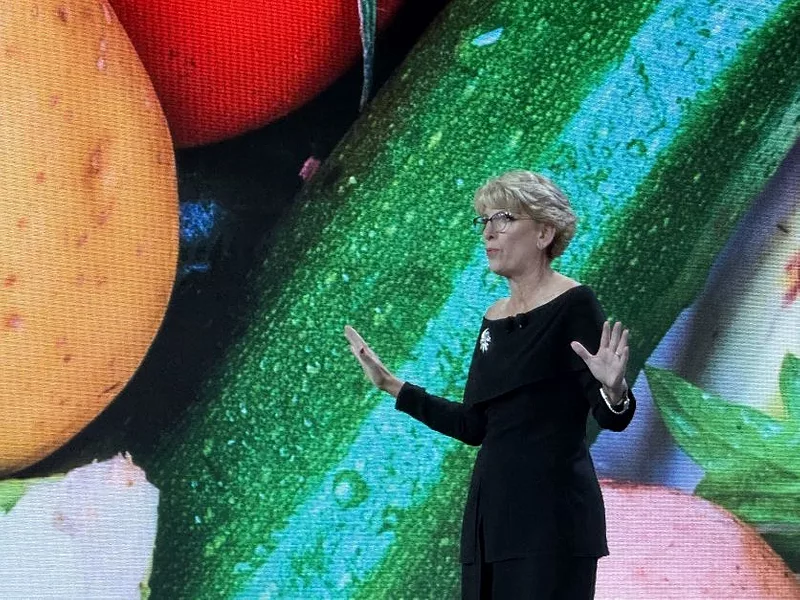
That’s according to IFPA CEO Cathy Burns in her “State of the Industry” speech at the organization’s Global Produce & Floral Show in Anaheim Thursday.
“One of the biggest impacts facing us this year has been tariffs and their impact on global trade,” Burns said. The IFPA Board of Directors has met with U.S. Trade Representative Jamieson Greer and the White House's National Economic Council to push for exemption of their products, as well as science-based trade policies and transparent, rules-based trading systems.
She said tariffs and inflation are impacting product flows and consumer behaviors.
“Our Global Intelligence team found that 66% of consumers are purchasing fewer foods and opting for smaller sizes,” Burns said. However, fresh fruits and vegetables are the least likely items that consumers give up, with only 5% reducing purchases.
Cut through the clutter! We deliver the news you need to stay informed about farm, food and rural issues. Sign up for a FREE month of Agri-Pulse here.
She cited data from a 2023 Nature article that found imports of fruits and vegetables improved dietary risks in importing countries, resulting in a mortality reduction from non-communicable diseases of 1.4 million deaths globally. Burns wants to ensure this data is delivered to decision-makers in a “brick-to-forehead” way. “The bottom line: Our products matter and save lives.”
On the labor front, IFPA is urging policymakers to resolve farm labor challenges, while advocating for more investment in automation and mechanization.
“Access to farm labor has been a contentious issue for decades. This year, the pressures have been enormous,” Burns emphasized, mentioning “aggressive worksite enforcement” that has occurred across the U.S.
On a positive note, she noted that IFPA and other plaintiffs won a lawsuit against the Department of Labor’s H-2A rule and advised DOL to develop a less burdensome Adverse Effect Wage Rate – “resulting in the most significant financial shift ever for growers in H-2A.”
IFPA also worked with with the Department of Homeland Security and ImmigrCE to avoid disruptions by securing clarity on enforcement – so that the agency would not go on farms unless there is an active warrant.
“In fact, based on the great work by our US [Government Relations] team, I received a call from Secretary Chavez-DeRemer to personally assure me that the raids will stop,” Burns said.
“And if I hear of any more, I can reach out directly to her cell phone.”
Other highlights from Burns’ speech:
Artificial intelligence
Burns said she is “obsessed with AI because our industry cannot and will not be left behind.” Technology is making IFPA more efficient, she noted. “But beyond that, it’s ensuring that every member has the power to see around corners, anticipate trends and act faster with confidence.” Today, the organization launched a new tool to help members “uncover insights from our deep database of industry and consumer research.”
Supply Chains
Burns noted that this year’s crops were among the most expensive ever harvested, shipped, and sold. IFPA launched a “Supply Chain of the Future” initiative to create solutions that will reduce costs and improve efficiency through four workstreams:
- Shelf-life Predictability
- Dynamic Incentives
- Harmonized Standards
- Smart Data Escrow
So far, she said pilot programs have been conducted with leafy greens, berries and mushrooms. Tools have been developed to calculate return on investment, ensure data privacy, and simplify implementation.
Sustainability
IFPA believes sustainability matters because fresh produce and floral are the most sustainable products on the planet. “The best thing we can do for our environment is eat more fruits and vegetables and enjoy floral every day. Full stop,” Burns said. IFPA’s Sustainability Council developed a global sustainability framework with rollout planned for next October.
In November, IFPA will “elevate our community in the largest annual sustainability forum – COP30 in Brazil – marking our third straight year of COP engagement.” The organization also reapplied for climate resiliency grants – which had their funding frozen – to help members conduct field trials of adopt climate-smart practices.
Packaging
Burns said packaging regulations should preserve the quality and shelf life of fresh produce, minimize food loss, and reduce single-use packaging waste – all while avoiding an increase in overall carbon emissions. The organization established a Sustainable Packaging Innovation lab, which supports engineers developing or commercializing sustainable packaging. Their Fresh Field Catalyst Program focuses on reusable packaging solutions.
Food safety
Burns highlighted the importance of addressing climate change for both crops and consumers. “Researchers have found warmer temperatures and increased humidity raises the risk of pathogens," she said, but technology could help.
For example, an AI system is in development that uses microscopic imaging and interconnected data layers to rapidly detect Salmonella in onions. Burns said 58% of global consumers are extremely or very concerned about the safety of their food, while in the U.S., consumer confidence in food safety is at an all-time low.
“We believe food safety is a shared responsibility across the supply chain, and that regulations around the world should be clear, scientifically rigorous, and not overly burdensome to our industry."
MAHA
IFPA spoke out against “questionable assertions” made about food production and safety in the first MAHA Commission report and provided 10 policy recommendations to the MAHA Commission on how fruits and vegetables must be foundational in all public health interventions. Burns said this is “non-negotiable.”
The organization also launched the “Fresh Produce for a Healthier America” campaign that intentionally put their products in front of the MAHA Commission, an effort that will also be advanced globally.
Produce prescriptions
IFPA has been focused on driving consumption through health and nutrition initiatives and urged the Department of Health and Human Services to recognize produce prescription programs as a supplemental benefit, approved for Medicare Advantage. “The best part is that fresh fruits and vegetables don’t have to do a thing. We don’t require reformulations, reductions or rebrands,” Burns noted.
For more news, go to Agri-Pulse.com

