
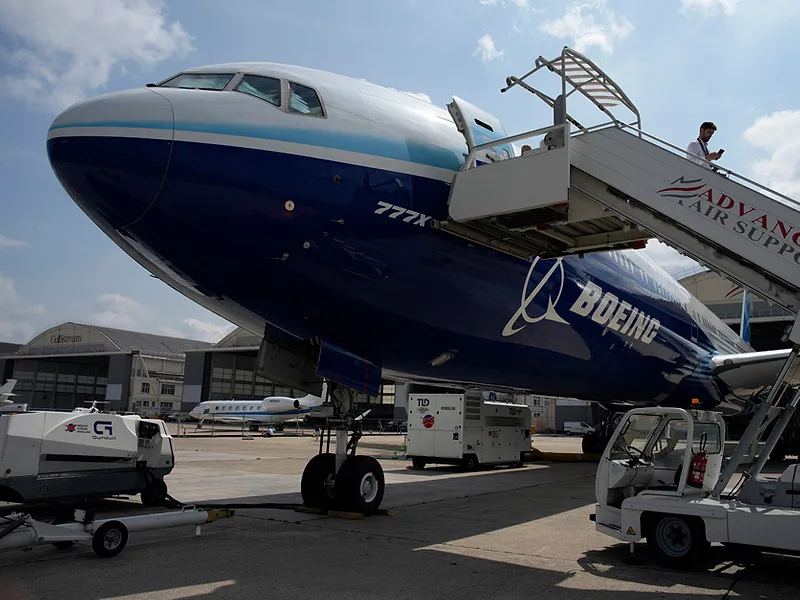
Four years ago, there were high hopes in agriculture for the future of sustainable aviation fuel. The airlines seemed to be all in, joining the Biden administration in announcing a commitment, known as the “Grand Challenge,” to use 3 billion gallons of SAF by 2030.
For farmers, SAF offered a long-term market to compensate for the decline in demand for ethanol as cars continued to become more efficient and electric vehicles more common.
But the SAF industry is still struggling to take off. The Biden administration and the Grand Challenge are gone. And a critical tax credit for the SAF industry, which needs multiple forms of subsidies and incentives to be competitive, has been slashed from $1.75 to $1 a gallon.
The cut in the 45Z clean fuels tax credit made in President Donald Trump’s One Big Beautiful Bill leaves SAF with the same subsidy as fuels like renewable diesel that use many of the same feedstocks, including soybeans and corn, but are cheaper to produce than SAF. Imported feedstocks, such as used cooking oil, also were made ineligible for the credit.
The cut to the 45Z credit caused concern that investment dollars needed to build up SAF will now be more likely to go to the more established market for green diesel used to power trucks, buses and other heavy modes of transportation.
“These projects are not attracting private capital, and so the role of government … in helping launch the industry, is super important,” said Bruce Fleming, CEO of Montana Renewables, one of the few plants now producing SAF at commercial scale, making it a bright spot in the fledging industry. Starting next year, Montana Renewables SAF will be shipped to a Minneapolis-St. Paul facility for use by Delta Air Lines.
 Bruce Fleming (SAF North America Congress photo)
“Currently, the SAF market is a mixed bag of policies and producers who are facing different challenges and realities,” said Pat Gruber, CEO of Gevo, which plans to make SAF from corn ethanol in North Dakota.
“In the end, products must be economical to be adopted. That’s a fact.”
Phillips 66 converted a plant in Rodeo, California, to produce renewable diesel and SAF, but during the company’s most recent earnings call, company executives lamented the restrictions on 45Z and the RFS, which the Trump administration is proposing to limit to North American feedstocks.
Phillips 66 President and CEO called the renewable fuels business a “strategic asset” to the company but said its losses “are unacceptable and unsustainable.”
The refiner reported losses from its renewable fuels business of $185 million in the first quarter and $133 million in the second.
Another current SAF producer is Diamond Green Diesel, based in Texas and a project of refining giant Valero Energy and Darling Ingredients.
U.S. SAF production has grown from 5 million gallons in 2021 to over 100 million gallons last year, but production is running well short of its current capacity of 465 million gallons, Andreea Moyes, global head of sustainability for Air bp, said at a recent SAF industry conference in Houston.
“What's concerning to me is that with all the investment that has happened and all this capacity that was unlocked in 2025 we don't see that capacity utilization fully yet, and we have to understand why, because this is not good news for the projects in the pipeline,” Moyes said.
To be competitive with other fuels and markets such as Europe and the United Kingdom, which are imposing SAF mandates on airlines, U.S.-produced SAF needs incentives worth several dollars beyond the value of the 45Z credit and credits that can be earned through the Renewable Fuel Standard, she said.
She said the 75-cent incentive that SAF originally had in the 45Z credit was enough to cover the extra cost to refiners of producing SAF rather than renewable diesel from the same feedstocks.
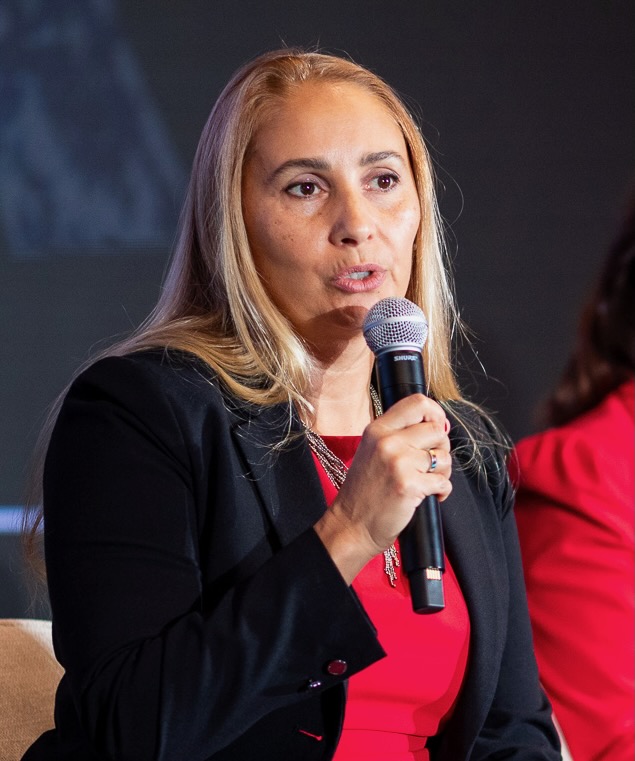 Andreea Moyes (SAF NA Congress photo)
Reema Bari, head of Aviation Americas for Shell, says the industry faces two major challenges: One is ensuring demand for projects that can take four to seven years to complete. The other is getting “bipartisan support for … policies that incentivize these complex and technologically advanced projects.”
‘Book and claim’ advanced as one solution to cost
Different projects have different economic challenges depending in part on the feedstocks they’re using and their locations. For Montana Renewables, which can produce SAF from oilseeds, corn oil, used cooking oil and tallow, one of those challenges is the cost of getting the fuel to the airports where it will be used. Shipping SAF from Great Falls, Montana, to Los Angeles, for example, costs about 37 cents a gallon.
Fleming and others in the industry argue that it would make more sense to sell the carbon benefits separately from the fuel through what’s known as a “book and claim” process. Corporations that want climate credits, for example, can buy the credits for SAF that’s been produced, and the fuel is then sold for its value as jet fuel at airports close to the SAF plants.
“If you want to make the cost lower for the final product, how about if we don't have to ship it physically and put it in the wing of a certain tail number of a certain aircraft?” said Fleming. “How about if we let the book and claim system do that for us?”
Cut through the clutter! We deliver the news you need to stay informed about farm, food and rural issues. Sign up for a FREE month of Agri-Pulse here.
Such book and claim services currently exist, but usage has been limited. Some critics say such trading in credits is prone to fraud. Notably, a group of Republican state attorneys general has recently launched an investigation into the use of renewable power credits in the tech industry.
In a letter to Microsoft, Meta, Google, and Amazon, the AGs alleged the credits allow the industry to “engage in a shell game whereby they purchase unbundled ‘renewable energy certificates’ (RECs) and then claim the ‘renewable’ attribute of energy that is used by someone else as their own energy usage.”
Alcohol-to-jet retains DOE support even as CO2 pipeline stalls
Hopes for turning ethanol into SAF have been slow to ramp up, but a leading company, Gevo, received some good news recently when Trump’s Energy Department recently extended a loan guarantee commitment for the company’s first ethanol-to-jet fuel (ETJ) facility.
Gevo is looking at moving the loan guarantee from a Lake Preston, South Dakota, site to a smaller plant in North Dakota the company acquired earlier this year. Gevo’s original plans for producing SAF at the 60-million-gallon-a year Lake Preston site have been hampered as the planned Summit carbon dioxide sequestration pipeline has stalled in the state.
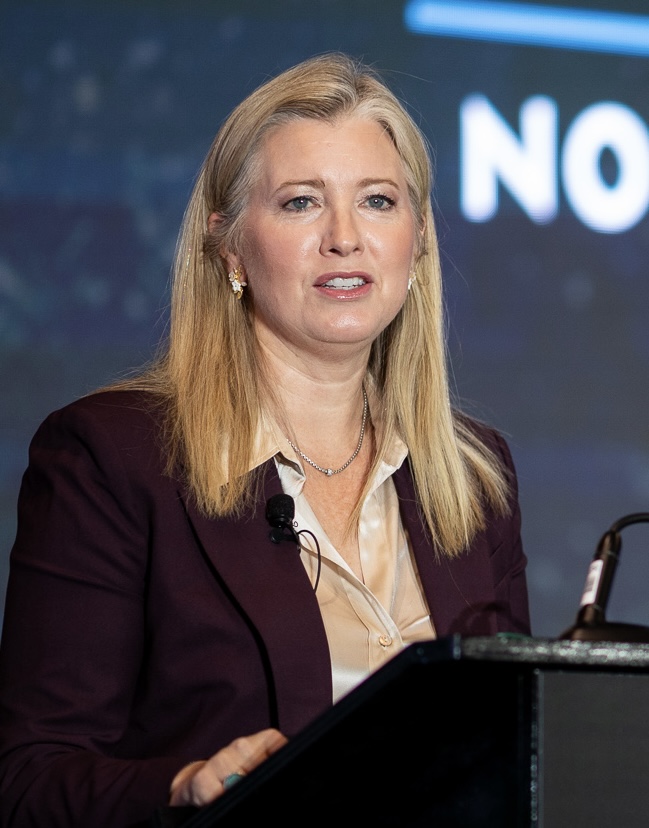 Emily Skor (SAF NA Congress photo)
Carbon from the 30-million-gallon-a year North Dakota plant can be buried near the facility. Switching the loan commitment to the North Dakota plant also would significantly shrink the size of DOE's $1.46 billion loan guarantee.
Gevo has said the South Dakota project is on hold until there’s clarity around the Summit situation. Meanwhile, it is aiming to start making SAF in North Dakota around 2029-2030.
A separate ETJ plant developed by LanzaJet in Georgia has yet to begin commercial production. Its plan to ramp up using Brazilian sugarcane ethanol has already run into challenges because of new tariffs and the restrictions on foreign feedstocks. The company missed a goal of starting full operations by the end of September.
Meg Whitty, vice president of corporate affairs and marketing for LanzaJet, said the company plans to start production “very, very soon” at a rate of about 9 million gallons of SAF and a million gallons of renewable diesel a year. Microsoft has purchased the renewable diesel to use for backup generators in data centers.
LanzaJet is looking at using as a feedstock a waste starch slurry derived from wheat and corn, she said.
Emily Skor, CEO of Growth Energy, an ethanol industry trade group, told Agri-Pulse SAF remains a “long-term” growth opportunity for her industry. But she suggested in a speech at the SAF North America conference in Houston that the SAF industry has to shift its message from focusing on climate benefits to the benefits it would provide to farmers and rural America.
“There’s a lot in terms of the value proposition here, but we have to talk about it in a way that's going to speak to the people who are making the decisions right now, and carbon performance is not going to speak to this administration,” she said in an interview.

.webp?t=1762183428)
