
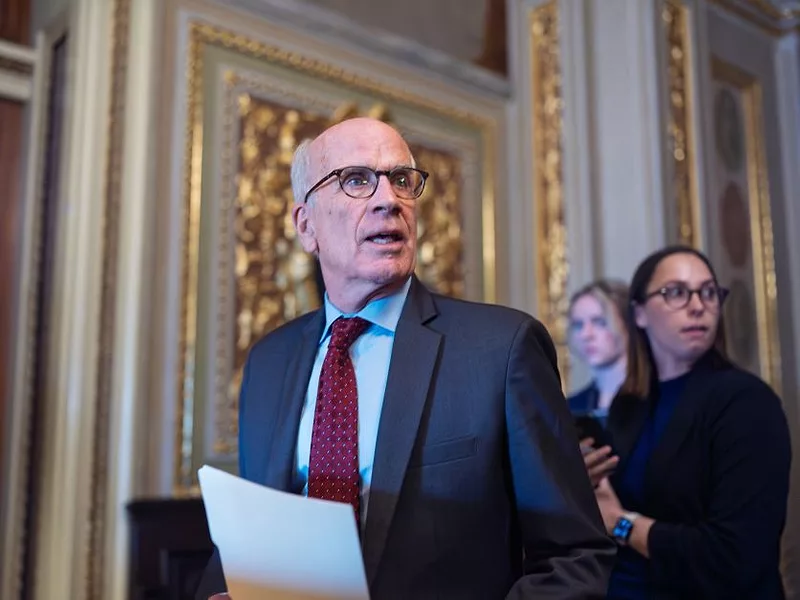
The Senate passed a bill Thursday to allow whole and 2% milk to be served at school meals.
The vote came by unanimous consent. The measure now goes to the House for approval. The House Education and Workforce Committee approved a similar bill earlier this year, 24-10.
In addition to paving the way for allowing schools to serve whole milk, which was barred by the Healthy, Hunger-Free Kids Act of 2010, the bill would allow schools to offer lactose-free fluid milk “and nondairy beverages that are nutritionally equivalent to fluid milk and meet the nutritional standards” established by USDA.
Schools will have to provide lactose-intolerant kids with a dairy-free beverage — such as soy, oat, or almond milk — "with a note from a parent, guardian, or licensed physician specifying whatever dairy-free beverage should be served to the student," Animal Wellness Action and the Center for a Humane Economy said in a news release.
Bill proponents, Sens. Roger Marshall, R-Kan., and Peter Welch, D-Vt., overcame a hold on the bill by Sen. Angela Alsobrooks, D-Md., who raised concerns about the stigma associated with lactose-intolerant children requesting milk alternatives.
Alsobrooks agreed to lift her hold after receiving assurances from Marshall and Welch to work together on the issue. The Americans with Disabilities Act classifies lactose intolerance as a disability, which Alsobrooks said on the Senate floor Thursday “can cause confusion for parents who would not refer to their lactose-intolerant child as having a disability.”
“They may not realize that they can write a letter asking for their child's school to provide a milk alternative, and it creates an undue stigma,” she said.
It’s easy to be “in the know” about what’s happening in Washington, D.C. Sign up for a FREE month of Agri-Pulse news! Simply click here
Alsobrooks said the bill will “make it easier for parents to request that their child be provided with a milk alternative if their child suffers from lactose intolerance.”
Welch said Alsobrooks’ points were valid and added that he is “enthusiastically looking forward to working with her so that we make certain that there's no stigma associated with a person who is lactose-intolerant.”
“We want to make certain that the parents have the ability, on behalf of their children, to choose an alternative that's best for their kids,” Welch said. “So, this is not about forcing people to drink milk or depriving parents of the responsibility and power they have to make certain that their kids are healthy.”
Both Marshall and Welch drank glasses of milk on the Senate floor, with Welch expressing disappointment that the milk was not from Vermont.
Marshall, a grandson of a dairy farmer, called whole milk “the healthiest option in the cafeteria” and said “bringing whole milk and nutritionally equivalent beverages to schools will help fight early onset osteoporosis, osteopenia and other diet-related diseases.”
“Whole milk delivers 13 essential nutrients and has enough fat content to help students absorb vitamins like A, D, E and K. It's also packed with protein,” he said.
The International Dairy Foods Association said in a news release that the vote "represents a major breakthrough in a long-running effort" not just by IDFA but "dairy food companies, dairy farmers, partners, school nutrition leaders, physicians and nutritionists, and parents across the country to restore access to the nutritious milk options children overwhelmingly prefer."
For more news, go to Agri-Pulse.com.

