
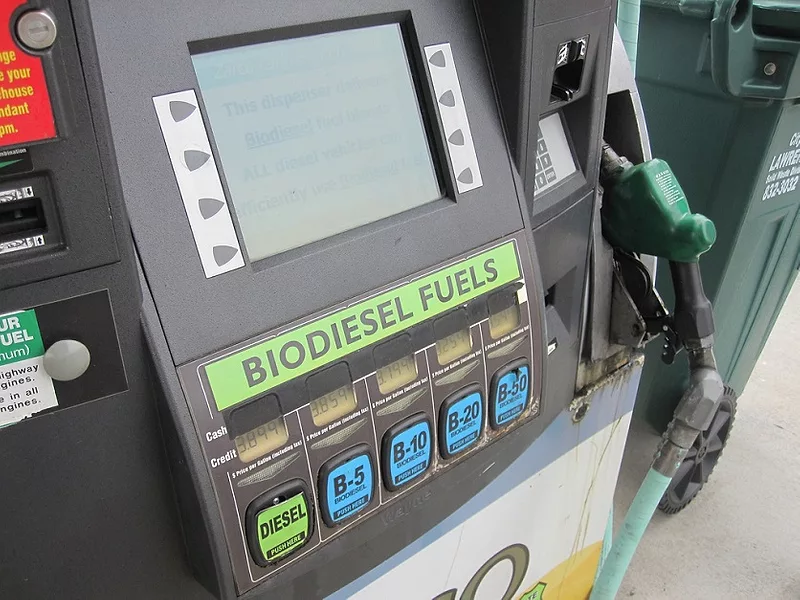
Could 2026 be a bust-to-boom story for U.S. biodiesel producers?
After losing of a key tax credit, struggling with lower-than-expected blending mandates and facing reduced output capacity, a flicker of hope has emerged that the renewable fuel’s fortunes may be about to turn for the better.
“I predict we’ll have a market recovery, and it could be a robust one,” Joe Jobe, chief executive officer of the Sustainable Advanced Biofuel Refiners (SABR), said in an interview.
That outlook depends on how a host of policy issues play out for biodiesel, the renewable fuel used to power heavy transportation like trucks and buses that’s increasingly over the years been overshadowed by more widely produced renewable diesel. Both can be made from soybeans and other crops, as well as waste oils and fats, yet renewable diesel is the near chemical equivalent of petroleum diesel, making it easier for refiners to switch to it as more big fossil fuel companies seek to benefit from federal and state clean fuel subsidies.
According to Jobe, who previously headed the main U.S. green diesel lobby for 17 years, the back seat biodiesel has taken to its flashier sibling stems from faulty policies that he's now working through SABR to remedy. After some victories out of Washington this year, beleaguered producers who are able to stay afloat could be poised for a turnaround.
Mike Reed, CEO of Renewable Biofuels, the largest U.S. biodiesel producer, is guardedly optimistic.
 Joe Jobe (SABR photo)
"There’s a scenario, yes, that looks great but we don’t have it now, and hope is typically not a good way to run a business," he said. Once federal policy changes kick in that put biofuel feedstocks on a more equal footing, Reed said his operation could see a return of twice as much revenue next year after losing the same amount in 2025 due to the loss of the flat
$1-a-gallon blenders' tax credit, an incentive biodiesel companies relied on for two decades.
Interested in more news on farm programs, trade and rural issues? Sign up for a four-week free trial to Agri-Pulse. You’ll receive our content - absolutely free - during the trial period.
Another unknown is whether the Environmental Protection Agency will come out this month with final biofuel-blending rules for 2026-27 that keep intact a big boost in mandated volumes for biomass-based diesel. "We may not know until late January or February, so producers will have missed another month and just bleeding more cash," Reed said.
Donnell Rehagen, CEO of Clean Fuels Alliance America, the top U.S. biomass-based diesel trade group that Jobe previously led, said while producers are in dire straits now, the bigger blending quota on top of new market opportunities like using biodiesel in heating oil, rail and marine are all potential boons for biodiesel.
“They've got to get back out of the valley they've been in first before they can see the light of day," he said. "But these are very resilient people. This is a huge challenge for them, I'd say it's probably one of the biggest in the history of our industry, but they're not gonna give up."
For Jobe, the push to promote biodiesel, which kicked off the biofuel boom for soybean farmers in need of new markets starting in the early 2000s, has become a life's mission. SABR formed two years ago with 20 members and today has over 75.
"It seemed like the industry had accepted that the handful of mega-refiners who did conversions to renewable diesel were just going to slowly devour biodiesel and there was nothing anyone could do about it," Jobe said. "It also seemed like the fate of soybean farmers was also just going to dry up and go away. We formed SABR to bring about a renaissance, to bring about policy fixes."
Jobe maintains that biodiesel is the "superior" fuel in slashing emissions and also that it's less costly to make.
One potential boost for biodiesel next year is new policy incentivizing use of domestic biofuel feedstocks, putting biodiesel producers in the center of the country, closer to soybeans and similar raw materials, at an advantage.
The new 45Z clean fuels tax credit will apply only to feedstocks sourced in North America. The Trump administration also is proposing to modify the Renewable Fuel Standard to slash the value of credits for fuels made from foreign feedstocks.
"There will be some folks that don't make it, but yes, I think there will be an industry on the other side of all this," Jobe says of U.S. biodiesel producers.
.webp?t=1762183428)
