
The meat, dairy and produce industries like the new Dietary Guidelines for Americans, but soybean growers, corn refiners and oilseed processors … not so much.
The Dietary Guidelines for Americans, or DGAs, guide federal nutrition programs, including school meals.
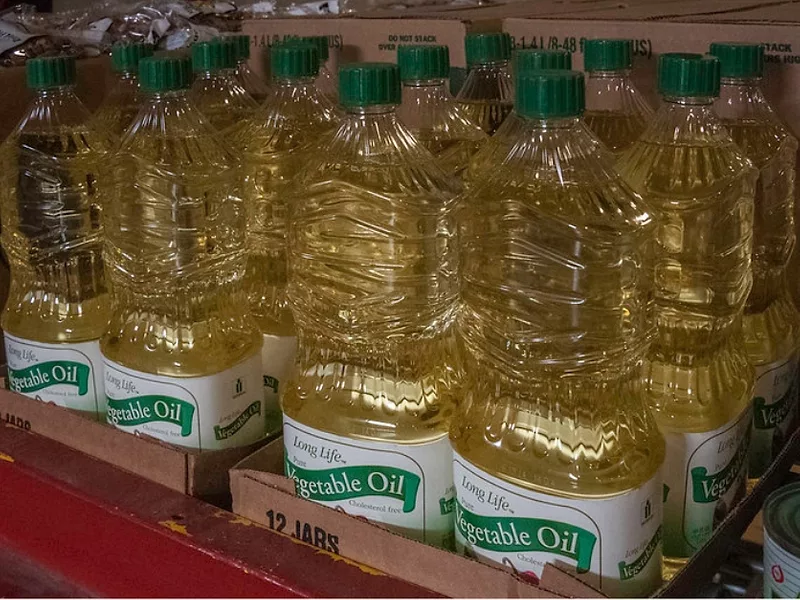
The associations representing soybean growers, corn refiners and oilseed processors don’t like language in appendices to the actual guidelines that question the safety of vegetable oils. “The report’s addenda continue to call into question the process of soybean oil extraction, which is scientifically proven to be safe for human health,” the American Soybean Association said in a news release.
The Corn Refiners Association and National Oilseed Processors Association issued similar statements Wednesday, with CRA President and CEO John Bode saying the DGAs’ “deviation from past practice undermines both the credibility and scientific foundation” of the guidelines.
Bode was referring to final DGAs recommending that Americans avoid highly processed foods, even though the guidelines’ scientific advisory committee said there wasn’t enough evidence to make that call.
NOPA also was critical, noting that the "appendices rely on a narrow evidence base with limited citations, which is concerning given the administration’s rhetoric questioning the safety of certain vegetable oils despite an established scientific consensus."
The Make America Healthy Again movement and its most high-profile adherents, including Health and Human Services Secretary Robert F. Kennedy Jr. and Food and Drug Administration Commissioner Marty Makary, say seed oils are bad for people’s health. The government plans to conduct more studies on the issue.
What’s next: Mollie Van Lieu, a vice president at the International Fresh Produce Association, says USDA officials told groups in a briefing that the department would be issuing guidance soon on what the guidelines will mean for federal nutrition programs.
“We'll be monitoring that really closely,” she told Agri-Pulse. IFPA wants to ensure that “a wide variety of fruits and vegetables are available in those programs,” Van Lieu said.
Thompson pushes for more specialty crop aid
House Agriculture Committee Chair Glenn “GT” Thompson, R-Pa., says that whatever it takes, there must be more aid for specialty crops.
The Trump administration announced a $12 billion aid package last month for farmers dealing with higher input costs, lower prices and export losses. But specialty crop producers were disappointed that only $1 billion would go to them.
President Donald Trump and other lawmakers have suggested tariff revenues could fund further assistance. The initial $12 billion came from the Commodity Credit Corporation, which is not funded by tariff revenues.
Thompson suggested using Section 32, which is topped up with tariff receipts, to provide additional support for specialty crop producers. But direct payments to farmers are currently capped at $350 million.
Thompson says diverting tariff revenue to farmers may be legally challenging, but “I'm looking under every rock,” he told Agri-Pulse Tuesday.
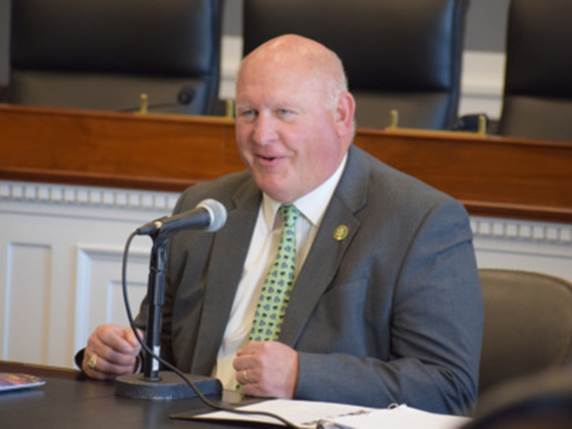 Rep. Glenn “GT” Thompson, (Agri-Pulse photo)
Lawmakers rally for E15
Efforts for a farm bill: part two are dovetailing with attempts to get key ethanol legislation over the finish line after many years of trying. Republican lawmakers who met with Trump Tuesday to discuss 2026 goals say year-round, nationwide sales of higher blends of grain-based ethanol with gasoline, known as E15, were among the topics highlighted.
“It’s a huge priority,” Rep. Zach Nunn, R-Iowa, a member of the House Ag Committee, told Agri-Pulse. “We've got a pathway to do it. We've got the legislation ready to go.”
Nunn wants an E15 measure hitched onto upcoming farm bill legislation aimed at updating agriculture provisions not addressed in last year’s One Big Beautiful Bill.
House Ag Chairman Thompson says “E15 would be very good for everybody, including the petroleum industry.”
A coalition of more than 70 biofuel and ag groups on Wednesday called on congressional leaders to pass E15 legislation, saying it would lower gas prices and help grain farmers find a home for their recent massive harvests.
Corteva, BP join forces on biofuels
Seed company Corteva and oil giant BP are teaming up to make green jet fuel and renewable diesel, and other biofuels, using canola, sunflower and mustard.
Corteva’s global business development director Ignacio Conti will be CEO of the 50-50 venture, called Etlas, according to a joint statement. Gaurav Sonar, VP of novel feedstocks at BP, will chair the board.
The goal is to combine Corteva’s century-long roots in seed technology with London-based BP's transportation fuels expertise.
It's the latest collaboration between ag and energy, as both industries look to capitalize on government incentives to boost biofuel production.
Etlas seeks to make 1 million metric tons of biofuel feedstock a year by the mid-2030s, potentially leading to more than 800,000 tons of renewable fuels. Initial production is set for 2027 for use at certain biofuel plants and co-processing at refineries.
The vegetable oils Etlas uses for feedstock will come from crops grown on existing cropland, between main food cropping seasons, allowing farmers to build their soil health and providing new revenue streams. Indianapolis-based Corteva formed a similar venture in 2023 with Bunge and Chevron.
STB to repeal longstanding rules on decision making
The Surface Transportation Board approved plans to repeal rules for prescribing reciprocal switching, through routes and through rates.
In a press release, STB Chair Patrick Fuchs says this would “embrace market forces, enable meaningful choice for American businesses as provided under the statutes, and eliminate regulatory barriers unnecessarily stifling rail competition.”
The press release says the rules were adopted in 1985 and “narrowed the agency’s statutory discretion to issue competitive access prescriptions.” They make shippers demonstrate “anticompetitive conduct” to seek board approval for remedies like reciprocal switching, or allowing one railroad to use a competitor’s tracks.
Take note: While STB unanimously adopted a reciprocal switching rule in 2024 aimed at reducing service delays, an appeals court vacated that rule last year. STB says repealing the 1985 regulations would mean the board handles the merits of such relief avenues on a “case-by-case basis."
Final Word:
“I really don't care how we do it. Congress can do it, the administration can do it, but we're going to need some additional monies.” House Ag Committee Chairman Glenn “GT” Thompson, R-Pa., on the need for more aid for specialty crop producers.
Steve Davies, Oliver Ward, Kim Chipman, Lydia Johnson and Noah Wicks contributed to today’s Daybreak.
.webp?t=1762183428)


