
|
Without more funding, public schools that serve meals to nearly 30 million kids per day likely will struggle to meet requirements in the new Dietary Guidelines for Americans (DGA) that call for increased protein, severe limitations on added sugars, and a move away from ultra-processed foods, school officials and other experts say.
But they also say they’ll simply have to wait to see how the Agriculture Department implements the 2025-2030 iteration of the guidelines, which provide the framework for not just meals for schoolchildren, but also for military families and veterans and other nutrition programs such as SNAP.
They also serve “as the evidence-based foundation for nutrition education materials that are developed by the federal government for the public,” according to the Department of Health and Human Services, which works with USDA to develop them.
The Trump administration has shown it likes to move quickly to make changes in how the federal government operates, but Ag Secretary Brooke Rollins acknowledged at a DGA release event that “unfortunately, in government, we can't go as fast as some of us would like to go.”
Nevertheless, she said USDA is working on “micro-targeted school lunch changes, but there's a lot we have to do, understanding the resources that are needed, and there's a whole infrastructure that has to be built.”
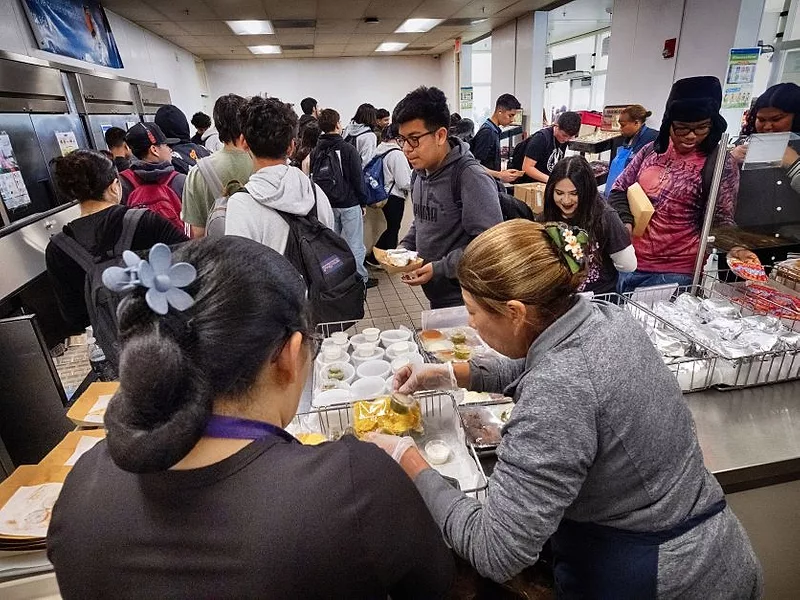
School officials say the infrastructure is generally lacking to move toward scratch cooking, which would allow schools to reduce reliance on what the administration is calling “highly processed foods.” The Food and Drug Administration is gathering information on "ultraprocessed foods" with an eye toward developing a definition.
But as with that definition, which has yet to be proposed, the guidelines will likely need a few years to have their impact felt in schools, which are still in the process of implementing changes outlined in the 2020-2025 DGAs.
“We really are going to have to see what USDA does, how they interpret [the guidelines] and apply them towards school meals,” said Nicole Melia, director of food services for the Norristown Area School District in Pennsylvania.
 Nicole Melia (LinkedIn photo
“A lot of what is in the new DGA is around fresh fruits and vegetables, dairy, protein, whole grains," which she said schools have been "doing for a long time. Those are our main components that we serve every day.”
But when it comes to making meals from scratch, school districts on the whole are not ready.
Many schools serve heat-and-serve items and don’t have room to do more, she said.
“Some schools, that's all their kitchens have space for,” she said. “We would really have to build a central kitchen to go fully scratch.” And that would be costly, she said.
A survey by the School Nutrition Association (SNA) of school meal program directors found that virtually all – 99 – “reported needing more funding, with 79% expressing an ‘extreme need’ for increased funds to further expand scratch cooking and reduce reliance on UPFs” an SNA press release said.
Jennifer Peifer, director of nutrition services for the Douglas County School District in Colorado, said food service directors will be looking to make sure that “anything that comes out is feasible for us, and feasible within the reimbursements we are given, because we're already fighting financial challenges with the current meal patterns.”
“So if you say, now we want more protein, that all comes at a cost,” she said.
The new guidelines say Americans should “prioritize protein at every meal, advising, “Consume a variety of protein foods from animal sources, including eggs, poultry, seafood, and red meat, as well as a variety of plant-sourced protein foods, including beans, peas, lentils, legumes, nuts, seeds, and soy.”
Beef prices have soared in the past year, up 16.4%, according to the latest Consumer Price Index. Pork (0.8%) and chicken (1.2%) have only increased slightly.
“Proteins are the single most expensive part of the school lunch tray, and so if we're making the portion sizes larger because we want kids to get even more protein in their diet, then it's going to come at a cost,” Peifer says.
She adds that in her district, “I have a bigger and bigger push every year for vegetarian options. So I'm also having to look at plant-based proteins and alternatives to meat, and those are, again, even higher cost than actual chicken or beef.”
The plant-based protein industry has expanded, she says, “but it hasn't grown enough, really, to bring the price down.”
 Erin Ogden (CSPI photo)
Another issue with the new guidelines, experts say, is the recommendation that children under the age of 11 not consume any added sugars. “This would limit or completely remove flavored milk, yogurt, and sweetened items,” said Erin Ogden, a policy associate at the Center for Science in the Public Interest (CSPI) who works on federal child nutrition programs, on a webinar discussing the new DGAs.
CSPI, she added, supports reducing added sugar intake, as do “the vast majority of health organizations,” but it will be “incredibly hard” to follow the advice that kids under 11 not consume any.
In its news release on the new DGAs, SNA says “school meal programs have always operated on tight budgets. For about $4.70 — less than the average price of a latte — schools must prepare a complete, nutritious lunch and cover labor, supplies, equipment and all other costs.”
The guidelines continue to recommend that Americans get no more than 10% of their calories from saturated fats, but the emphasis on consumption of protein and three daily servings of dairy will make it “nearly impossible for many people to remain under the 10% saturated fat cap – particularly without clear translation of servings into real-world measures like cups or ounces,” said Jerold Mande, CEO of Nourish Science and an adjunct professor at the Harvard T.H. Chan School of Public Health.
CSPI’s Ogden noted that the new DGAs do away with the five subgroups for vegetables – dark green (leafy greens), red/orange (bell peppers, for example), legumes, starchy and others.
“Currently, school meal programs have to have limits or specific minimums for school meals to serve throughout the week to make sure that kids are getting a variety of these vegetables,” she said. “They might do away with this in the future.”
Food program directors will be in Washington in March for SNA’s Legislative Action Conference, where they will advocate for more funding, Peifer says. “To continue allowing us to move in the direction for less processing, more scratch, more professional training for our staff, all of that requires monetary investment, so the reimbursements need to go up."

