
|
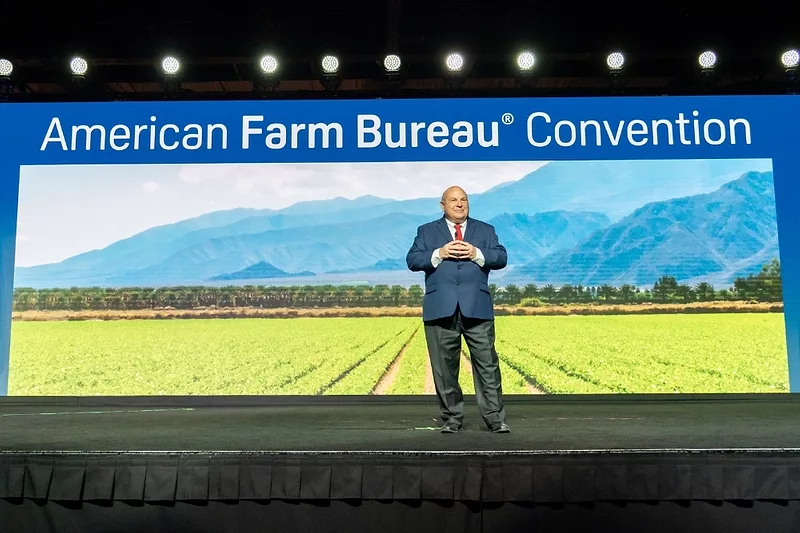
Delegates for the nation’s largest farm organization gathered in Anaheim to approve the addition of policy on data centers, New World screwworm, fair taxes and trade for winegrape growers, as well as language pushing back on the Agriculture Department’s proposal to close the Beltsville Agricultural Research Center.
And in an amendment from the floor, American Farm Bureau Federation delegates added language by unanimous consent opposing “any federally funded dairy buyout program that has the potential to create further market volatility in livestock market sectors,” according to the text.
The issue arose in the past week because “USDA started having talks about a dairy buyout program to bring down beef prices,” Mississippi Farm Bureau President Mike McCormick said when introducing the amendment.
A USDA spokesman on Wednesday flatly denied a buyout is being considered. “This is unequivocally false. USDA is not considering such a buyout full stop," he said.
Still, McCormick said at the debate, “Now is not the time to do this. We need to let the free market work. The cattle cycle, the cattle inventory will fix these issues in the cattle market, but the last thing we need to do now is to create mass confusion, mass disruptions in the cattle market.”
Data centers
A set of amendments introduced by Missouri Farm Bureau attracted the attention of Amazon and other big data center investors. Delegates approved language for the “responsible development of data centers, server facilities and other similar facilities in rural communities, recognizing their potential economic benefits while prioritizing responsible stewardship of local resources and respect for private property rights.”
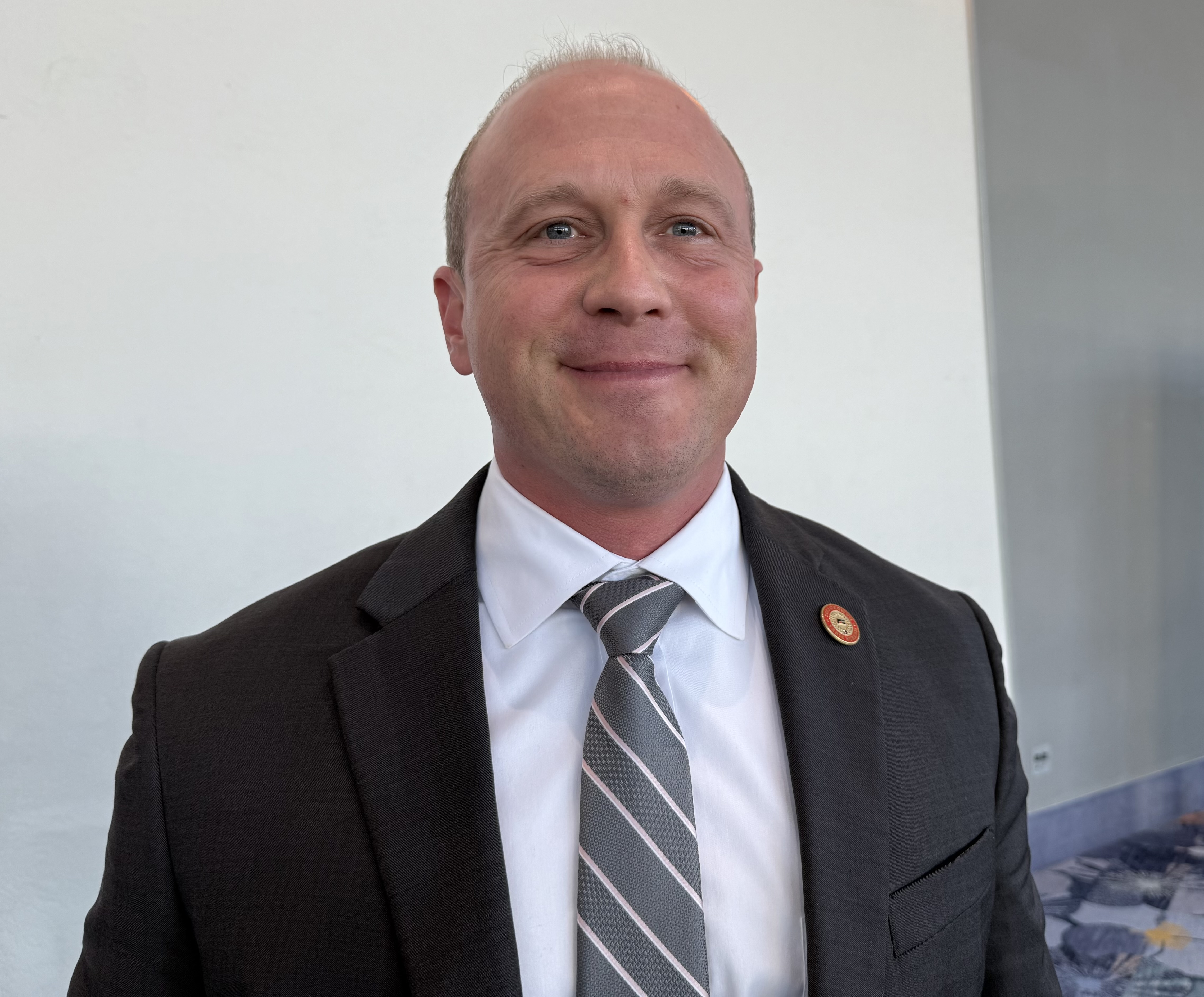 Garrett Hawkins (Sara Wyant photo)Missouri Farm Bureau President Garrett Hawkins told fellow delegates that the “proliferation” of data centers across the country is evident from the regular news coverage and is concerning, especially from a property rights perspective.
“What we don't have right now is transparency around data centers and their usage and their impacts in our communities,” Hawkins said.
“I want this delegate body to know that I think when our members spoke in Missouri, it seems like these concerns are shared all across the country with regard to data centers recognizing that there's a need,” Hawkins said, “but trying to balance that need is making sure that we are not trampled on, particularly from a private property rights standpoint.”
The data center language calls for energy consumption to be efficiently managed to minimize strain on local grids, centers be sited and operated in a manner that safeguards agricultural water supplies, and the prioritization of water resources for residential, animal agriculture and irrigation use during adverse weather conditions.
The policy also calls for the implementation of “large load tariff rates to ensure large load users like data centers are paying their fair share for energy” and residential and agricultural electrical usage demands are prioritized over large load users like data centers.
New World screwworm
Delegates added a subheading to the policy book devoted to New World screwworm, including a call to keep the U.S. Mexico border closed to cattle trade until the pest is controlled and devoting additional resources to eradication.
One Texas Farm Bureau delegate, proudly old enough to remember the last New World screwworm outbreak in the 1960s, used his discussion time to make the point that when the pests came before, “they didn’t stop in Texas.”
“This is not a Texas problem, and I don't think we need to look at it like that. We need to stop this from being a United States problem, and we don't do that by waiting ‘til the flies get to the United States,” he said. “Research is great but at this point, we don't need research. We know that we need flies.”
Eradication of the parasite was made possible by breakthroughs at the Agricultural Research Service decades ago when scientists discovered how to sterilize male flies using radiation. Female flies mate once in their life, making eradication possible when a flood of sterile males – as many as hundreds of millions per week – are dropped into infected areas.
Producing sterile male flies is still done today in a Texas facility, but ranchers and cattle producers remain concerned that’s not sufficient production given a detection of the pest within 150 miles of the U.S. border.
AFBF delegates ultimately passed language supporting federal construction of a new, state-of-the-art biocontainment animal disease and parasite research facilities, as well as the USDA-National Bio and Agro-Defense Facility serving as a Biosafety Level (BSL)-4 biocontainment animal disease and parasite research facility.
“We don't need to treat screwworms in America,” the Texas delegate said, calling for the maximum amount of resources added to the eradication efforts. “We need to stop screwworms in Mexico.”
Delegates also voted to support federal funding for research and biosecurity facilities to better identify and combat illnesses and pests that threaten the health of crops and animals.
Wine
In an amendment submitted by California Farm Bureau, AFBF adopted language supporting actions that repeal the use of substitution drawback for excise taxes on alcohol. The current per-unit taxes challenge the state’s wine growers who have torn out thousands of acres of vines as farmers deal with a declining market, California Farm Bureau President Shannon Douglass told Agri-Pulse.
AFBF delegates also adopted policy to codify a U.S. Customs and Border Protection proposal which clarifies that substitution drawback of excise taxes was never authorized under statute and has led to significant abuse. Supporting trade and tax policies that restore fair competition for U.S. agricultural producers, including winegrape growers, by closing loopholes that subsidize imports at the expense of domestic production was also added to the policy book.
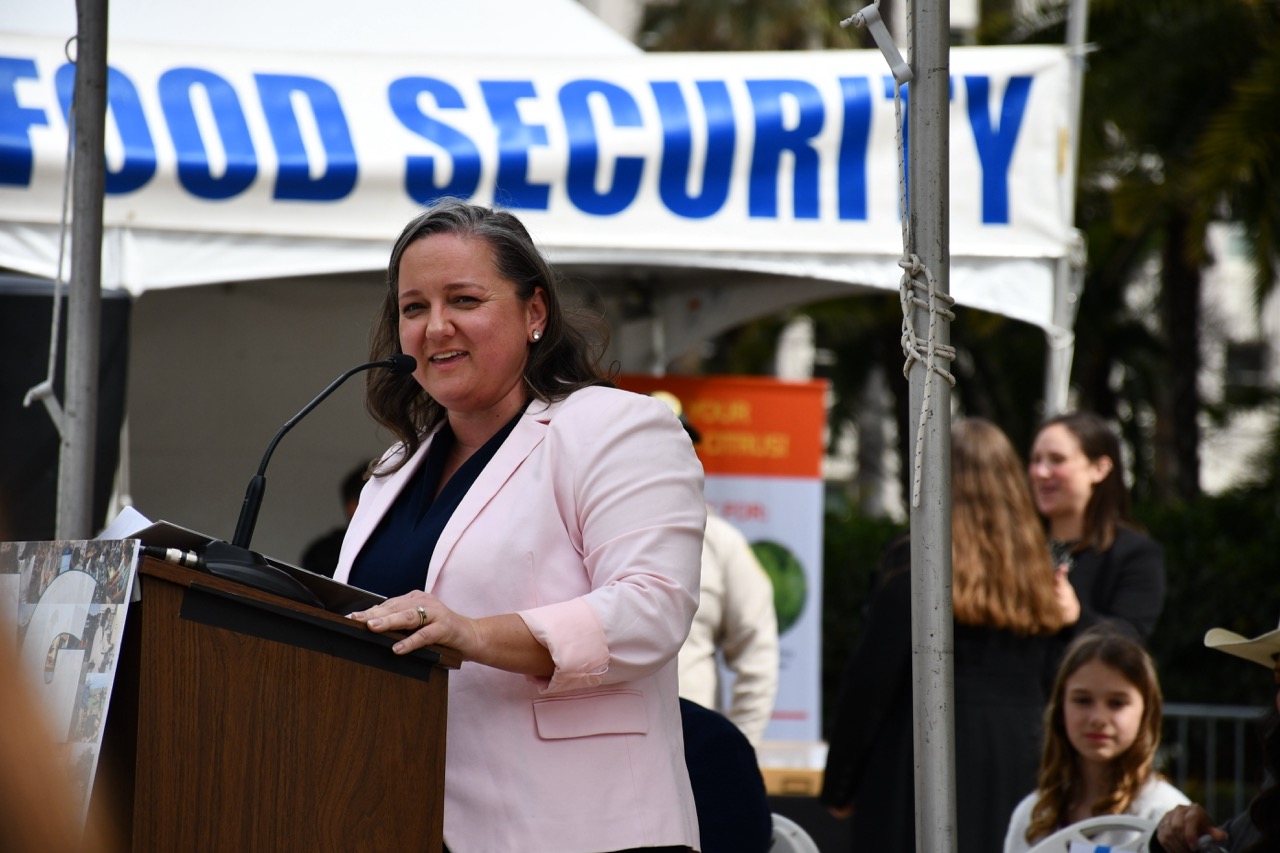 Shannon Douglass (Agri-Pulse photo)“Our members believe the current structure needlessly encourages foreign sourcing of wine to the detriment of our smaller and mid-sized producers,” Douglass said. “This resolution now gives the American Farm Bureau Federation the ability to advocate to lawmakers on fixing this loophole to better support American farmers and farmworker jobs.”
Douglass was not aware of legislation to directly address the issue in the wine sector, but mentioned the failed attempt to include a provision in the One Big Beautiful Bill Act last year.
USDA reorganization
AFBF added language to support the continued operation of USDA’s Beltsville, Maryland, research facility, citing its “its importance to the apiary industry and other segments of agriculture.”
The facility is set to be closed in the USDA’s broad reorganization led by Deputy Ag Secretary Stephen Vaden. The reorganization, which Vaden told Agri-Pulse will be complete in 2026, will also move more than half the current Washington-area staff to five regional hubs across the U.S. Relocation of USDA employees was not addressed during AFBF’s policy session.
Right to repair
Delegates updated the right to repair section of the policy book to support the implementation of legislation or a negotiated written agreement between ag producers and original equipment manufacturers.
The policy amendment states that such an agreement should be "enforceable, guarantees access to all information, parts and tools, includes all equipment, protects repair but not illegal modification, maintains existing contract rights and ensures both farmer and independent repair service access," according to the text.
Regenerative agriculture
Although not adopted, delegates debated updating the definition of regenerative agriculture.
"Regenerative agriculture is one of those nifty new buzzword terms that are out there largely undefined, except by anybody and their brother that would like to define it for us," said Dan Vogler, a member of the Michigan Farm Bureau board of directors. "Getting out in front of that, we would like to see more specific language about our definition."
Ultimately the group chose not to add language designating "any production system along with conservation practices that reduce negative environmental impacts, enhances soil quality over time, increases profitability, and stabilizes production against adverse weather conditions.”
AFBF's previous definition remains: "Regenerative agriculture should be defined as any production system that minimizes environmental impacts, maximizes production and increases the productivity of soil over time."
The group voted to add language supporting voluntary regenerative agriculture initiatives rather than mandatory programs.
Recommendations to the board of directors
In addition to policy book resolutions, voting members also recommended AFBF’s board of directors oppose the merger of Union Pacific Corp. and Norfolk Southern Corp. railroads.
Delegates also asked the board to analyze the lack of affordable insurance options for poultry farmers and impact of tariffs.
Additional approved policy changes:
- Add language to oppose any efforts by the Commodity Futures Trading Commission "to expand livestock commodity futures and options trading to 24/7 allowances.”
- Adding language to support the “United States getting out of the United Nations and the United Nations getting out of the United States.”
- Add language under the legislative branch title “banning public officials leaving office from taking employment with those they formerly regulated.”
- Add language under honey and apiculture: “A colony and hive reimbursement program to compensate producers for the loss of hives if government-mandated hive destruction occurs in the event of a Tropilaelaps outbreak."
- Add language opposing “taking away current farming chemistries or mandating certain practices that cause disruptions or reductions to American’s food independence without a science and safety-based reason to do so.”
- Add language requiring USDA and EPA “to pay just compensation for limiting the use of agricultural land by declaring wetlands. If a wetland is labelled and an easement has not been purchased, these agencies would be required to pay the landowner before placing any restrictions upon the land.”
- Add language stating that “in the event of the sale of federal lands, current permit holders of the land be given first right of refusal, with no limitation of acres and sufficient time to procure financing.”
- Adding a definition of precision agriculture to mean “managing, tracking, or enhancing crop or livestock production inputs, including seed, fertilizer, chemicals, water and time, at a heightened level of spatial and temporal accuracy to improve efficiencies, commodity quality, and yield.”

