
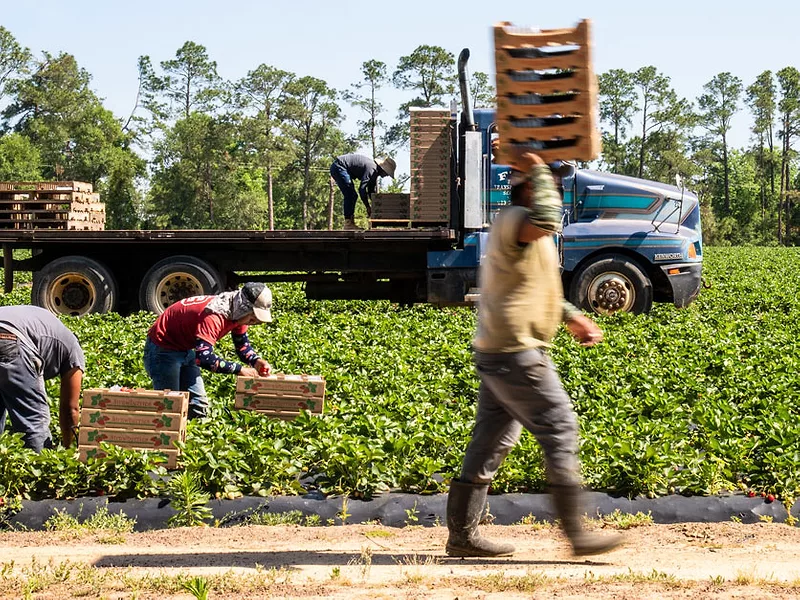
The H-2A foreign worker program saw another year of growth in 2025, with the number of certified positions increasing by 13,300 workers to 398,258, a nearly 3.5% rise from the year before, the American Farm Bureau Federation reported.
For the first time, U.S. growers applied for more than 400,000 workers; the total sought was about 415,000.
Program participation has increased 185% in the last 10 years, although growth has slowed somewhat in the last three, AFBF economist Samantha Ayoub wrote in the report.
Domestic workers continue to show little in the H-2A positions. “Only 182 positions out of over 415,000 advertised (less than 0.04%) received a domestic applicant in fiscal year 2025,” the report said.
In keeping with historical trends, five states accounted for almost half of all the positions sought – Florida, Georgia, California, Washington and North Carolina. By itself, Florida accounted for over 14% of FY 2025 certifications.
Florida was the only state of those five that saw an increase in certifications in 2025, with about 9,000 more workers requested.
Cut through the clutter! We deliver the news you need to stay informed about farm, food and rural issues. Sign up for a FREE month of Agri-Pulse here.
Ayoub noted that regulations that have since been replaced were responsible for an uptick in applications. A 2023 rule that was vacated by a federal judge last year “compelled H-2A users to be more specific and exclusive on their job descriptions, driving up the number of applications each farmer must submit during the year,” her report notes.
A new interim final rule issued in October “and other deregulation efforts give employers the ability to expand contracts to cover more workers and decrease application costs, which could increase use of the H-2A program,” the report says.
With participation in the labor force decreasing, and domestic workers expressing little interest in working on farms, “farmers and ranchers will continue to turn to alternative labor recruitment to ensure a dependable food system,” the report says.
“Mechanization in these labor-intensive industries requires much more upfront investment, research and development and will likely be cost prohibitive for small farmers; so, guestworker programs remain a crucial resource for sustaining American food production.”
For more news, go to Agri-Pulse.com.

