

Senate Democratic Leader Chuck Schumer says his party will not vote to fund the government if Department of Homeland Security funding is included in a spending bill. Schumer was reacting to the fatal shooting Saturday of Minnesota resident Alex Pretti by federal immigration officers.
The government will go into partial shutdown if Congress does not pass federal funding legislation before this coming Saturday.
Meanwhile, some Republicans want Senate Majority Leader John Thune, R-S.D., to suspend the filibuster, a procedural rule that requires a 60-vote supermajority to end debate on legislation and force a full vote. Lawmakers against that change say such a move could hurt them when or if Democrats regain Senate control.
Take note: This shutdown would have far less impact than the previous shutdown this past fall. That’s because Agriculture Department funding was signed into law in November. And funding bills for some other agencies, including the Interior, Commerce and Justice departments and the Environmental Protection Agency were signed on Friday.
Ag giants, governors urge cooperation between states, feds
Cargill, CHS, General Mills, Hormel and Land O’Lakes signed a Minnesota Chamber of Commerce statement calling on federal, state and local officials to deescalate tensions in the state.
Meanwhile, the National Governors Association issued a statement calling for cooperation between the federal government and states on immigration enforcement.
“Clarity of purpose is essential to maintaining public trust, ensuring accountability, and avoiding unintended escalation,” Oklahoma Gov. Kevin Stitt and Maryland Gov. Wes Moore said in a statement. “The use of federal authority should be guided by a transparent strategy that complements — rather than supplants — state and local efforts to uphold the law.”
Cut through the clutter! We deliver the news you need to stay informed about farm, food and rural issues. Sign up for a FREE month of Agri-Pulse here.
Stitt, a Republican, is chair of the NGA; Democrat Moore is vice chair.
E15 fallout
It’s not clear how a possible government shutdown could affect farm-state lawmakers’ efforts to include pro-ethanol legislation in a funding vehicle. A bill that would have allowed year-round U.S. sales of higher ethanol motor fuel blends, known as E15, didn’t make it into a House-passed spending package. This after small oil refiners balked at a provision to limit exemptions from national biofuel-blending rules given to certain refiners.
The issue of small refinery exemptions, or SREs, is splitting big and small oil refiners. The American Petroleum Institute wants Congress to revive the E15 bill. The powerful oil and gas lobby supports revamping the exemption process, saying the current system lacks clarity and causes market disruptions.
On the other side, a group of union workers and independent refiners praised Republican leaders in Congress for not “forcing a sweeping policy change” by advancing the E15 measure. The Fueling American Jobs Coalition says the biofuel bill would raise production costs “while eliminating one of the only mechanisms for meaningful cost relief, SREs.”
Trump assails Canada over China dealmaking, threatens more tariffs
President Donald Trump is threatening Canada with more tariffs after recent talks between Canada and China on a trade deal.
“If Governor Carney thinks he is going to make Canada a ‘Drop Off Port’ for China to send goods and products into the United States, he is sorely mistaken,” Trump wrote on social media. Trump often calls Canadian leaders “governor,” also using the nickname on Prime Minister Mark Carney’s predecessor, Justin Trudeau.
“If Canada makes a deal with China, it will immediately be hit with a 100% Tariff against all Canadian goods and products coming into the U.S.A,” Trump added.
Take note: Carney made efforts to reset relations with Beijing while visiting China earlier this month. He walked away with a deal to lower tariffs on some Chinese electric vehicles in exchange for increased market access for Canadian ag products.
Carney told reporters earlier this month that the Canada-China relationship is currently “more predictable” than its relations with the U.S. “You see results coming from that,” he said.
Carney on Sunday said that Canada has no intention of pursuing a free trade agreement with Beijing and stressed that the recent deal only cuts tariffs on specific sectors.
House committee advances bill to delist Mexican gray wolves
A bill to delist the Mexican gray wolf under the endangered species act is headed to the House floor after being passed the House Natural Resources Committee.
Mexican gray wolves roam parts of the Southwestern U.S. and Mexico. According to the bill text, the Fish and Wildlife Service documented at least 286 of these wolves in the wild and 350 in captivity.
Public Lands Council President Tim Canterbury applauded the action in a press release, saying, "This bill is a step toward alleviating the challenges southwestern producers face and would recognize the realities on the ground.”
But, but, but: Craig Miller, the southwest representative for Defenders of Wildlife, says if the bill passes, “Mexican gray wolf numbers will shrink dramatically, and it’s not a matter of ‘if’ but ‘how soon’ after."
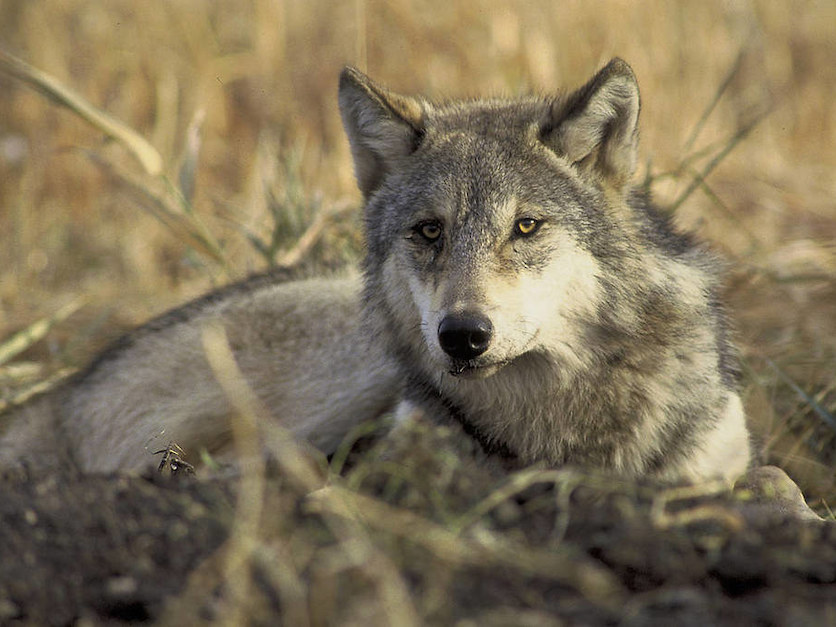 Gray wolf (USFWS photo)
Canada approves sale of gene-edited pigs
The Canadian government has approved the sale of gene-edited pigs developed to resist Porcine Reproductive and Respiratory Syndrome, or PRRS. That’s a disease that causes reproductive failure, pneumonia and susceptibility to bacterial infection.
PRRS-resistant pigs developed by PIC, a swine genetics company, may now be manufactured or imported to Canada after receiving approval from the Canadian Food Inspection Authority. The same gene edit was approved in the U.S. last April.
“Today marks a major milestone for consumers, farmers, and the entire pork industry who have hoped for relief from PRRS for decades,” PIC Chief Operating Officer Matt Culbertson said in a release.
Final Word
“States and the federal government should work together to ensure laws are enforced, communities are protected, and constitutional norms are preserved. We believe there are criminals in our country who must be held accountable, but moments like this demand thoughtful leadership, coordination, and clarity. Scenes of violence and chaos on our streets are unacceptable and do not reflect who we are.” – Republican Oklahoma Gov. Kevin Stitt and Democratic Maryland Gov. Wes Moore in a statement from the National Governors Association.
Kim Chipman, Steve Davies, Noah Wicks, and Oliver Ward contributed to today’s Daybreak.
.webp?t=1762183428)


