
A group of 27 former agricultural leaders and executives are warning of the “widespread collapse of American agriculture and our rural communities” absent swift action by Congress.
The Trump administration’s policies “have caused tremendous harm to U.S. agriculture,” they say in a letter delivered to the leaders of the House and Senate ag committees.
The letter was signed by past presidents and CEOs of the American Soybean Association, National Corn Growers Association, National Pork Producers Council, National Barley Growers Association, National Milk Producers Federation, US. Grains Council, and Renewable Fuels Association. Former leaders of the Illinois and Nebraska agriculture departments also signed.
Among the problems facing farmers, they listed increased farm input prices caused by tariffs, loss of export markets, and disruptions to the ag labor supply. They also cited “massive cuts to USDA staffing and agricultural research funding [and] reductions in foreign aid and domestic food programs.”
What they want: The group urged Congress to act immediately to exempt all farm inputs from tariffs, pass E15 legislation, renew trade promotion authority, complete review of the U.S.-Mexico-Canada Agreement, and pass a new farm bill and farm labor reform.
Farmer confidence plummets
American farmers are worrying more about their long-term prospects, according to the monthly farm economy barometer conducted by Purdue University and the CME Group.
Producers are especially pessimistic about the next five years, with the index measuring the five-year outlook dropping from 122 to 88. That’s its lowest point since September 2024.
Take note: More than half of corn and soybean producers surveyed say they will use their Farmer Bridge Assistance Program payments to pay down debt. Another quarter plan to increase their working capital. Other farmers will use their payments for family living expenses or farm machinery.
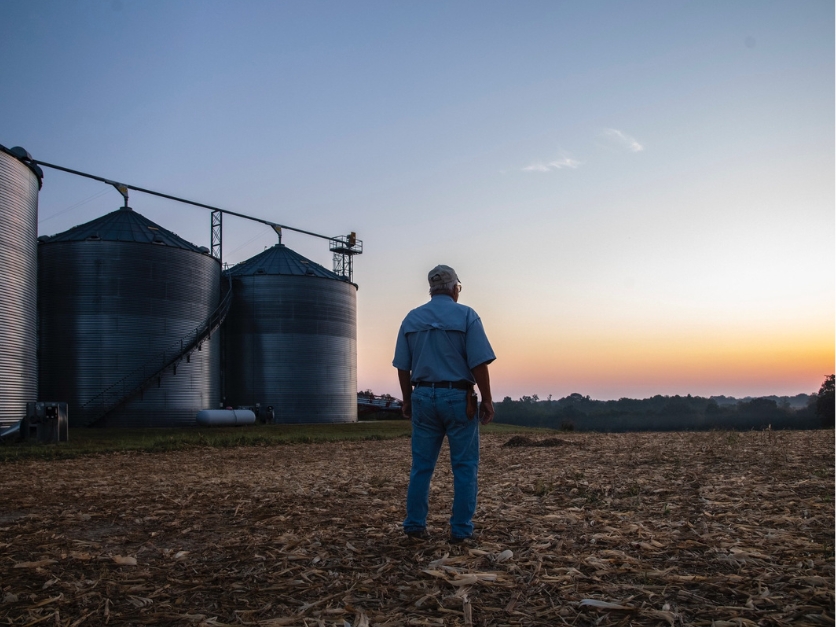 (USDA photo)
 45Z guidance is here
The Treasury Department has proposed long-awaited guidance on the clean fuel production tax credit, known by its place in the IRS code, 45Z. Reactions to the 170-page proposal range from hopeful to calls for a do-over.
National Oilseed Processors Association CEO Devin Mogler says the Trump administration needs to reinforce the proposal by finalizing proposed biofuel-blending rules under the Renewable Fuel Standard that move ahead with robust biofuel volumes and support for domestic feedstocks like soybeans.
The EPA’s proposal would cut the value of RFS biofuel credits, known as RINs, by 50% for fuels made with foreign raw materials, like Chinese used cooking oil.
NOPA issued a joint statement with the American Soybean Association praising the Treasury Department proposal, saying it would build domestic markets for U.S. soybeans.
National Corn Growers Association President Jed Bower says the 45Z plan would clear the path for farmers to start supplying the sustainable aviation fuel market. “Being able to fuel commercial planes with fuel derived from corn would be important to the long-term economic viability of farming,” the Ohio farmer says.
On the other hand: NATSO, which represents truck stops and travel plazas; SIGMA, a fuel marketing trade group; and the National Association of Convenience Stores say the 45Z proposal is a “giant step backward for American biofuel policy.”
“As Americans are navigating affordability challenges, now would be a great time to reinstate a tax policy that actually lowers the price consumers pay at the pump,” said David Fialkov, executive vice president of government affairs for NATSO and SIGMA.
Screwworm case found in transported horse, but no outbreak yet
New World screwworm was found in a horse at an import quarantine facility in Florida during a routine USDA inspection, but the event does “not constitute evidence of a U.S. outbreak,” according to Texas Ag Commissioner Sid Miller.
The horse was from Argentina and “does not appear to be associated with the NWS outbreak in Mexico,” according to a USDA release. In a separate release, the Texas Department of Agriculture said “to date, there remains no evidence of New World screwworm populations or local infestation anywhere in the United States.”
"The detection demonstrates that our federal inspection system is working exactly as designed and is an additional biosecurity tool that will protect our livestock industry,” Miller said.
Take note: Last week, USDA announced it would shift its sterile fly dispersal efforts into Texas following recent cases that have appeared in northern Mexico.
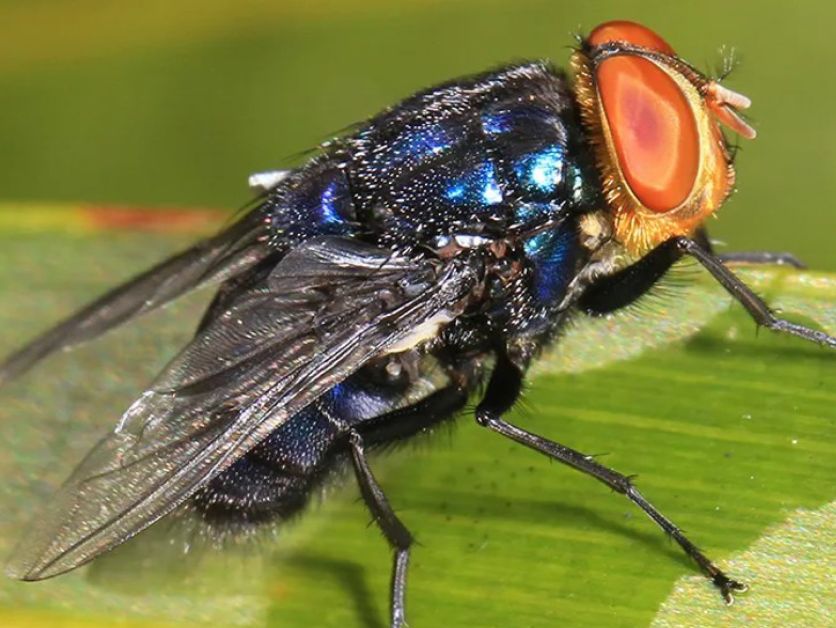 Adult New World screwworm fly (University of Arkansas photo)
USDA inspector general stresses SNAP fraud in testimony
USDA Inspector General John Walk emphasized investigating fraud in the Supplemental Nutrition Assistance Program at a House Appropriations subcommittee hearing Tuesday.
“Investigating SNAP fraud is one of my office's highest priorities,” Walk said, noting that about half of the office’s investigative cases are related to SNAP fraud, and about 36% of IG investigators’ time is spent on those cases.
The hearing was occasionally contentious, as Democrats pressed Walk on USDA’s reorganization plans and whether he was involved in USDA’s removal of the “socially disadvantaged” classification to receive program benefits.
Walk told Rep. Chellie Pingree, D-Maine, that a lot has not been decided yet on the reorganization. “It's almost like inspecting the hydraulics on the plane while we're already in the air, because it hasn't landed yet,” he said. He added he was not involved in dropping the socially disadvantaged designation when he was serving as a special adviser to Ag Secretary Brooke Rollins.
Pressing Walk for answers on reorganization, Pingree said, “Most of your testimony and much of what you've been talking about is the SNAP benefits program. And while we don't want to see any fraud or abuse there, you are not the IG of SNAP. You are the IG of the USDA.”
Partial shutdown ends
President Donald Trump signed a funding measure Tuesday that ended a partial government shutdown. The funding lapse started Saturday after Republicans and Democrats failed to reach an agreement on how to proceed with immigration enforcement policy.
The legislative package included a stopgap funding bill for the Homeland Security Department that expires Feb. 13.
Final Word
“Congress needs to assert itself on behalf of farmers if we are to avoid a widespread collapse of American agriculture and our rural communities.” – former ag leaders’ letter.
Steve Davies, Noah Wicks, Bob Ellison, and Kim Chipman contributed to today’s Daybreak
.webp?t=1762183428)


