
Leaders of the ethanol industry are feeling a sense of urgency about getting Congress this month to move legislation authorizing year-round sales of E15, although it’s not yet clear how they are going to overcome resistance among some oil refiners.
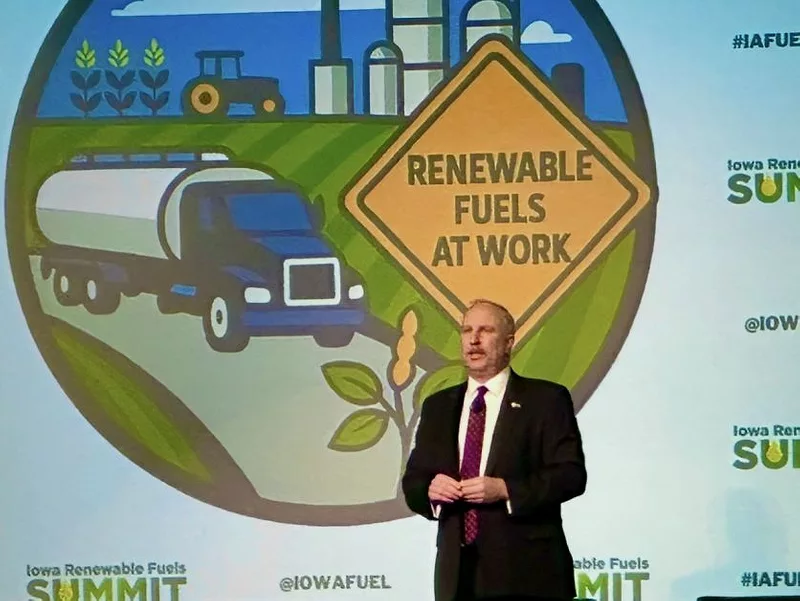
"I wake up many nights in a cold sweat wondering, how are we ever going to get this over the finish line?" Troy Bredenkamp, senior vice president of government and public affairs for the Renewable Fuels Association, said at the Iowa Renewable Fuels Summit on Thursday.
The Altoona, Iowa, meeting came on the heels of E15 legislation getting left out of a spending package passed by Congress and signed into law by President Donald Trump earlier this week.
The ethanol industry reached a deal with the American Petroleum Institute that would have allowed year-round, nationwide sales of E15 and also would have reduced the number of oil refineries eligible for exemptions to federal biofuel-blending requirements. The plan fell apart when small energy firms balked and pressed lawmakers with refineries in their states not to support it. A House task force is now trying to come up with a new plan and hold a vote
"We're fighting like hell to hold this together. To paraphrase one of my favorite Monty Python movies, we're not quite dead yet," said Bredenkamp in a reference to the 1975 movie, Monty Python and the Holy Grail.
The best near-term possibility for passing E15, if a bill could be ready in time, would be attaching it to a spending measure for the Department of Homeland Security that is needed by the end of next week to avoid a funding lapse, according to Bredenkamp. He doesn't see an E15 measure successfully being added to a farm bill, which the House Agriculture Committee is supposed to take up Feb. 23.
Iowa Renewable Fuels Association Executive Director Monte Shaw said he's concerned that without momentum on Capitol Hill this month for E15 legislation, which is needed to spur short- and medium-term demand for U.S. corn, "we won't see congressional action for years to come."
Farm state lawmakers say they are working to to find a quick solution.
About 25 lawmakers on the E15 Rural Domestic Energy Council met Tuesday night, member Rep. Dusty Johnson told Agri-Pulse. The group is "making good progress," he said without elaborating, but "we don't have time to spare."
Johnson, a member of the House Agriculture Committee, noted that the biggest hurdle so far in getting a new E15 deal doesn't involve concerns about ethanol, but on how to craft legislation that is acceptable to small, medium and large refiners.
While the American Petroleum Institute, which. represents big energy firms, supports fewer biofuel law exemptions for refiners, arguing that the current system leads to market distortions, smaller, independent refiners say the exemptions for regulatory compliance cost burdens are needed to keep their businesses running and preserve U.S. jobs.
Johnson said he believes finding the right balance in legislation is "attainable,"
But perhaps the biggest source of optimism comes from Trump recently telling Iowans he wants E15 to clear Congress and become law.
Shaw reminded the biofuel summit on Thursday that at the same IRFA event in January 2016, then presidential candidate Trump first publicly declared support for policies that would lead to higher ethanol blends at the gas pump.
In a visit last week to Iowa, the top corn growing state, Trump said he expects Congress to send him a bill "very shortly" on year-round E15, and that he intends to sign it into law "without delay."
Though for an industry that's seen E15 slip away numerous times over the last decade, Shaw cautioned the crowd not to "count your E15 chickens just yet, but our odds of success increased many fold" with Trump's backing.
For more news, go to Agri-Pulse.com.
.webp?t=1762183428)
