
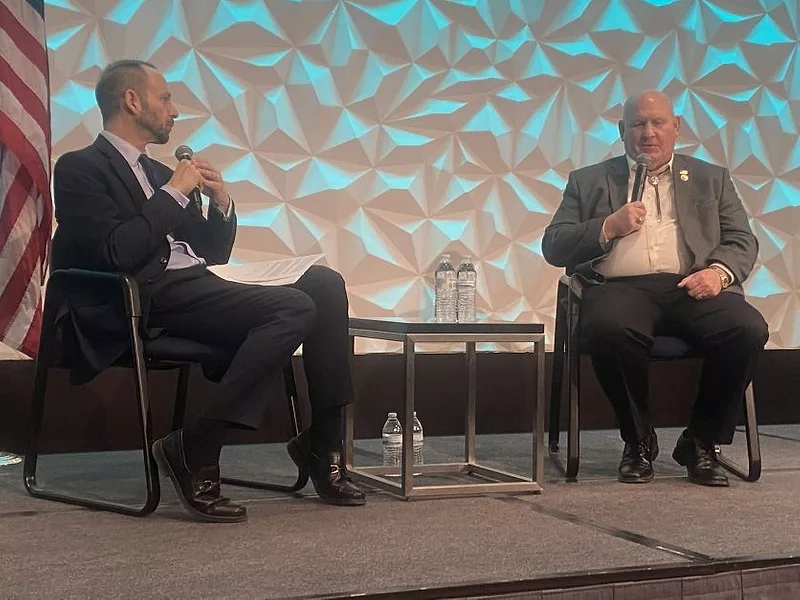
House Ag Committee Chairman Glenn “GT” Thompson is due to release the text of his new farm bill today.
This is “farm bill 2.0,” as he calls it, which would reauthorize a range of programs left out of the One Big Beautiful Bill last year. It’s expected to include some additional provisions, including one addressing California’s Prop 12, and another dealing with pesticide labeling.
The committee is due to the debate the bill Feb. 23-25.
Keep in mind: Prospects for the bill beyond the committee are cloudy at best, given the tiny GOP majority in the House and the likelihood that Democrats will be strongly opposed.
Thompson told members of the National Council of Agricultural Employers on Thursday that he had “great momentum” for the legislation, “but we can’t sustain that momentum without all of you.”
E15 passage prospects in coming weeks fading fast
Lawmakers working on a plan to allow year-round U.S. sales of higher ethanol blends, or E15, floated a proposal this week that has been roundly rejected by both biofuel and oil refining groups.
But even if a deal with broad support emerges soon, it likely needs to be attached to a larger spending bill or other legislation that Congress has to pass.
“The must-pass legislation strategy probably wouldn’t be until the end of the year,” Nebraska Republican Rep. Adrian Smith says in an interview for this week’s Agri-Pulse Newsmakers. “I’d like to get this done even before that.”
Smith insists the E15 talks are making progress although there are no details to share.
For more on the state of E15 talks, go to Agri-Pulse.com. This week’s Newsmakers will be available here today.
Thompson previews ag labor bill
Thompson also said at NCAE’s conference that he’s “a couple of weeks” away from issuing a discussion draft of an ag labor bill that he hopes to introduce as a bill before the end of March.
Thompson pointed to the work of the Agricultural Labor Working Group in March 2024 for insight on what would be in the legislation. The group made up of eight Republicans and eight Democrats on the committee adopted 15 recommendations unanimously.
Among them: Requiring the Labor Department to consult with USDA before issuing any proposed rules; streamlining recruiting and hiring in the H-2A program; granting year-round industries access to H-2A workers; and implementing a federal heat standard.
The House Agriculture Committee will not have jurisdiction over the legislation; the House Judiciary Committee, chaired by Ohio Republican Jim Jordan, will.
But Thompson said he has spoken with Jordan, “and I think he's ready to do some good work when it comes to his area of jurisdiction, and certainly when it comes to providing certainty to America's No. 1 industry, which is agriculture.”
Lawmakers launch bipartisan effort to claw back some tariff powers
Reps. Linda Sánchez, D-Calif., and Mike Turner, R-Ohio, have introduced the Respect NATO Allies Act, which would have Congress vote on any new tariffs on NATO allies. It comes as several lawmakers prepare to travel to Europe for the Munich Security Conference.
“NATO is the United States’ greatest strategic alliance and the relationship with our transatlantic allies must be preserved,” Sánchez said in a statement. She is the ranking member on the Ways and Means Trade Subcommittee. “Congress has constitutional authority over trade and any new tariffs against our closest friends and allies should require congressional approval to protect those relationships and our national security.”
White House unveils two new trade pacts
The U.S. has unveiled new trade deals with North Macedonia and Taiwan.
Taiwan will scrap or reduce tariffs on 99% of goods, according to a fact sheet from the Office of the U.S. Trade Representative. Tariffs are set to end on U.S. beef, lamb, seafood, dairy, potatoes, vegetables, legumes, nuts and fruits.
The deal also streamlines processes for exporting U.S. beef, poultry, pork and processing potatoes, the White House said, and protects common names for meat and cheeses.
In a joint statement, Northern Macedonia said it agreed to “eliminate customs duties for all U.S. industrial and agricultural goods.”
Taiwan currently maintains an average tariff rate of almost 17%, according to the World Trade Organization, while North Macedonia’s is close to 13%.
Lawsuit seeks final monarch butterfly rule under Endangered Species Act
The Fish and Wildlife Service is facing a new lawsuit for failing to issue a final decision on whether to list the monarch butterfly under the Endangered Species Act.
The lawsuit was filed Thursday by the Center for Biological Diversity and the Center for Food Safety. It seeks a court order requiring a deadline for the service to issue a final listing decision, which under the ESA is supposed to be completed within a year of a proposal.
Take note: FWS issued its proposed rule to list the monarch as threatened in December 2024 to comply with a settlement reached with the Center for Biological Diversity. The proposal suggested exempting several agriculture-related activities from the ESA’s prohibition against species “take,” including livestock grazing, rangeland haying and fire management.
Broadband mapping bill passes out of Senate Commerce Committee
The Senate Commerce Committee on Thursday unanimously passed a bill requiring the Federal Communications Commission to reevaluate its broadband funding map, which guides where federal broadband funding goes. It now can go to the Senate floor.
The bill also requires a Government Accountability Office report on whether the FCC is authorized to collect enough data from other agencies to fill out the map, as well as its coordination with other agencies that fund broadband deployment efforts. Those agencies include the National Telecommunications and Information Administration and the Agriculture Department.
Final Word
“We need that bridge operational. … I think it's important for us in Michigan to help amplify the importance of that project for broader North American trade.” – Chuck Lippstreu, president of the Michigan Agri-Business Association, responding to President Donald Trump’s threats to block the opening of a new bridge between Michigan and the Canadian province of Ontario.
Lippstreu and other members of the association were in Washington earlier this week to meet with lawmakers and administration officials on U.S. ag trade issues, including the future of the Gordie Howe International Bridge.

.webp?t=1762183428)


