
|
The Conservation Reserve Program this year will likely see increased interest from farmers seeking a consistent source of income from less productive acres in a tough commodity market, according to conservation policy experts.
However, available space in CRP will be limited, as acreage enrolled in the program remains around 1.9 million acres below the 27-million-acre cap, making competition tight.
“There's always intense competition for the acres available,” said Jonathan Coppess, an associate professor at the University of Illinois. "I would think that competition for acres would be increased in this time of uncertainty.”
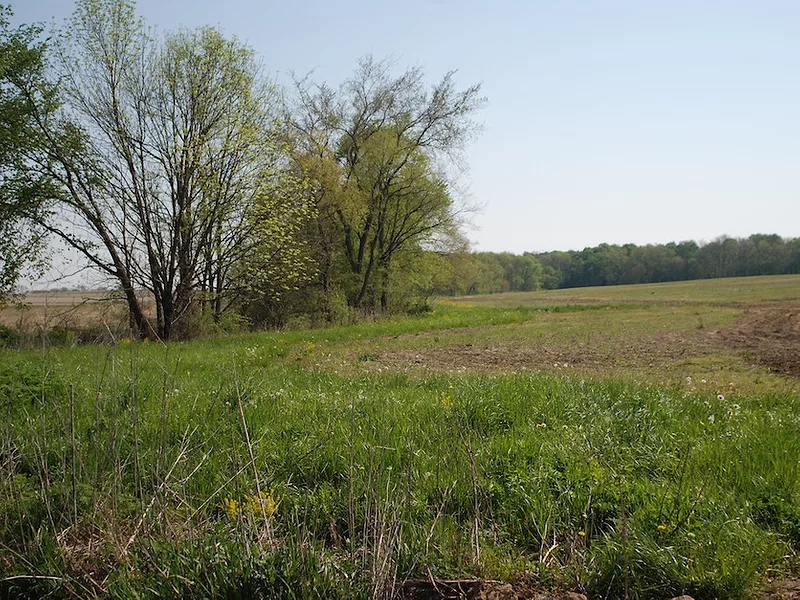
CRP pays farmers to remove environmentally sensitive land from production, although activities like haying or grazing can continue in some circumstances. It has three main sub-programs: General, Grasslands and Continuous.
General CRP focuses on retiring whole fields from production for 10 to 15 years, while continuous CRP targets smaller parcels through practices like buffers and filter strips. Grassland CRP allows farmers to graze land they enroll, which can only be done in “emergency” conditions in a general signup
USDA announced last week that it would accept offers for Continuous CRP between Feb. 12 and March 20, and General CRP from March 9 through April 17. The agency has not announced Grasslands CRP signup dates.
Undersecretary for Farm Production and Conservation Richard Fordyce acknowledged in a press release that enrollment “is likely to be competitive” with 1.9 million acres available this fiscal year across all three sign-ups.
About 25.8 million acres were enrolled in CRP as of last September, according to a USDA press release.
One of CRP’s original functions was to conserve highly erodible and poor quality lands. However, Coppess said CRP also has a dual purpose of helping to reduce oversupply of crops.
 Jonathan Coppess (University of Illinois photo)
He said the stability the program offers might appeal to farmers currently facing uncertainties surrounding trade and markets, particularly for crops like soybeans.
“[For] soybeans in particular, there’s a lot of additional uncertainty in the market,” Coppess said. “In that case, it makes sense if you had acres, you could get them enrolled. That’s a 10-year contract with a guaranteed rental payment for those 10 years, so it could be a real option, particularly if your field is underperforming.”
However, he added that the 27-million-acre enrollment cap is going to create “a real scramble and struggle” within USDA to determine which acres to enroll, which “really complicates the program and complicates its purposes, particularly in a moment like this.”
USDA data from last July indicate that 8.4 million was enrolled in Continuous CRP, 9.6 million in Grasslands CRP, and 7.1 million in General CRP. Grasslands CRP has seen a significant increase in acreage over the years since its introduction, making it competitive with general and continuous.
CRP offers farms some certainty for income
Ivy Jean Reynolds, founder and principal of the Agrarian Policy Center, said consistent income over a period of time may appeal to producers, particularly in light of current input costs. While those who enroll need to plant cover, the program provides a cost-share to help them do so, she added.
“I think people who are at the margins and are saying, ‘I’ve got to figure out how to make some sort of reliable income’ are likely looking at CRP as a potential here,” Reynolds said.
In particular, Reynolds expects to see a possible uptick in interest in the general CRP signup. She also said continuous may have appeal for producers, since farmers could see higher payments through that sign-up than others, though that depends how much availability there is for enrolling whole fields and what producers' agreements look like.
Reynolds said producers looking for the best shot at securing a place within CRP should submit offers through both the continuous and general signups to have two chances for getting in.
 Andrew Schmidt (LinkedIn photo)
Continuous CRP, unlike the other two sign-ups, typically allows offers to be submitted and accepted throughout the year. However, Andrew Schmidt, director of government affairs for Pheasants Forever, said USDA will likely use “batching periods” for this year’s continuous signups, in which the agency accepts eligible applications on a first-come, first-served basis within a certain set of dates. If additional space is available following the results of the other two sign-ups, he said the agency may open new batching periods later in the year.
“They'll take stock of how many acres have come in through that continuous signup. They'll take stock of where the general signup stands once it ends in April, and then, in all likelihood, have some more batching periods for more acres to come in,” Schmidt said.
Signup takes place amid some uncertainty
Coppess said that, legislatively, the Conservation Reserve Program is in an uncertain state, which may either dampen or heighten producers' interest in the program. While four major farm bill conservation programs were reauthorized through the One Big Beautiful Bill Act last year, CRP was not. Congress extended it through this year, but reauthorization depends on whether Congress can pass a new farm bill this year or will simply reauthorize the existing one.
Coppess said uncertainty regarding CRP’s statutory future may push some producers away from the program, but the lack of clarity may inspire others to try to lock in 10-year contracts to assure certainty in years ahead.
“It could cut multiple ways,” Coppess said.
House Agriculture Committee Chair Glenn "GT" Thompson, R-Pa., announced a farm bill framework last week that would reauthorize CRP through 2031. It maintains the 27-million-acre cap.
Still, Reynolds noted Thompson's bill may be a tough sell for House Democrats following some of the changes made to the nutrition title last year through last year’s One Big Beautiful Bill Act.
“I think that the farm bill coalition, as it’s historically been, is in a very precarious place right now,” she said, adding, that she thinks " the minority is really going to need to see something” in the nutrition title that they would favor.

