
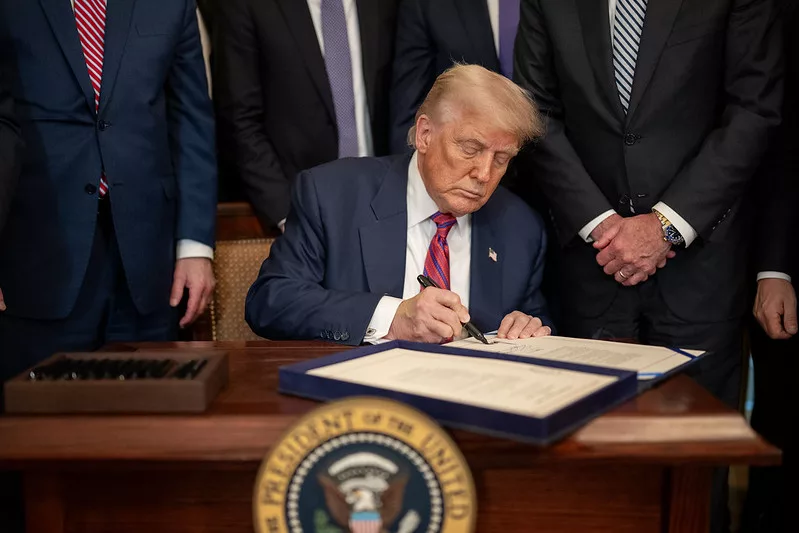
The U.S. and Indonesia finalized a trade pact to lower tariffs on each other’s products on Thursday and boost ag purchases, with President Donald Trump and Indonesian President Prabowo Subianto signing an agreement during the latter’s visit to Washington. Subianto was in Washington to participate in the first meeting of the U.S.-led Board of Peace initiative.
The deal will see Indonesia eliminate 99% of tariffs on U.S. exports, according to a White House fact sheet on the deal, while the U.S. keeps its reciprocal tariff rate of 19% – down from the 32% initially threatened last year.
A tariff schedule published as part of the deal shows tariffs will be lifted on a range of commodities, from rice to fruits, potatoes, vegetables, fish and meat. Other ag and food products will be subject to tariff-rate quotas.
The two sides published details of the deal in July, including Indonesia’s commitment to buy $4.5 billion of U.S. agricultural products, exempt U.S. food and ag products from its import licensing regime and eliminate pre-shipment inspections, as well as provide permanent recognition for U.S. plant products under Indonesia’s Fresh Food of Plant Origin scheme and recognize U.S. regulatory oversight of meat, poultry and dairy facilities.
The agreement text published Thursday night, however, provides additional details.
The Indonesian government is expected to facilitate $4.5 billion in agricultural purchases, including by importing at least the following annual volumes over the next five years:
- 163,000 metric tons of cotton (150,000 tons thereafter)
- 3.5 million tons of soybeans (2.5 million tons thereafter)
- 3.8 million tons of soybean meal (200,000 tons thereafter)
- 2 million metric tons of what (1.3 million tons thereafter)
Indonesia is also expected to meet minimum import volumes of the following commodities:
- 26,000 metric tons of apples
- 50,000 metric tons of beef
- 3,000 metric tons of citrus fruits
- 100,000 metric tons of corn
- 150,000 metric tons of corn gluten meal
- 1,000 metric tons of ethanol
- 5,000 metric tons of grapes
- 1,000 metric tons of rice
However, the agreement notes that if Indonesia fails to live up to these commitments, the U.S. will not consider Indonesia to have violated the deal, provided it has not imposed a trade barrier to prevent imports.
The initial announcement in July also included a commitment to protecting generic terms for meats and cheeses. The specific meats and cheeses are laid out in the agreement text published Thursday, and include feta, mozzarella, prosciutto and pecorino.
The deal also commits Indonesia to opening its market to U.S. agave, bulk almond hulls, Helleborus tissue culture plants and livestock after six months. It will also allow imports of various chicken parts.
U.S. Trade Representative Jamieson Greer argued that the deal represents a “landmark” agreement between the two countries.
“President Trump is unlocking Indonesia’s market of over 280 million people to create commercially meaningful opportunities for American farmers and manufacturers,” he said in a statement.
Various U.S. ag industries welcomed the news of the deal’s finalization.
U.S. Meat Export Federation President and CEO Dan Halstrom said the deal includes substantial wins for U.S. exporters.
“Currently, Indonesia is essentially closed to U.S. beef due to its trade-limiting import licensing system and effective cap on imports. The new agreement addresses the many barriers maintained by Indonesia, and successful implementation will allow Indonesian importers and consumers to have meaningful, consistent access to U.S. beef for the first time,” he said.
USMEF estimates that the deal could lead to $400-$500 million additional exports of beef.
The U.S. Dairy Export Council, National Milk Producers Federation and Coalition for Common Food Names also celebrated the deal.
“The common names protections included in this agreement are especially important for America’s farmers and exporters,” said Jaime Castaneda, executive director of CCFN. The country is currently the eighth largest market for U.S. dairy products, with $222 million of sales in 2025, the groups note.
“Ensuring U.S. producers can continue to market and sell products like ‘parmesan’ and ‘feta’ in Indonesia without unfair restrictions helps preserve export opportunities and supports the livelihoods of farmers and manufacturers across the United States,” Castaneda added.
For more news, go to Agri-Pulse.com.

