
|
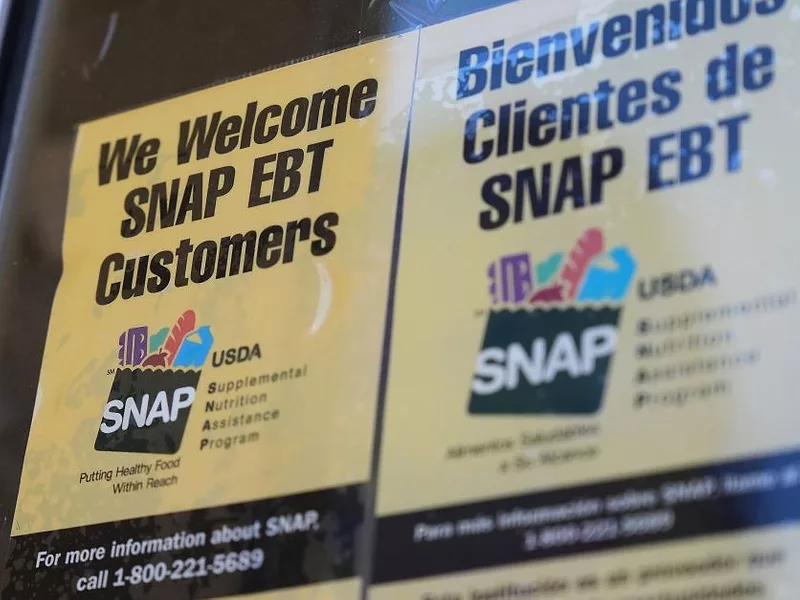
The Trump administration’s proposal to require retailers who participate in the Supplemental Nutrition Assistance Program to carry more whole foods is facing pushback from convenience stores that say it could drive them out of the program.
The Food and Nutrition Service proposal published in September seeks to more than double, from 12 to 28, the varieties of whole foods sold by SNAP retailers.
Ag Secretary Brooke Rollins said at an event in Washington Jan. 8 that in order to make whole foods accessible across the SNAP landscape, “Starting almost immediately, we are doubling what's called the stocking standard, making sure that if [retailers are] going to take a tax dollar on behalf of those with the least among us, that they will have twice as many healthy alternatives to choose from,” in line with the newly released Dietary Guidelines for Americans.
The final rule does not appear to be imminent, however. It has yet to be sent to the Office of Management and Budget for review, the final step before it can be published. Eve Stoody, director of the nutrition guidance and analysis division at the Center for Nutrition Policy and Promotion in FNS, said at last week’s Agricultural Outlook Forum that the final rule “will be coming out soon.”
USDA did not respond to a request for comment on when it might be published.
Small retailers who commented on the proposal say the new requirements are unworkable for them and for consumers. It would require stores to offer seven varieties from four “staple food” categories: protein (currently meats, poultry and fish), grains (which is now breads and cereals), dairy, and fruits or vegetables.
It’s the grains and dairy categories that have small food retailers most worried.
“Our concern is that if those two areas aren't fixed in this final version of this rule, we're going to see more and more stores leave the program,” Margaret Hardin Mannion, director of government relations at the National Association of Convenience Stores, said in an interview.
 Margaret Hardin Mannion (NACS photo)
Formal comments submitted by NACS and two other groups go further. Along with NATSO, which represents travel centers and truck stops, and SIGMA, which represents fuel marketers, NACS said the proposed rule “dramatically narrows the staple food varieties available in the grains category and significantly narrows the staple food varieties available in the dairy category. The “unworkable” proposal “risks pushing tens of thousands of stores out of SNAP.”
USDA’s proposal would make all bread one variety, regardless of the type of grain used. The 2016 rule the program is operating under now includes bread, bagels, buns/rolls, English muffins and pitas for each type of grain in that category. The proposal would add whole grains to the list but treat the previously separate varieties as just one.
USDA said in a summary of the proposal that the categorization in the 2016 rules “introduces too much confusion as to which category a particular bread form falls under,” citing as examples tortillas, croissants, cornbread or matzo bread.
Indicating a desire to have more people make their own meals, USDA said “raw grains and flour, which are not only generally more easily identifiable on account of having the grain clearly indicated on the front of the package, are also important components for the preparation of numerous foods.”
“Essentially, what they've done is they're really, they want us to stock raw grains and grain-based flours,” Mannion said. “So, potentially we have a rice, potentially we might have rolled oats, but we're not going to stock any other kind of grain, essentially, in that category.”
Getting to seven distinct varieties in the grains category “is not feasible for our store formats,” Brittany Bayley-Murray, vice president of marketing at Huck’s Market, said in comments. Huck’s has more than 130 stores in Illinois, Indiana, Missouri, Kentucky and Tennessee and employs more than 2,500 people.
“Our stores already offer a wide variety of popular grain-based products, including breads, bagels, rolls, tortillas, cereals and ready-to-eat items that our customers purchase daily,” she said. “The reclassification of all bread products into a single variety and all breakfast foods into another removes the flexibility retailers need to meet USDA requirements while serving customer preferences.”
Mannion emphasizes that point. “Even though we might have English muffins, sliced bread, hot dog buns, bagels and tortillas on our shelves, that's five to you and me, but to USDA, they're saying that just counts as one.”
“As written, the proposal defines varieties of staple foods within the grains category in a way that departs from common understandings of what constitutes different foods and restricts potential offerings in ways that are unworkable for consumers,” Kim Cooper, vice president of government affairs at the North American Millers’ Association, said in comments.
The proposed dairy category has also come in for criticism. Mannion notes that the proposal puts all cheeses into one subcategory of dairy. “Even though you might have a cream cheese, a mozzarella, a cheddar, in your cold case, you can only use one of those to get to seven, so they're not really affording us any flexibility … to use the products that we're stocking on shelves to get to seven.”
NACS, NATSO and SIGMA said in comments that a proposal released during the first Trump administration “sensibly treated full fat and reduced fat cow’s milk as separate staple food varieties, [but] the proposed rule abolishes this distinction. The same is true for full fat and reduced fat yogurt and cheeses.”
 Miquela Hanselman (NMPF photo)
The National Milk Producers Federation also has concerns. NMPF “strongly believes that flavored milk and yogurt should count as varieties under the dairy category,” Miquela Hanselman, director, regulatory affairs, said in comments. “These products meet the standards of identity for milk and yogurt, respectively, and therefore are clearly ‘perishable liquid milk’ and ‘yogurt (non-liquid),’ to use the names selected by [FNS] for dairy categories.”
NMPF also said the proposal’s limit of three plant-based alternatives that can count as alternatives in the dairy category is too many.
“NMPF believes that no plant-based product other than fortified soy should count as a dairy variety,” Hanselman said. “These products are not nutritionally equivalent to milk, as a number of medical and public health organizations have noted.”
But the League of United Latin American Citizens said there aren’t enough plant-based alternatives.
“The proposal to limit plant-based dairy options to three varieties may look like a technical choice, but for many families it determines whether they can eat without discomfort,” the group said in its comments. “According to a 2024 report from the National Digestive Diseases Information Clearinghouse, between 30 million and 50 million Americans cannot digest lactose.”
“A 2002 study from the American Academy of Family Physicians shows that lactose intolerance is concentrated in communities of color and is present in 80 percent of black and Latino people and nearly all Native Americans and Asian Americans, compared with only 15 percent of individuals of northern European descent,” LULAC said.
FNS acknowledged that many small retailers have expressed concerns about being able to comply with the proposal’s requirements, particularly the dairy and protein categories.
Small-format retailers make up about 45% of all SNAP-authorized operations, FNS noted in its summary of the proposal.
An analysis of about 122,000 small-format stores “determined that, in terms of meeting the higher number of staple food varieties required by the 2014 Farm Bill, 81% of the small stores already stocked enough grains and 83% already stocked enough fruits and vegetables, while only 63% already stocked enough protein and only 52% already stocked enough dairy,” FNS said.
Another bone of contention involves so-called “accessory” foods, which cannot be used to count toward the stocking requirements. Mannion notes, for example, that the proposal would move jerky to the accessory foods list, “so we would no longer be able to count it as a variety of food in the protein staple food category.”
Noah Wicks contributed to this story.

