
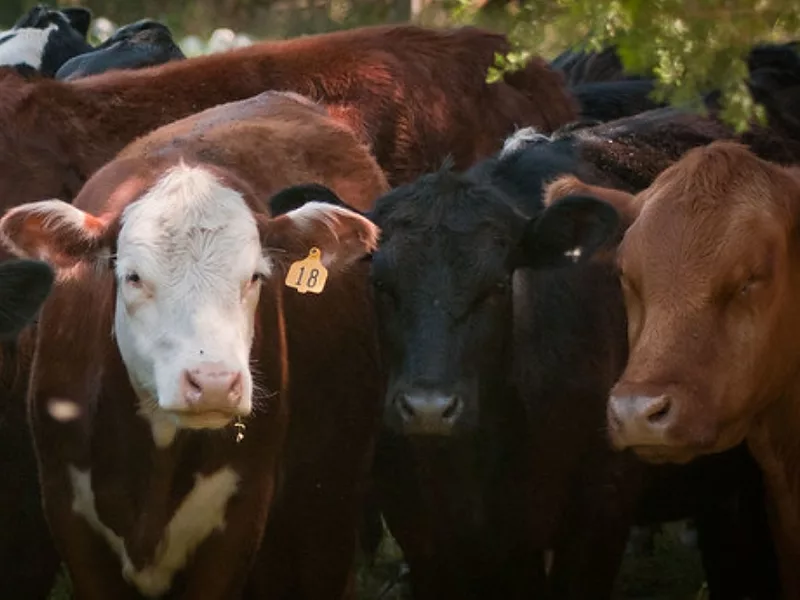
Researchers are taking a closer look at whether a seaweed feed additive known for sharply reducing methane emissions in cattle can work under the less controlled conditions of open rangelands.
A new study led by University of California scientists examines whether the red seaweed Asparagopsis taxiformis can be delivered effectively to grazing cattle. While earlier trials have shown dramatic methane reductions in feedlots and dairies, those systems allow supplements to be mixed directly into daily rations — something that is far more difficult for cattle roaming large pastures.
Methane produced during digestion — known as enteric methane — is a potent greenhouse gas and a major contributor to agriculture’s climate footprint. Researchers have found that small amounts of Asparagopsis can disrupt microbes in a cow’s stomach that generate methane. Controlled feeding trials have shown the additive can reduce methane emissions by as much as 80% to 90%.
The challenge is delivering the supplement consistently to grazing animals.
Interested in more news on farm programs, trade and rural issues? Sign up for a four-week free trial to Agri-Pulse. You’ll receive our content - absolutely free - during the trial period.
Unlike feedlot cattle that eat daily rations from troughs, grazing cattle rely primarily on pasture forage. Supplements are typically provided through mineral feeders that animals visit voluntarily, making it harder to ensure each animal consumes enough of the additive to maintain methane reductions.
To address this, the study is testing ways to incorporate seaweed into mineral supplements or pellets that cattle will eat while grazing. Researchers are also evaluating whether the additive affects animal health, weight gain or grazing behavior.
Early trials suggest the strategy may still deliver meaningful results. Research with grazing cattle has shown methane reductions of roughly 35% to 40% when seaweed supplements are delivered in pelletized form, while cattle maintain normal growth and productivity.
Even so, scientists caution that broader adoption will depend on overcoming economic and logistical barriers. Producing enough Asparagopsis at scale remains a challenge, and ranchers would need reliable ways to deliver the supplement across large rangelands.
Interest in methane-reducing feed additives is growing as policymakers and livestock producers look for ways to curb agricultural emissions without reducing herd sizes. Cattle are one of the largest agricultural sources of methane worldwide, largely due to the digestive process that helps them break down grass and other forage.
The new research aims to determine whether seaweed supplements can move beyond controlled feeding trials and become a practical tool for cutting methane emissions in the grazing systems that dominate much of the beef industry.

