
The Trump administration faces a 2 p.m. deadline today to report to the U.S. Court of International Trade (CIT) on its plan to refund tariff collections made under the International Emergency Economic Powers Act.
The deadline was set by CIT Judge Richard Eaton, who ordered a brief status report from U.S. Customs and Border Protection outlining how the administration intends to issue refunds.
In a filing last week, CBP said it could begin issuing refunds by late April, noting it needs about 45 days to build an automated system to process the payments.
Government data show CBP collected roughly $166 billion in tariffs from more than 330,000 importers that must now be refunded with interest following the Supreme Court’s decision striking down the use of emergency tariffs.
Dozens of lawmakers push administration to press Japan on potatoes
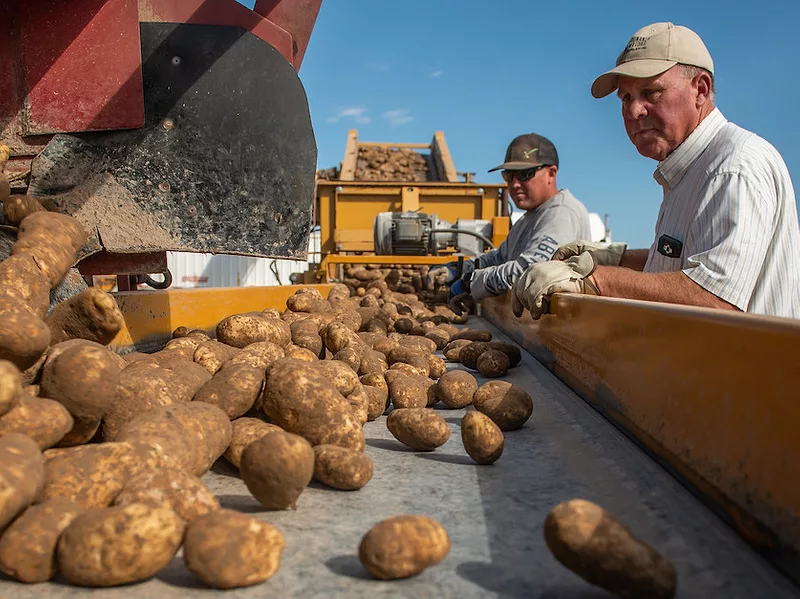
Over 60 lawmakers from both parties and chambers are urging the administration to use an upcoming visit from the Japanese prime minister to secure market access for U.S. potatoes.
In a letter to President Donald Trump Wednesday, led by Sens. Mike Crapo, R-Idaho, and Ron Wyden, D-Ore., the lawmakers argued Japan could be the largest export market for fresh U.S. potatoes outside North America.
Japanese officials have delayed discussions about opening their market without any scientific justification.
“We urge you to prioritize this issue in your discussions with the Prime Minister [Takaichi Sanae’s visit] and find a lasting solution for U.S. potato growers,” the lawmakers write.
The National Potato Council applauded the letter and had already been eyeing Takaichi’s visit later this month as an opportunity to make progress on the issue.
“We're very hopeful that it's going to be part of the discussions between the president and her,” Kam Quarles, CEO of the National Potato Council, told Agri-Pulse earlier this week. Securing access to the Japanese market “would create a massive tailwind under our industry,” he added.
Biofuels, biofuels and more biofuels
The flood of policy news, outlooks and opinions on crop-based fuels continues to dominate talk in the ag world.
The Trump administration’s biofuel-blending quotas are at the top of the watch list.
EPA’s final Renewable Volume Obligations – currently under review by the White House – aren’t likely to be released until after next week amid the administration’s focus on the war in Iran, Bloomberg Intelligence analyst Brett Gibbs says.
He also now expects a 2023-25 small refinery exemption reallocation of 70%.
The final RVOS are still expected by the end of March, and a decision on 2025 SREs in April, Gibbs says.
Gas prices and RVOs
Oil price shocks are reviving debate on the impact of ethanol on gasoline prices.
As it weighs actions to shield Americans from sudden gasoline price spikes, the Trump administration should “adjust” EPA’s proposed 2026-27 blending mandates for ethanol and prevent the reallocation of SRE volumes, according to a group of independent refiners and union workers.
“Financial analysts have confirmed that the Renewable Fuel Standard is adding 20-30 cents per gallon to prices at the pump,” the Fueling American Jobs Coalition says.
Interested in more news on farm programs, trade and rural issues? Sign up for a four-week free trial to Agri-Pulse. You’ll receive our content - absolutely free - during the trial period.
The group has previously called for lower mandates for corn-based ethanol. EPA has proposed a 15-billion-gallon ethanol mandate for 2026-27.
Ethanol groups and supporters say higher blends of the gasoline additive save consumers money when they fill up their cars. Sen. Amy Klobuchar, D-Minn., is among lawmakers saying that current surges in oil prices make it a good time for Congress to pass legislation allowing year-round sales of 15% ethanol mixes with gasoline, or E15, up from the standard 10% now.
Strawberry antidumping investigation advances
The International Trade Commission says that a probe into whether Mexican strawberries are being dumped onto the U.S. market below fair market price can continue.
The ITC found evidence that imports of fresh winter strawberries from Mexico are hurting U.S. producers. The Commerce Department will now take up the investigation to determine whether dumping is taking place.
Lawmakers weigh loosening diesel exhaust fluid regulations in cold environments
The Senate Environment and Public Works Committee heard from a Wyoming farmer Wednesday about whether to loosen diesel exhaust fluid regulations for cold regions of the U.S. to avoid shutdowns caused by freezing temperatures.
Wyoming Farm Bureau Federation President Todd Fornstrom said farmers in his state have struggled with equipment stoppages after cold temperatures froze the diesel exhaust fluid inside. In his written testimony, he also recalled an instance where a DEF freeze cracked one producer’s tank.
Environmental Protection Agency regulations generally require DEF in newer truck and nonroad equipment models to reduce nitrogen oxide emissions in diesel vehicles. Fornstrom said some farmers are opting to buy older vehicles to avoid DEF freezes.
“They’re choosing not to buy newer equipment,” he said.
Take note: The hearing centered on the Cold Weather Diesel Reliability Act, which would require EPA to allow manufacturers to suspend automatic engine derates at subzero temperatures; it also would grant a year-round exemption from DEF system requirements for equipment primarily operated in very cold regions.
Chevron fined $1 million, retires RINs to settle RFS violations
Chevron has retired renewable fuel credits worth about $3.6 million and will pay a $1 million fine to settle violations of the Renewable Fuel Standard, the Justice Department announced Wednesday.
From January through August 2022, Chevron invalidly generated over 2.2 million advanced biofuel production credits, known as Renewable Identification Numbers or RINs, on renewable diesel that had already been used for RIN generation and sold to third parties, the company disclosed in 2023, according to DOJ’s press release.
“The benefits that flow from the Renewable Fuel Standard program to rural American communities depend on the integrity of program credits, and this action ensures the reliability of [RINs],” said Principal Deputy Assistant Attorney General Adam Gustafson of the department’s Environment and Natural Resources Division.
Final word
“If you reopen it, you're going to go right back to the same disagreements you had before. So, unless somebody puts something on the table where everybody goes, ‘Oh, gee, that's perfect. Let's do that,’ how do you reopen [discussions]?” – Sen. John Hoeven, R-N.D., on the suggestion that Ag Committee Democrats may seek to revisit SNAP cost sharing as part of farm bill talks.
.webp?t=1762183428)


