
The administration is standing up a system to handle up to $175 billion in tariff refunds that will launch Monday, as Democrats see another opportunity to needle the administration on the cost of living and consumer prices.
U.S. Customs and Border Protection (CBP) has a system for evaluating and refunding the bulk of the revenue collected from the now invalidated tariffs imposed under the International Emergency Economic Powers Act, with interest.
From Monday, the agency can begin processing claims. Importers that have not yet had their entries “liquidated” – a technical term for when CBP finalizes the tariff rates owed – will be able to apply for refunds, as will those that have been liquidated within 80 days.
As liquidation can take up to 314 days, this initial tranche of refunds should cover “a pretty large segment” of the tariffs paid, Robert Grasing, a trade lawyer with Sandler Travis and Rosenberg, told Agri-Pulse.
CBP estimates that around 82% of the imports hit with the tariffs will be eligible for refunds in this first tranche of applications, totaling around $127 billion.
Some of the more technical cases, including $2.9 billion of tariffs paid on imported products that were also subject to antidumping or countervailing duties, may have to be manually approved and will be addressed later.
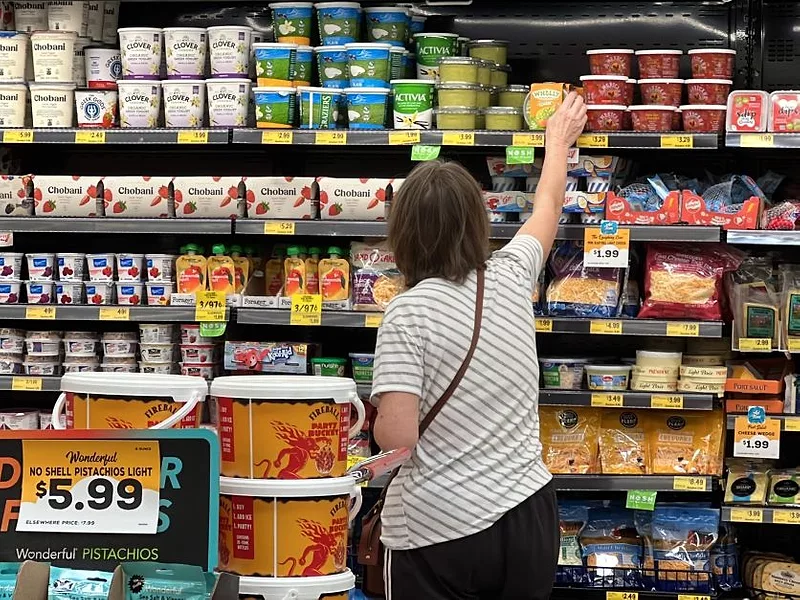
Democrats have been blaming the Trump administration’s tariff policy for rising costs of living since the administration began rolling out new duties early last year. Early signs suggest some congressional Democrats see additional opportunities to highlight the plight of U.S. consumers as the refund process gets underway.
During a House Appropriations subcommittee hearing Thursday, Maryland Democratic Rep. Glenn Ivey pressed U.S. Trade Representative Jamieson Greer on whether the administration planned to take steps to ensure that consumers also see some benefits from the returned tariffs.
“What I'm not seeing,” Ivey said, is a way to get money back to “smaller businesses on the supply chain or regular customers.” Ivey argued that the refund scheme amounts to “unjust enrichment” of large corporations.
“What will happen is the corporations are going to get sort of double compensation,” he said. “They'll get the benefit of having charged the higher prices at the front end, and they'll get the benefit of the refund through the process that you all set up.”
But Grasing said that the argument is a “misnomer.”
The assumption that importers "all raised their rates or prices,” he said, is “not necessarily true.” He added that many of his clients simply ate the higher costs without passing them along to consumers.
Interested in more news on farm programs, trade and rural issues? Sign up for a four-week free trial to Agri-Pulse. You’ll receive our content - absolutely free - during the trial period.
If some companies did pass the costs along to consumers, he argued that the administrative costs on businesses at responding to fluctuating tariff rates over the last 15 months has been immeasurable, and the refunds would also likely be used to offset some of those expenditures.
Some tariffs, like the national security tariffs on products made with steel and aluminum, required importers to calculate the cost of the metals in each product.
“Importers spent countless hours trying to figure that out, dedicate resources to figuring that out,” Grasing said. “It’s not necessarily like this is a windfall” for businesses, he added.
Greer told Ivey that the administration is committed to complying with the courts on the issue of refunds, but that the order from Court of International Trade Judge Richard Eaton stipulated that refunds go to the importers that paid the duties.
“Anything the court tells us to do, we'll do it,” Greer said in response to a similar line of questioning from Pennsylvania Democratic Rep. Madeleine Dean.
The administration still has time to appeal the order, but Felicia Pullam, former executive director in CBP’s office of trade relations, said that once refunds get underway, the likelihood of an appeal would diminish.
She also noted that in the current economic climate, with the recent supply chain disruptions in the Middle East pushing price pressures higher, it may not make political sense to appeal tariff refunds.
Even without an appeal, there is no guarantee that the refund process will go smoothly, and some trade lawyers are preparing businesses for a long wait.
“It's a big undertaking for customs,” Grasing said. “It’s completely new.”
The system, known as the Consolidated Administration and Processing of Entries (CAPE), is integrated into CBP’s automated processing system, ACE. Pullam noted that CBP is accustomed to updating and improving ACE. But even so, she said, the novel effort is “going to be a challenge.”
The administration also has an economic interest in quickly administering refunds because the longer it takes, the more interest it will owe.
But Leslie Glick, an international trade lawyer at Fennemore Forward, said during a webinar this week that he’s anticipating it could a year or more for importers to actually see the money in their accounts.
“When you're talking about this large sum of money, it's really hard to predict,” he said.
For more news, go to Agri-Pulse.com.
Kim Chipman contributed to this story.

