
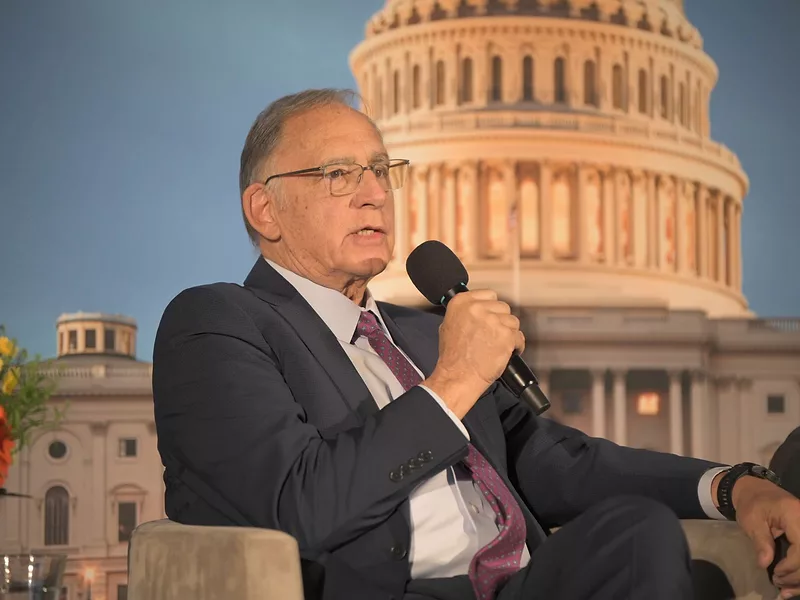
Senate Agriculture Chairman John Boozman says he’d be happy to put an authorization provision for year-round E15 in an upcoming farm bill, if the Senate Environment and Public Works Committee agrees to it.
“If we can get that signed off, we’d be glad to stick it in there, for sure,” the Arkansas Republican said at the Agri-Pulse Ag & Food Policy Summit on Monday.
The EPW panel has official jurisdiction over any legislation that would allow year-round sales of higher ethanol blends, known as E15. The Senate Ag Committee’s top-ranking Democrat, Minnesota's Amy Klobuchar, separately told the gathering at the National Press Club she’d like to see E15 in a farm bill.
Meanwhile, Boozman and Klobuchar remain at odds over modifications to a key change congressional Republicans made to the Supplemental Nutrition Assistance Program in the One Big Beautiful Bill Act. The bill requires states to begin paying a share of the program’s costs based on their SNAP error rates.
"The nutrition cuts that were passed on to the state, that part of the cut, which is billions and billions of dollars, really needs a delay for us to look at this policy,” Klobuchar said.
When asked if he could accept adding a SNAP cost-share delay to the farm bill, Boozman gave a clear "no," citing the need to fix what he said is a flawed system.
Advancing E15 authorization through the EPW Committee has been a daunting proposition for farm-state lawmakers due to EPW members who weren’t fans of the biofuel.
The committee’s current senior Democrat, Sheldon Whitehouse, has historically opposed the federal support received by the corn ethanol industry. Still, Whitehouse has told Agri-Pulse he could be open to E15.
“I told Republicans, it is something I’m certainly willing to consider, but waiting for their first offer,” Whitehouse said in November.
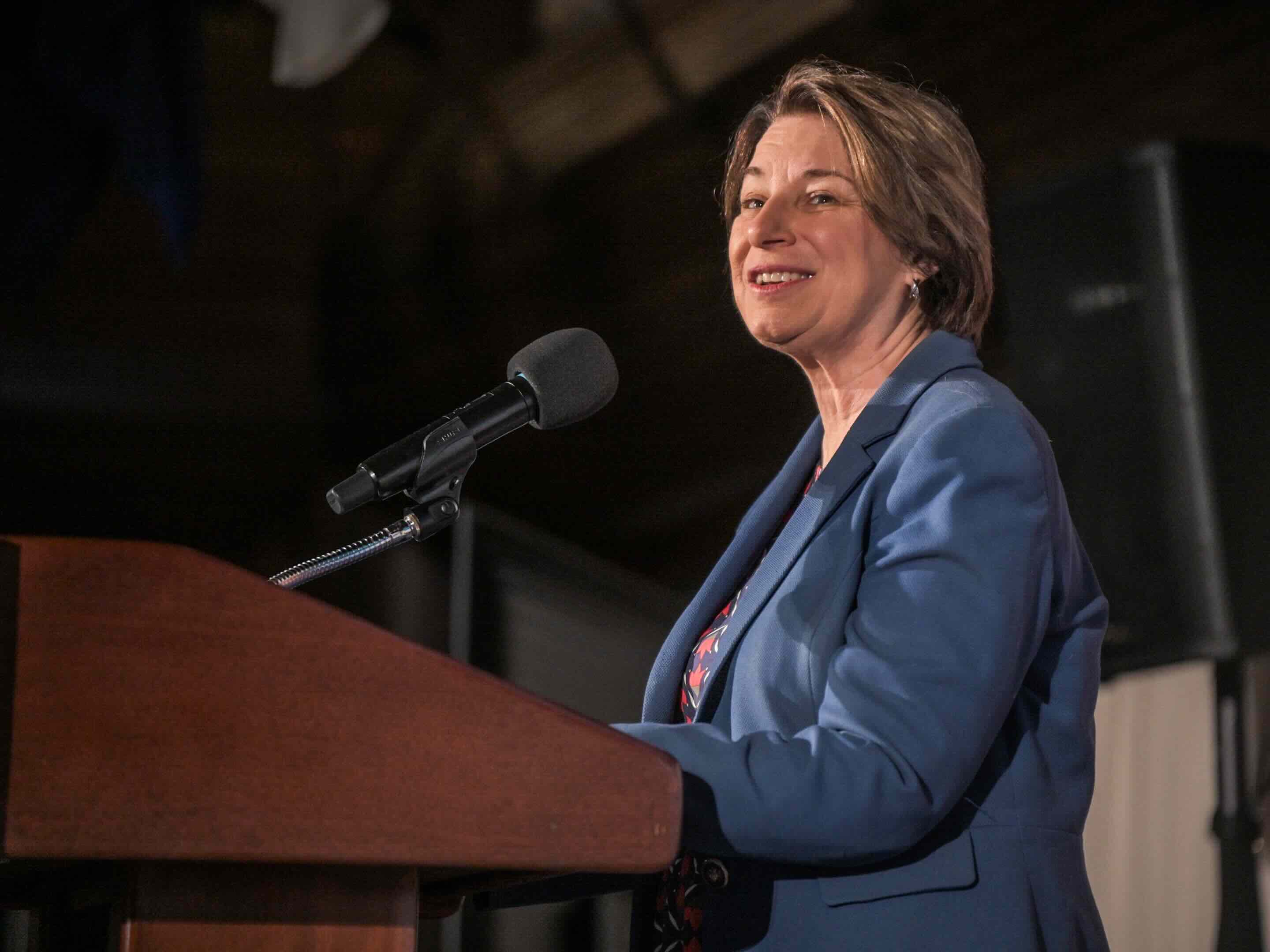 Sen. Amy Klobuchar at the Agri-Pulse summit (Agri-Pulse photo)
Boozman, who also sits on the EPW Committee, also discussed his own recent issues with proposed E15 legislation. A deal in January among key stakeholders to pass E15 in the House through a government funding measure fell apart at the last minute after many independent refiners balked at a provision in the legislation to slash the number of biofuel-blending exemptions allowed for small refiners.
The opposing companies said large, multinational refiners were pushing the change to further consolidate the industry and drive them out of business. The bigger firms argue the exemptions cause market uncertainty and lack transparency.
Boozman said on Monday that the move would have hurt Delek U.S. Holdings, which has operations in Arkansas, and hurt people in his state, including a loss of jobs. The refinery produces gasoline and jet fuel for all of southern Arkansas, he said.
“It’s something that Big Oil cooked up,” said Boozman, adding that he’s in favor of E15 but not supportive of large refiners “forcing consolidation.”
He also said he’s optimistic the rift between small and large refiners will ultimately be worked out.
As far as passing a new partial farm bill this year following approval of a measure out of the House Ag Committee earlier this month, Boozman said his intent isn’t to wait until the full House passes a farm bill. Instead, the goal is to move a Senate Ag version “as soon as possible – weeks, not months and months,” he said.
Boozman and Klobuchar both said they’d like to get additional aid for ag producers in a farm bill. Both Boozman and House Ag Chairman Glenn “GT” Thompson, R-Pa., have said $15 billion in new assistance is needed.
A “natural fit” for the farm aid would be a supplemental bill to fund the U.S. war with Iran, said Boozman, noting the harm the conflict is doing to farmers amid disrupted supply chains that are driving up the cost of fertilizer and fuel.
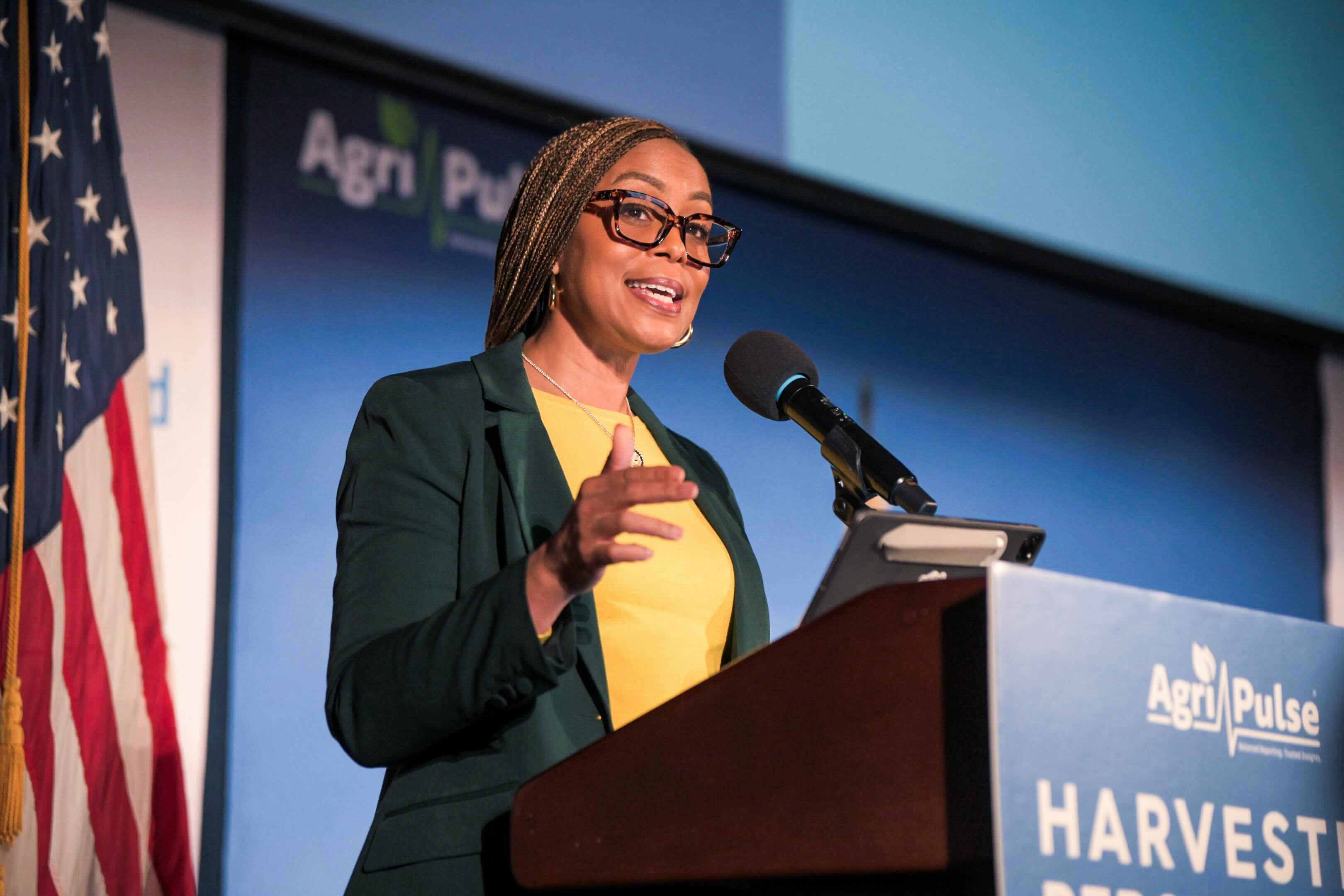 Rep. Shontel Brown (Agri-Pulse photo)
In separate remarks at the summit, the vice ranking member of the House Ag Committee, Shontel Brown, D-Ohio, questioned whether a farm bill could pass and lamented GOP rejection of Democratic proposals to address the SNAP cost-share requirement and concerns with the Trump administration’s trade policy.
“The farm bill is supposed to be the foundation of both farm stability and food security, but what we've seen lately is a process that feels like we're going through the motions, not doing the hard, thoughtful work that the moment demands,” she said.
But seven other Democrats in the committee voted for Thompson’s bill, and he said at the summit that he’s reaching out to additional Democrats ahead of possible House floor votes.
“I've already started meeting individually with individual Democrats, starting with the ones who voted for the bill, the seven that voted out of committee, going to from there, the ones that almost voted for the bill,” he said.
For more news, go to Agri-Pulse.com.
.webp?t=1762183428)
