
|
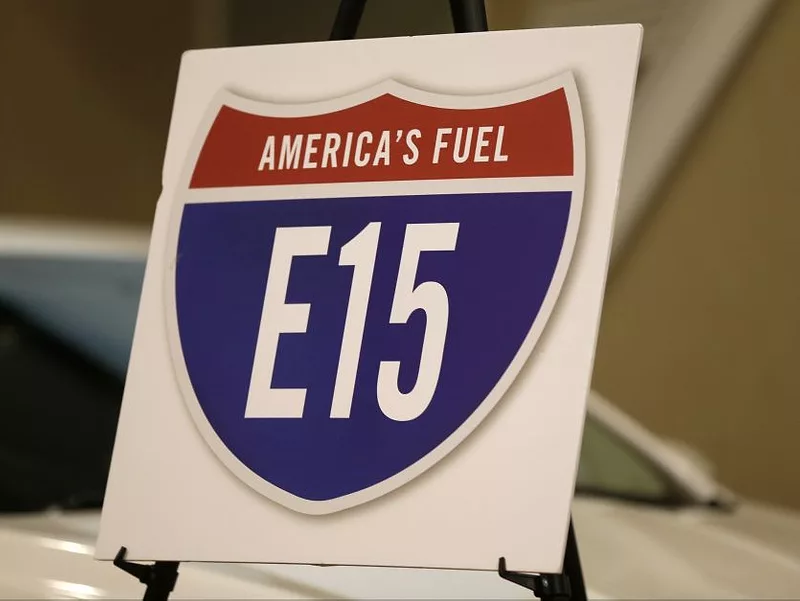
Farm-state lawmakers return to Washington next week under pressure to pass a bill allowing more corn ethanol in cars, a challenge that grows more difficult by the day.
The Environmental Protection Agency’s recently issued biofuel-blending rules were mostly a major victory for agriculture but likely made the path even more rocky for legislation to allow year-round sales of higher ethanol blends, known as E15.
Clashes over energy and ag policies are mounting amid a high-stakes midterm election year set to be dominated by debate over gasoline price spikes and, in many key races, farm economy woes.
“A high percentage of rural voters are swing voters, even higher than in urban and suburban areas,” Iowa Farmers Union President Aaron Lehman, a fifth-generation crop grower, tells Agri-Pulse.
In Iowa — the biggest producer of ethanol and the corn used to make it — two of its four congressional districts are considered “tossup” races as Republican incumbents try to hold onto their House seats and the party overall fights to keep control of the chamber.
Three of the districts were won by Democrats as recently as 2018. Two years ago, Rep. Mariannette Miller-Meeks, who is running again this November, had the closest race of any Republican in Congress for that cycle.
E15 politics
House and Senate members who support crop-based fuels got good news from the Trump administration on March 27, when EPA finalized the highest-ever national quotas for mixing biofuel into the national fuel supply.
Lawmakers then left for a two-week recess without making any clear progress on crafting E15 legislation.
Farmers, renewable fuel producers and President Donald Trump all have intensified calls to get an E15 bill over the finish line as both ethanol and corn producers need to find new markets. Proponents say higher blends would be a boon for corn demand and help ethanol producers manage declining liquid fuel consumption until new markets like clean jet fuel develop.
The most recent obstacle in legalizing year-round E15, which is banned from being sold in summer months due to air quality concerns that the industry says are outdated, stems from disagreement among oil refiners over proposed changes to the 2005 Renewable Fuel Standard that established the biofuel mandate.
The EPA’s final blending rules likely deepened that division.
At issue is EPA’s reallocation of 70% of 2023-25 small refinery exemptions (SREs) into the final 2026-27 standards. The SREs are at the center of the rift between large and small refiners in E15 negotiations.
The American Petroleum Institute, which represents big, multi-national refiners, wants any ethanol-expansion bill to also revamp the RFS to reduce the number of refiners eligible for exemptions. API says SREs cause lack of transparency and uncertainty in the market. Independent refiners counter that the powerful oil lobby wants to drive them out of business and consolidate the industry.
EPA’s reallocation “distorts the marketplace, rewarding exempted refineries while disadvantaging the majority of refiners who are not exempted,” said Will Hupman, API vice president of downstream policy. “This highlights the need for legislative reform to ensure the RFS delivers certainty, supports investment, and maintains a reliable fuel supply.”
Hupman also said API supports the robust biofuel volume mandates, a dramatic turn from the prior decade.
API’s positioning in biofuel policy lobbying has shifted drastically in recent years. It’s gone from fiercely opposing RFS mandates to more recently uniting with agriculture and biofuel interests in making recommendations to EPA on blending targets, also known as renewable volume obligations, or RVOs.
Interested in more news on farm programs, trade and rural issues? Sign up for a four-week free trial to Agri-Pulse. You’ll receive our content - absolutely free - during the trial period.
The oil group also has joined the National Corn Growers Association and ethanol groups like the Renewable Fuels Association (RFA) in pushing lawmakers for E15. However, API pulled that support late last year, citing opposition to other biofuel actions out of Washington that it said put its members at a disadvantage.
The leverage seemed to work in getting an E15 deal early this year that included the overhaul of the exemption process, until smaller refiners took issue and made their case to lawmakers including Senate Ag Committee Chairman John Boozman, R-Ark.
Since then, attempts by lawmakers to come up with a compromise E15 deal have fallen flat. There’s been increasing talk on Capitol Hill on pushing ahead with E15 legislation that doesn’t address the exemption issue, though it’s not clear how that might impact votes from oil-state lawmakers.
Dueling RFS agendas
The Fueling American Jobs Coalition, a group of independent refiners and union workers, says the latest RVOs aren’t realistic and are a “hidden tax on fuel” that will drive up compliance costs, threaten U.S. fuel supply and create higher costs at the pump and broader economy.
“There is a clear remedy. Congress should sponsor and pass legislation that reforms the Renewable Fuel Standard by tying annual ethanol mandates to actual fuel consumption from the prior year,” the group said.
The latest chapter of discord within the oil industry means lawmakers next week return to work on Capitol Hill with an even steeper uphill climb for E15.
Meanwhile, RFA CEO Geoff Cooper tells Agri-Pulse his group plans to keep pushing on E15.
“I have no doubt that the reallocation approach finalized by EPA will add more urgency and pressure to the large refiners’ efforts to reform the flawed SRE program,” he said. “We’ll continue working with API and others on strategies to pair targeted SRE reform with year-round E15 legislation.”
.webp?t=1762183428)
