
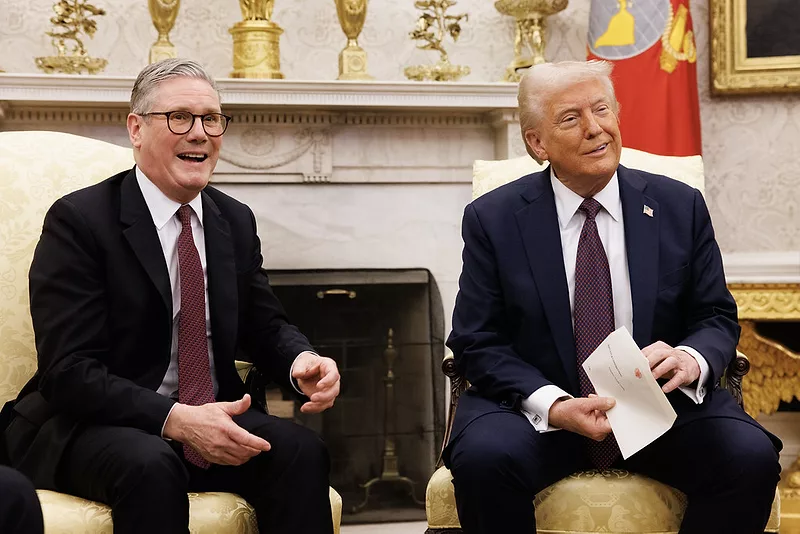
President Donald Trump offered a sober picture of U.S.-United Kingdom relations on Wednesday and suggested that the administration could revisit the terms of its tariff deal.
In an interview with the UK’s Sky News Wednesday, the president said that the relationship “has been better,” adding, “it’s sad.”
“How is the relationship? It's the relationship where: when we asked them for help, they were not there,” Trump said, referring to the UK’s opposition to U.S. military action in Iran.
“And we gave them a good trade deal. Better than I had to. Which can always be changed,” Trump added.
Pushback: Later in the day, UK Prime Minister Keir Starmer presented a defiant tone when he addressed Parliament.
“It is not our war,” he told them. “I'm not going to change my mind. I'm not going to yield.”
Why it matters: The U.S.-UK deal agreed to last May increased market access for U.S. beef and ethanol producers, which was celebrated at the time. In exchange, the UK received a 10% tariff rate on most exports.
Earlier this week, Growth Energy’s Emily Skor told Agri-Pulse the deal holds promise for U.S. ethanol exports.
“That's one of our top three trading partners,” she said. “So, I think that's a really good example” of the positive market signals that can lift exports, she said.
Budget season begins on Capitol Hill
The House Appropriations ag subcommittee takes a first crack at establishing USDA funding priorities for the next fiscal year at a hearing this morning.
President Donald Trump wants to cut the department’s budget by nearly $5 billion in fiscal 2027, a 19% drop from the current fiscal year. But he’s unlikely to get the full cut. Last year, lawmakers gave USDA $2.6 billion more than Trump sought.
“Appropriations is ultimately a numbers-driven process, and based on last year’s outcomes, Congress has not shown a strong inclination to fully adopt the proposed reductions,” budget expert Nona McCoy, vice president at Torrey Advisory Group, tells Agri-Pulse.
Other budget hearings scheduled today in the House will focus on the Department of Health and Human Services, Office of the U.S. Trade Representative and the Army Corps of Engineers.
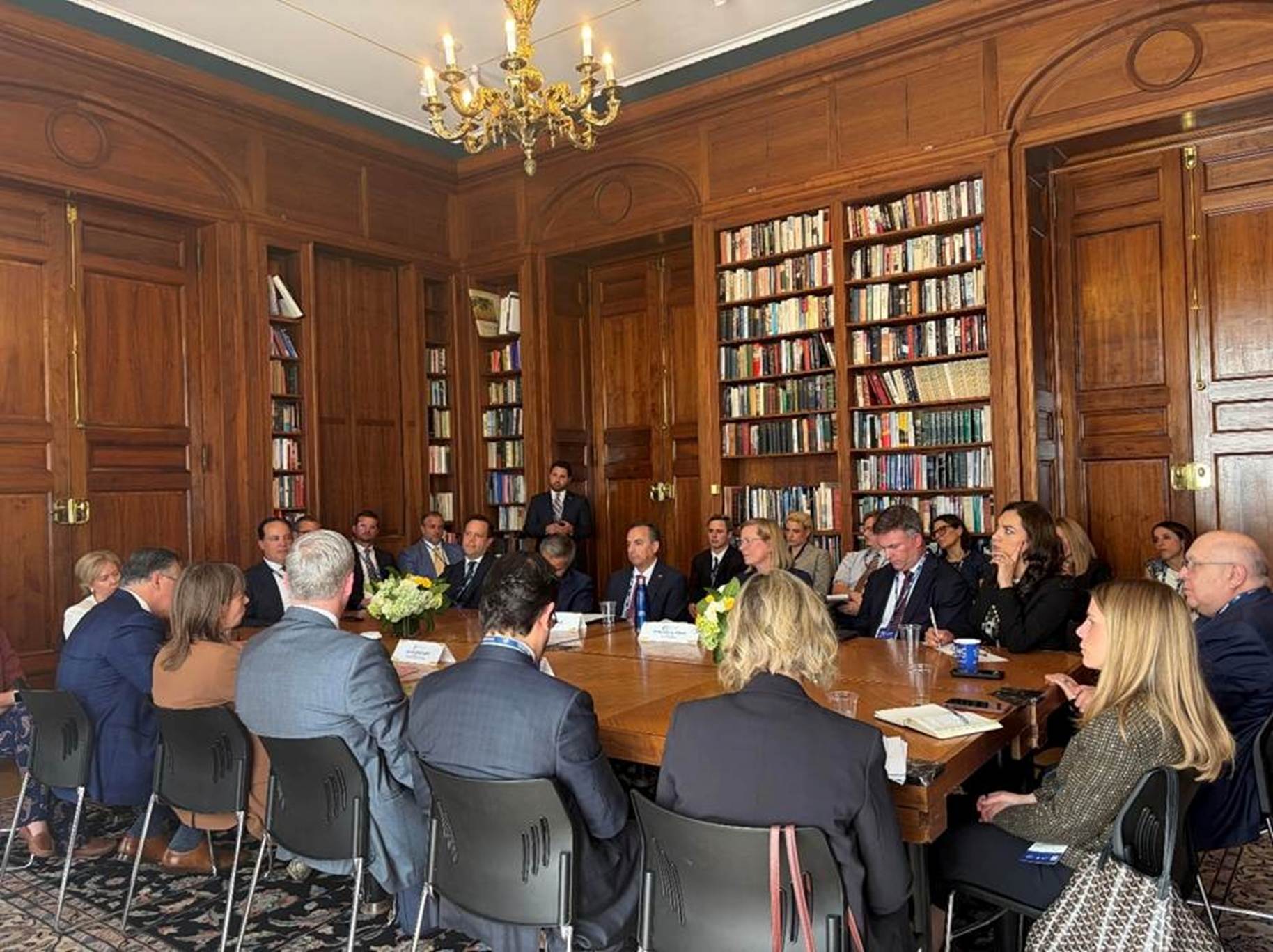
An agriculture-focused panel at the North Capital Meridian Diplomacy Forum.
Texas Democrats confident of USMCA extension
Texas Democratic Reps. Joaquin Castro and Marc Veasey are projecting confidence ahead of a forthcoming review of the U.S.-Mexico-Canada Agreement that the pact will be extended.
“We will have a successful review and continuation of USMCA, and then, most of all, this relationship will make this region the most economically prosperous region in the world,” Castro said.
Interested in more news on farm programs, trade and rural issues? Sign up for a four-week free trial to Agri-Pulse. You’ll receive our content - absolutely free - during the trial period.
The pair were speaking at the North Capital Meridian Diplomacy Forum in Washington, a convening of business leaders and officials from the three nations.
Part of their confidence, the pair said, comes from unintended impacts from Trump’s threats to break up the agreement.
A “silver lining” of Trump’s rhetoric, Castro said, is that the media has dug into and publicized the benefits of the deal.
At a roundtable, business representatives from the three countries all agreed the deal should remain trilateral. They also lamented the backdrop of higher tariffs on non-covered products.
Representatives at an agriculture-focused panel also discussed how to effectively convey the deal’s benefits, including by tying it to a core aim of the Trump administration: affordability.
Greer to point to USTR’s dealmaking and enforcement efforts to justify further funding
U.S. Trade Representative Jamieson Greer will point to an uptick in his agency’s dealmaking and enforcement efforts when he appears before a House Appropriations subcommittee this morning to ask lawmakers for more funding.
“Implementing the President’s trade program has been an enormous undertaking,” he’ll say, according to a copy of his remarks seen by Agri-Pulse. “Whether it’s negotiating new trade agreements, monitoring and enforcing existing trade agreements, or influencing the direction of the World Trade Organization, USTR is hard at work ensuring that the American people are the ultimate beneficiaries of our trade policy.”
The White House is asking Congress to expand the agency’s budget by $7 million for the 2027 fiscal year, to $95 million.
“These additional funds will enable us to hire additional negotiators and new enforcement personnel so that we can continue to secure new market access for American farmers and workers,” Greer will say.
Need for additional farm aid is clear. The amount? Undecided.
Top Republican ag committee and ag appropriations leaders recognize the need for additional farm aid, but major questions remain: How much and through what vehicle?
House Ag Chair Glenn “GT” Thompson told Agri-Pulse Wednesday he’s eyeing a $20 billion package that includes $10 billion for row crop producers, $10 billion for specialty crop growers and $200 million for sawmills, infrastructure and forestry. It’s the highest figure floated yet.
“Certainly, with the fertilizer prices, the increase in diesel, all those things, you can make a good case that you might need some additional funding,” Boozman said while falling short of vocalizing a dollar figure.
“I’m open to getting as much aid as we need,” he said.
Senate Ag Appropriations Subcommittee Chair John Hoeven, R-N.D., said he’s eyeing around $17 billion for additional farm aid, but cautioned that “how much would be allocated to row crops and special crops is something that's a work in progress.”
USDA opens seafood office
The Agriculture Department has opened a new Office of Seafood to advocate for the “farmers of the sea,” Ag Secretary Brooke Rollins announced Wednesday.
“For the first time ever, the U.S. Department of Agriculture will have an office and a team fully dedicated to advancing, to honoring, to elevating and to supporting our great farmers of the sea. And what a joy it is to be able to lead on that,” Rollins said at an event at USDA.
The sole employee of the office at this point is Mike Illenberg, a longtime USDA Office of Communications staffer who has experience in fisheries matters.
Final word
“Well, this president has basically called all of the federal government a bloated bureaucracy.” – Ag Secretary Brooke Rollins, in response to a question about how she plans to reduce the bloat at USDA, which the president’s budget referred to as a “bloated bureaucracy.”
.webp?t=1762183428)


