

|
Rail giants Union Pacific and Norfolk Southern are once again seeking Surface Transportation Board approval to merge into the nation’s first coast-to-coast railroad company, submitting a more than 7,000-page proposal that seeks to assuage past agency concerns about the completeness of their plan.
The companies' revised merger application includes additional data and analysis to addres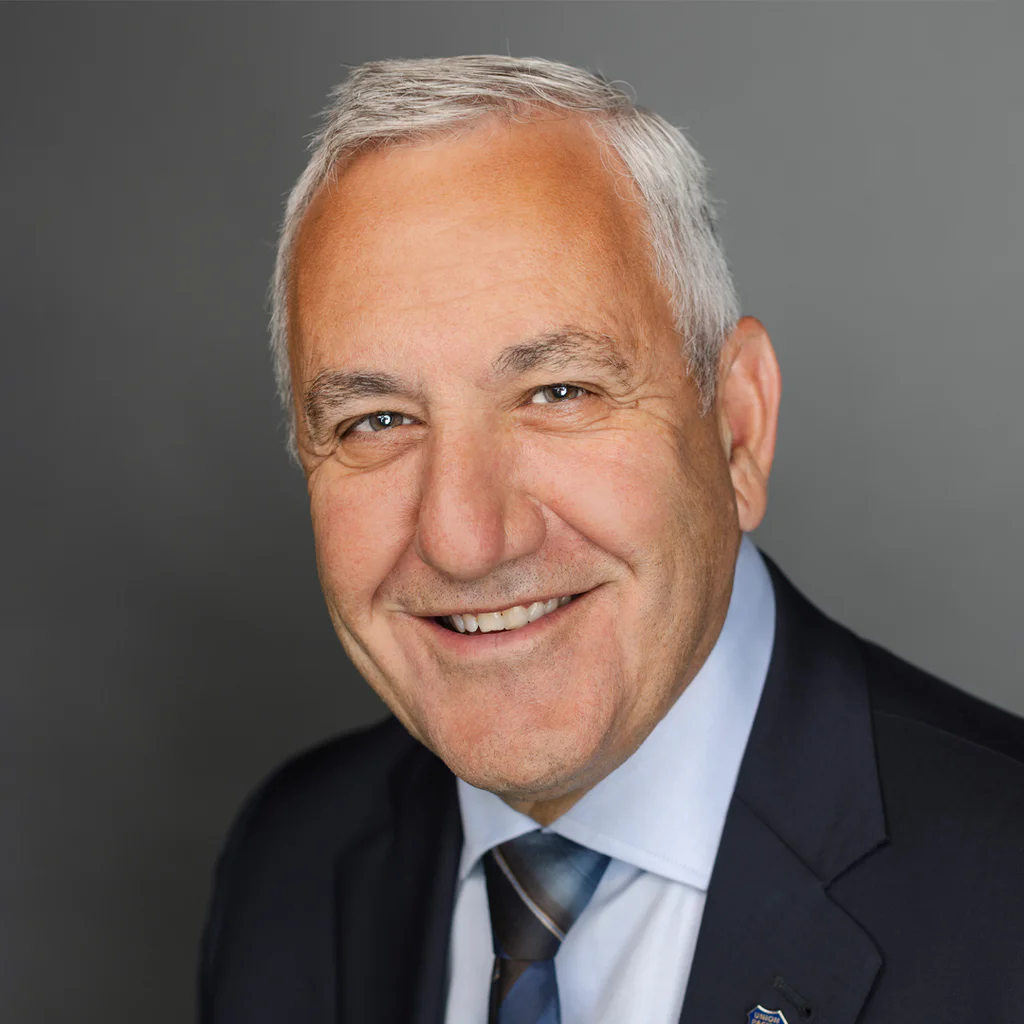 Jim Vena (Union Pacific photo)s shortfalls identified by the board in January; the STB rejected the first proposal after finding it lacked market share projections around merger-related growth and diversions, copies of schedules and other contractual documents.
"We appreciate the STB’s feedback and look forward to continuing to work with them through the process,” Union Pacific CEO Jim Vena said in a press release Thursday. “We are confident our updated application meets their guidance and presents an even stronger case for why America needs a seamless coast-to-coast railroad to reinvigorate the rail industry.”
The merger seeks to create a new Union Pacific Transcontinental Railroad, which would span approximately 50,000 miles and connect around 100 U.S. ports on the East, West and Gulf Coasts. The idea has drawn interest from some shippers excited by the prospect of fewer delays, but concern from others about potential anticompetitive effects. Leaders of other major Class I railroads, including BNSF and CSX, are opposed to the merger.
STB Chairman Patrick Fuchs told House lawmakers in a letter last year that the board would "conduct a thorough and fair review of the companies' evidence and argument and consider whether the transaction serves the public interest, consistent with applicable law."
Company executives: Merger will expand competition with trucking sector
In a statement appended to the revised application, Union Pacific Executive Vice President of Marketing and Sales Kenny Rocker painted the merger as a way to better compete with the nation’s trucking system. Having to hand off shipments to other carriers “adds time, cost and uncertainty,” which results in “delay, added expense, and service irregularity — the very inefficiencies that the trucking industry eliminated decades ago by operating as one unified national network,” he wrote.
“[C]reating a single-line, transcontinental network that delivers what customers have asked for — one accountable carrier, one schedule, one standard of excellence — would create a future with robust single-line service into and through the watershed markets that will outcompete the present. For manufacturers, retailers, and exporters alike, that means faster service, fewer delays, and a level of reliability that keeps supply chains moving. This is what is required to keep pace with our integrated trucking competitors."
In another filing to the STB, transportation consultant David Hunt suggested the UP-NS merger would shift 2.1 million long-haul truckloads off of roads and onto rail, which he estimates would result in $3.5 billion in annual cost savings for shippers.
The companies have also proposed a new "Committed Gateway Pricing” model to address concerns about competitive impacts of the merger. Katherine Novak, UP's general director of interline operations, said in a statement that this would allow other railroads, including BNSF and CSX, to “directly market transcontinental service, offering one-stop shopping to customers shipping traffic between facilities they solely serve and facilities served solely by UP/NS when they interchange traffic with UP/NS in Chicago, St. Louis, Memphis, and New Orleans, regardless of whether they are the originating or terminating carrier."
It’s easy to be “in the know” about what’s happening in Washington, D.C. Sign up for a FREE month of Agri-Pulse news! Simply click here
"Committed Gateway Pricing is purely additive: It will give eligible customers — that is, customers shipping eligible interline movements — an additional rate and service option without eliminating any existing rate or service option available to customers," Novak wrote.
Other major railroads previously raised concerns about the merger giving UP and NS majority control over the Terminal Railroad Association of St. Louis (TRRA), one of two terminal railroads operating in the St. Louis gateway (the other is already wholly owned by UP). When the STB rejected the initial merger application filed by UP and NS, it also found the railroads misclassified the TRRA aspect of the merger as a “minor transaction” instead of a “major” one.
The revised application says the companies are committed to ensuring that the combined railway does not take control of TRRA and are looking at options to prevent that from happening, including divesting shares to other railroads with stakes in TRRA or transferring some of its shares to TRRA itself.
Anthony Hatch, an independent analyst and consultant for major railroad companies, told Agri-Pulse that he believes the companies’ revisions should be enough to address the STB’s concerns.
“It seems like they did a good job, and I would expect this document to be accepted as an application,” he said. “And then we debate the merits of the merger, which is a whole different deal.”
Hatch stressed that application approval is only the first stage of the merger process. If the STB were to accept the application, it would kick off a 45-day public comment period and a year-long evidentiary proceeding process where the board would consider the competitive effects, potential service impacts, environmental impacts and overall public interest of the merger.
Following the close of the evidentiary period, the board would have 90 days to make a decision, according to an explanation of the merger review process on its website.
Companies tout efficiency; opponents worry about loss of competition
In an interview with Agri-Pulse, Union Pacific Vice President for Bulk Reed Janousek said the merger could enable smoother interchanges at major connection points, since the company can oversee the entire route rather than needing to coordinate hand-offs with other railroads. He said it should reduce transit time, free up car capacity, and allow more volume to be shipped along the UP-NS network overall.
He also expects the merger to provide farmers with access to new markets through connections to ports, crush plants, or other users of their products, and said it could be a way to enhance U.S. farmers’ competitiveness in international markets.
“Efficiency allows us to be more cost-competitive, and that ... then allows us to be more competitive in the global market,” Janousek said. "And that's really how we're viewing this thing.”
In a statement last week, Nebraska Governor Jim Pillen also expressed support for the merger, arguing that the current rail system “forces too many shipments through time-consuming, costly handoffs between carriers.”
“This is about giving farmers more control and greater flexibility,” Pillen said. “Whether it’s responding to weather, adapting to shifting export demand or managing tight harvest windows, better rail service leads to better outcomes.”
However, American Farm Bureau Federation Economist Daniel Munch worries the merger could reduce competition in rail networks. A lot of competition that currently occurs in rail networks happens at interchanges where east and west coast carriers meet, and having multiple companies competing for shippers' business pressures them to keep prices low, he said.
 Daniel Munch (Linkedin photo)
Additionally, Munch found in a recent analysis that 95% of grain elevators are served by only one railroad and as a result, “are really going to have to accept whatever price comes their way.” He worries about the impact future cost increases may have on these customers.
“They can’t not ship their product,” Munch said. “So they’re going to have to absorb any cost increase we see.”
When asked about the captive shipper concerns, Janousek said UP and NS will still need to compete for farmers' business since producers could truck grain to other elevators, rail lines or crush plants in search of the best deal.
“A farmer is going to make a decision that says, ‘What gives me the best dollar for the corn or soybeans I bring to market?' And if I’m not competitive at my location even though it’s solely served by UP, you’re going to go to the elevator five to 15 miles down the road,” he said. “So you absolutely have to be competitive because it’s just how the market works."
AFBF has banded with the American Chemistry Council, BNSF, Canadian Pacific Kansas City, and others to oppose the merger through the “Stop the Rail Merger Coalition." The coalition released results from a survey of eligible voters last week that suggests 55% opposed the merger when first asked about it. When respondents were given more information about the merger, the percentage of those opposed rose to 71%, according to the survey.
Daren Coppock, president of the Agricultural Retailers Association, told Agri-Pulse that Class I railroads already “exert a significant amount of power in how they deal with customers,” pointing to demurrage fees as an example. He said that power would only grow if concentration continues.
Coppock also worries that if the merger were to go through, it would force BNSF, another major Class I provider, to consider future merger opportunities “because they’ll feel like they’ve got to in order to compete."
“There’s just been a whole lot of consolidation in this business over time, and if we haven’t gone too far, we’ve certainly gone far enough,” Coppock said. He noted 60% of fertilizer shipments in the U.S. occur via rail.
KC Graner, chief executive officer at a Minnesota-based cooperative called Central Farm Service, told Agri-Pulse he supports the merger as a way to connect the cooperative’s members to new markets for their grain, noting it could allow for more opportunities to send grain to ports or poultry operations on the East Coast. Currently, railroads tend to not want to work with one another, which “essentially puts a glass barrier out there for the markets we can and cannot touch,” he said.
“What we see is an opportunity to connect our patrons and their operations to parts of the continental U.S. that right now we struggle to hit,” Graner told Agri-Pulse.

