
|
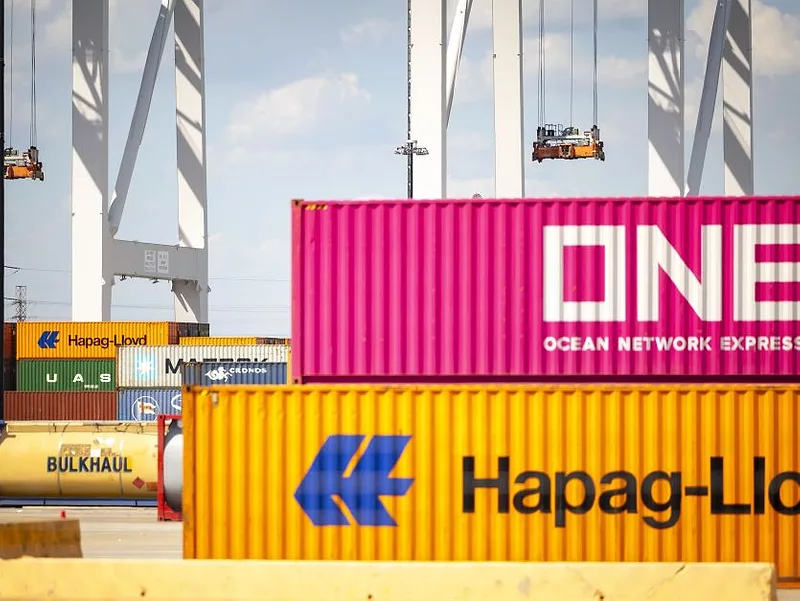
A bill to give California air regulators clearer authority over warehouses, ports and other freight hubs stalled after running into a broad coalition of business, labor, port and agricultural groups warning it could raise costs across the supply chain.
Assembly Bill 1777 by Asm. Robert Garcia, D-Rancho Cucamonga, would have authorized the California Air Resources Board to adopt rules to reduce or mitigate emissions from indirect sources of pollution — facilities that attract trucks, trains and other mobile sources of emissions.
Garcia pitched the bill as the California Clean Skies Act and said it was aimed at “pollution magnets” like warehouses and ports that draw heavy-duty vehicles into surrounding communities.
Garcia framed the measure as especially urgent as the Trump administration moves to undercut California’s air-quality and clean-vehicle programs, arguing AB 1777 would give the state another tool to protect residents from diesel pollution.
Ada Waelder, a senior state legislative representative for Earthjustice, said indirect sources “spew diesel dust” into neighboring communities and worsen air pollution in regions already struggling to meet federal standards.
Waelder pointed to the South Coast Air Quality Management District’s warehouse rule as a model. It allows large warehouse operators to comply through a menu of options, including charging infrastructure, solar panels, zero-emission equipment, cleaner trucks or mitigation fees.
“We don’t have to choose between clean air and a strong economy,” said Waelder, arguing warehousing has continued to grow in the South Coast district since the rule took effect.
Benjamin Liu, who manages California clean air advocacy at the American Lung Association, said the debate should center on the public health costs of diesel pollution. Diesel emissions, he said, “congregate around hot spots like warehouses, ports and other commerce hubs,” often in lower-income communities and communities of color.
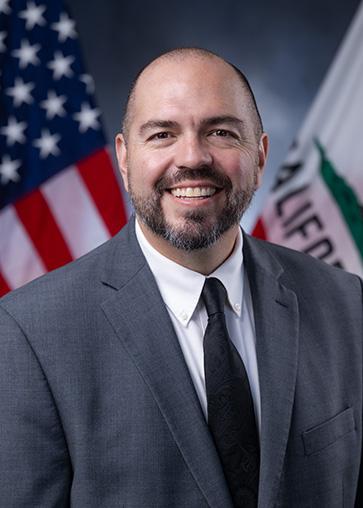 Asm. Robert Garcia
Supporters argued AB 1777 would not force CARB to write a statewide indirect source rule. They said it would clarify that the board has the authority to act if needed to help California meet federal clean air standards.
That argument echoed a discussion at CARB three days later, when staff laid out a much broader challenge facing the state’s air regulators. CARB staff told board members federal actions threatening California’s clean vehicle and equipment programs could leave the state with a 165-ton-per-day shortfall in its plan for reducing nitrogen oxide emissions by 2037 — a 42% increase compared to the reductions California had been counting on.
After staff identified a long list of possible regulatory and incentive strategies, they estimated CARB would still face a gap of about 91 tons per day of NOx in 2037. Staff included indirect-source review among the options that could help chip away at the gap, alongside new vehicle standards, off-road equipment rules, incentives and voluntary agreements.
Opponents warn of supply chain costs
Opponents countered that the bill was far more than a clarification. Chris Shimoda, representing the Supply Chain Federation and California Trucking Association, warned lawmakers AB 1777 would give CARB “expansive new blank check authority” over facilities based on emissions from vehicles and equipment they may not own or operate.
Cut through the clutter! We deliver the news you need to stay informed about farm, food and rural issues. Sign up for a FREE month of Agri-Pulse here.
Shimoda said California already regulates trucks, cargo-handling equipment and other mobile sources directly. He pointed to pollution reductions at the ports as evidence that the existing regulatory framework is working. Since 2005, he said, diesel particulate matter from trucks serving the ports has fallen 98% and nitrogen oxides have fallen 93%, even as cargo volumes increased 44%.
He argued indirect source rules shift responsibility away from vehicle owners and onto facilities that attract traffic. Where indirect-source rules have been tried, said Shimoda, they have imposed significant costs without delivering the expected federal air-quality credit. He estimated the South Coast warehouse rule had imposed more than $500 million in costs and noted that the Biden administration declined to credit it toward California’s federal air quality attainment obligations.
“These costs are being passed directly onto consumers,” added Shimoda.
Shimoda made a similar case to CARB, warning board members not to abandon what he called a decades-old framework of working with industry on “reasonable, technologically achievable mobile and stationary source emission standards.”
Jon Kendrick of the California Chamber of Commerce drove home the affordability argument, saying AB 1777 would hit Californians “at the front door.”
“Californians already struggle with the cost of groceries, consumer goods and other everyday essentials,” said Kendrick. “AB 1777 makes life more expensive, more difficult.”
Kendrick said local air districts are better positioned than CARB to handle indirect source rules because air quality challenges and freight operations vary across the state. The Port of Long Beach is different from the Port of Stockton or the Port of Humboldt, he explained, and a warehouse in San Bernardino is different from one on the North Coast.
For agriculture, the concern was not that AB 1777 regulated farms directly. It was that the bill could reach the infrastructure that moves crops from fields to consumers and export markets — packing houses, cold-storage facilities, food distribution centers, ports, rail yards and warehouses.
The opposition list included California Citrus Mutual, California Cotton Ginners and Growers Association, California Strawberry Commission, California Walnut Commission, Western Growers Association and Western Tree Nut Association, along with trucking, port, retail, construction and real estate groups.
A recurring fight over CARB authority
AB 1777 was not the first attempt to reshape the indirect source debate. Garcia carried AB 914 last year, which would have required CARB to adopt rules to control criteria pollutants and toxic air contaminants from indirect sources and authorized fees to fund implementation.
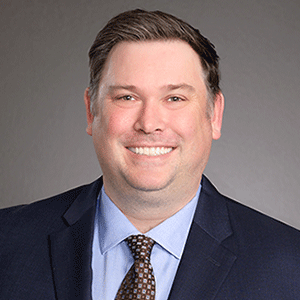 Jon Kendrick (CalChamber photo)
Garcia failed to gather enough votes to advance either bill out of the Assembly. He told Politico Assembly Speaker Robert Rivas denied his request to bring AB 1777 up since it did not have enough votes to pass.
The issue also surfaced last year through Senate Bill 34 by Sen. Laura Richardson, D-South Bay. It would have limited the South Coast air district’s authority to impose new emissions reduction requirements tied to the ports of Los Angeles and Long Beach until 2031. The measure passed out of the Legislature but was vetoed by Gov. Gavin Newsom, who reasoned that the federal administration was undermining state and local pollution strategies and that California needed to “maintain the tools we have.” Newsom also pointed to ongoing negotiations between South Coast regulators and the ports, saying the bill would interfere with a locally driven effort to reduce air and climate pollution.
The same uncertainty over unintended consequences surfaced at CARB. Tania Pacheco-Werner, who serves as the San Joaquin Valley representative on the board, reminded her colleagues that not all meaningful emission reductions come through mandates. She pointed to the FARMER Program, which helps replace older agricultural equipment with cleaner models.
“Incentives do produce real emission reductions, and they have immediate public health benefits,” said Pacheco-Werner.
That stood in contrast to other air districts. Sonoma County Supervisor Lynda Hopkins, a farmer who chairs the Bay Area air district board, pointed out that her district had taken a formal support position on AB 1777 and was preparing to move forward with its own warehouse-focused indirect source rule. The district also supports a statewide approach that could help avoid a patchwork of different local requirements.
Yet Hopkins also supports incentives and has seen how effective they can be in reducing emissions from off-road engines. Pairing incentives, voluntary agreements and industry partnerships, she said, could help CARB move more quickly while still addressing affordability concerns.

