
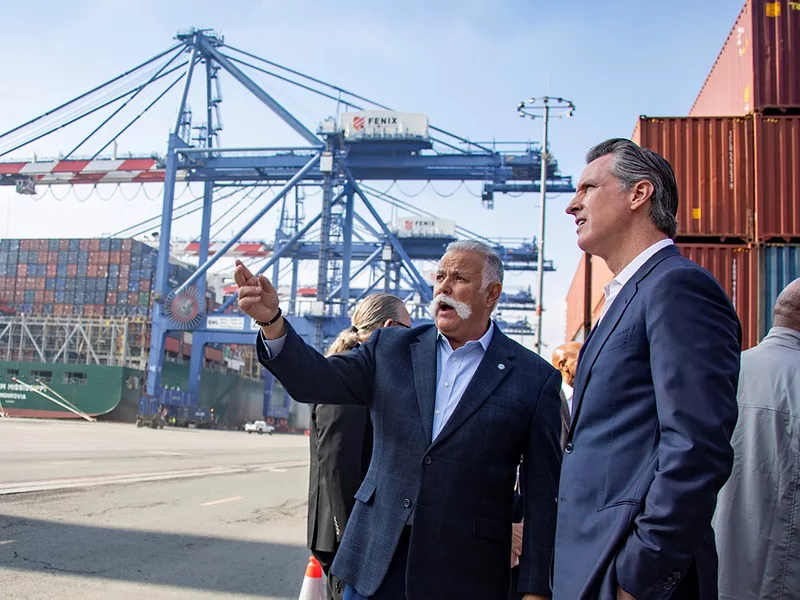
A new cooperative agreement is in the works to improve the air quality around some Southern California ports. Crucially for agriculture, it would bar the local air district from issuing a cap on cargo volumes or any other regulatory rules that could limit the flow of exports out of the major ports.
The cooperative agreement aims to sidestep contentious rulemaking by formalizing a negotiated path to emissions reductions. The Los Angeles and Long Beach ports would commit to develop and implement infrastructure plans for achieving zero emissions, with milestones and triggers for financial penalties if obligations are missed. The South Coast Air Quality Management District would enforce the terms but pause its effort to establish an indirect source rule for the ports.
Cut through the clutter! We deliver the news you need to stay informed about farm, food and rural issues. Sign up for a FREE month of Agri-Pulse here.
“This agreement will serve as a model for cooperation between regulators and industry,” said Thomas Jelenić, vice president at the Pacific Merchant Shipping Association, who applauded the district’s support during its board hearing this month. “It will accelerate emission reductions and once again put the ports and AQMD at the forefront of the transition to zero emissions nationwide.”
Environmental justice advocates maintained strong objections, arguing the agreement would sideline the port rule and weaken the district’s regulatory leverage.
“I urge you not to rush to abandon the tools at your disposal, especially not for a plan that still needs significant work,” said Fernando Gaytan, a senior attorney at Earthjustice. “We need concrete commitments to meet emission reduction targets. We need this agency to maintain its regulatory authority to help protect the public and course correct when actions don't deliver results.”
The district will review the agreement in an Oct. 15 evening meeting and will take comments through Oct. 22. It anticipates board adoption in November. Additional negotiations over emission controls for trucks, ships, railyards and other port-related sources will continue, with the board hoping to iron out the details next spring.
For more news, go to Agri-Pulse.com.

