
|
A proposal to extend key water rights for the State Water Project is reviving one of California’s most entrenched water fights. Water contractors and farm groups are urging lawmakers to shore up reliability for nearly a million acres of farmland. Delta counties, tribes and environmental advocates warn the bill would shortcut water rights oversight and ease the path for the contentious Delta tunnel proposal.
Assembly Bill 2215 by Asm. Lisa Calderon, D-Whittier, would give the Department of Water Resources until 2046 to complete construction work and apply water to beneficial use under six State Water Project permits. The permits cover both power generation and water supply uses tied to the Feather River, Lake Oroville and Delta channels.
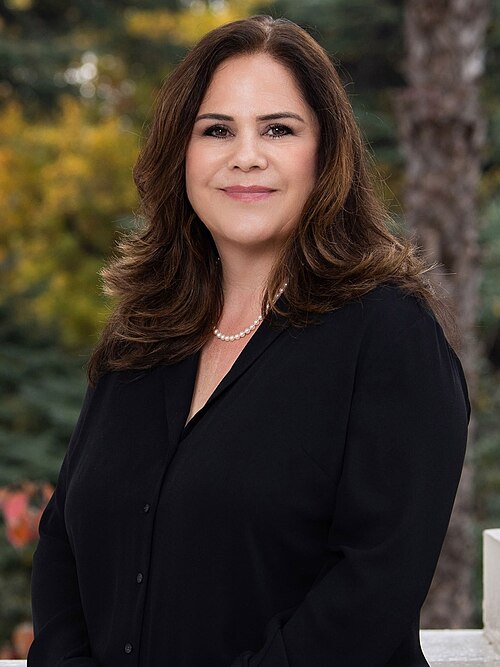 Asm. Lisa Calderon (office photo)
The bill is sponsored by the State Water Contractors, whose member agencies pay for the operation and maintenance of the State Water Project through long-term contracts with DWR. Supporters say the legislation is needed because DWR’s water rights extension request has languished for years at the State Water Resources Control Board, creating uncertainty for the agencies and ratepayers that fund the project.
“Without an approved time extension, securing funding to improve and even just maintain the State Water Project is at risk,” Jennifer Pierre, general manager of the State Water Contractors, wrote in a Capitol Weekly opinion piece recently. “This uncertainty raises unnecessary speculation for investors seeking to fund project improvements to this essential infrastructure.”
Pierre said DWR has spent more than three decades developing its existing water rights, building 36 water facilities, 25 pumping plants, five hydroelectric power plants, and about 700 miles of canals, tunnels and pipelines.
Proponents argue the system needs more time and more investment to keep pace with climate change. The state is seeing bigger storms, faster snowmelt, longer dry periods and increasing pressure to capture water during wet years for use during drought. The bill’s findings point to the need to modernize long-term operations, plan a new North Bay Aqueduct diversion point, develop more storage south of the Sacramento-San Joaquin Delta and build the Delta Conveyance Project.
Cut through the clutter! We deliver the news you need to stay informed about farm, food and rural issues. Sign up for a FREE month of Agri-Pulse here.
At a committee hearing for AB 2215, Calderon said DWR submitted a request for more time in 2009 and updated the request last year but is still awaiting a response. Without fully developing the water rights, she warned, DWR could eventually be capped at current capacity, leading to unmet demand and higher rates for millions of Californians.
“This bill is simply seeking to protect water ratepayers as affordability remains a top concern for our constituents,” Calderon told lawmakers.
Pierre told the committee the State Water Project delivers water to 27 million people and 750,000 acres of farmland in a dozen counties: Solano, Napa, Santa Clara, Alameda, San Luis Obispo, Santa Barbara, Kings, Kern, Ventura, Los Angeles, Riverside and San Diego. She said two out of every three Californians receive about 30% of their water from the project.
“What has typically been an administrative process” has become “a significant handicap” for the State Water Project to address climate change, said Pierre.
Pierre and other supporters stress that AB 2215 would not itself approve the Delta tunnel or any other new project. She said the bill “does not create any physical changes in the environment; approve any projects or operations; impact other water rights holders or shift mitigation obligations to others; or circumvent any environmental review.” She argued it would preserve the public’s ability to challenge future SWP actions through the California Environmental Quality Act, water rights proceedings and other permitting processes.
The bill also drew a long list of “me too” supporters at the committee hearing, including the State Building and Construction Trades Council, California Chamber of Commerce, Western Growers, and the Milk Producers Council.
Opponents warn of a water board bypass
Opponents say AB 2215 is not a routine administrative fix. They argue the bill would give DWR preferential treatment by allowing the Legislature to extend permits that other water rights holders must defend before the water board.
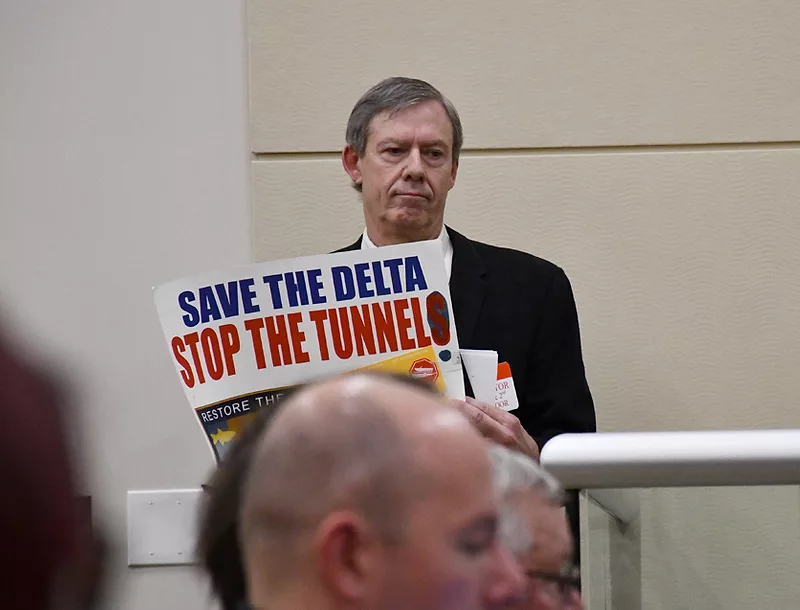
A coalition of tribes and environmental groups, led by Restore the Delta, is urging lawmakers to reject the bill, saying it would undermine the normal process for water rights extensions, favor the State Water Contractors and threaten the already fragile Delta ecosystem.
“This bill would set an extremely dangerous precedent,” said Morgen Snyder, director of policy and programs at Restore the Delta, in a coalition statement. “Protecting our waterways and the communities that depend on them requires maintaining rigorous standards for all water rights holders. Granting exemptions that override existing processes creates a system that favors powerful users at the expense of ecosystem and community health.”
At the hearing, Snyder argued DWR had years to advance its petition at the water board but failed to do the necessary work. She said DWR tried last year to fold the time extension issue into the water rights proceeding for the Delta tunnel, but the hearing officer rejected that approach.
 Jennifer Pierre (State Water Contractors photo)
“DWR never started its homework, but the State Water Contractors want to let DWR graduate with honors,” said Snyder.
Ryan Hernandez, assistant deputy director for Contra Costa County’s conservation and development department, testified on behalf of the Delta Counties Coalition, which comprises Contra Costa, Sacramento, San Joaquin, Solano and Yolo counties. He said the bill’s central purpose is to remove a barrier to the Delta Conveyance Project.
“The water board exists for a reason,” said Hernandez. “The Legislature shouldn’t eliminate its authority to manage water rights and protect other beneficial users of water.”
Hernandez acknowledged the tunnel would still need other approvals if AB 2215 passes. But he said the bill would “clear the path” by treating the State Water Project differently from other water users and allowing DWR to move forward without the same water board review.
A narrowed bill, but the fight continues
The bill was narrowed after its introduction. Earlier versions would have extended the permit deadlines to 2085, aligning them with long-term SWP contracts. Amendments shortened the extension to 2046 and added language stating that the bill is tied to unique circumstances, does not set a precedent for other permits and leaves the water board with authority to administer and enforce the six SWP permits.
Those amendments helped the bill move forward but did not resolve the broader dispute. Asm. Steve Bennett, D-Ventura, called AB 2215 “a big deal piece of legislation” and a “big deal change,” saying he wanted more answers on whether it would subvert Delta decision-making or set a precedent, though he ultimately supported moving the measure.
AB 2215 has cleared the Assembly and is now before the Senate, where the fight is expected to continue.

