
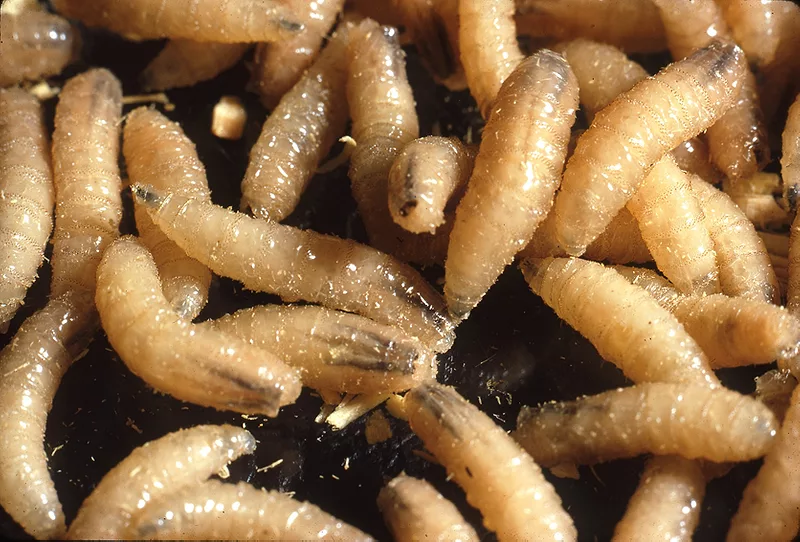
Agriculture Department to fund 40 screwworm defense projects
The Agriculture Department is putting $105 million into 40 research projects aimed at better equipping the U.S. to combat the spread of New World screwworm, the agency says.
The projects are being funded as part of a New World screwworm “Grand Challenge.” USDA wants to advance improvements in monitoring for wild flies, treating infected animals, and producing more sterile flies, according to a press release.
Projects range from new traps and insecticides for combating the pest to technologies like drones that could help better monitor its spread, according to a project list.
Corn growers to USDA: Fund corn grain research, not just stover
The National Corn Growers Association and 15 state corn organizations are calling on USDA to fund research supporting the full value of corn as a driver of new market opportunities and farm revenue.
In a letter to Scott Hutchins, USDA undersecretary of research, education and economics, the corn groups stress the need for the Trump administration to broaden its focus beyond the potential use of crop residues like corn stover, or the husks and stalks left in fields after harvest.
“While research into crop residues such as corn stover has received increased attention, it is equally critical that USDA invest in advancing the utilization of corn grain itself, including its core components: protein, oil, starch, and fiber,” according to the June 9 letter. “Critical solutions are needed now, and investing in research for corn grain that diversifies and expands markets generates more demand for our farmers.”
As grain farmers face a possible fourth year of being financially squeezed from high production costs and slumping corn prices, NCGA is exploring ways to create new sources of demand.
Cut through the clutter! We deliver the news you need to stay informed about farm, food and rural issues. Sign up for a FREE month of Agri-Pulse here.
University scientists have said to secure project funding, they’ve avoided research on increasing the utilization of corn grain, NCGA said in a statement on Tuesday.
“Some scientists have determined that if they include the words ‘corn grain’ in their proposal, they will not receive funding. In contrast, researchers have reported success in securing federal grants to develop a use for corn stover,” according to the group.
New biofuel markets are the key to new era of U.S. corn growth, study says
Booming production of corn and other crops is leading to gluts as the appetite for grain wanes amid slower global population growth and lower ethanol demand, a sweeping new study from S&P Global Energy says.
Nearly a third of annual U.S. corn acres will vanish by 2050 if new opportunities aren’t pursued, specifically new biofuel markets for the hard-to-electrify aviation and marine industries, according to the report released on Tuesday and commissioned by U.S. Farmers and Ranchers in Action, a nonprofit ag advocacy group.
U.S. ethanol, which is almost all made with corn, could see demand drop by almost 50% to about 6.6 billion gallons by 2050 due to fuel efficiency improvements, changing driving habits and the rise of electric vehicles, the study says. The outlook assumes ethanol-gasoline blend rates remain at the current 10%.
Yet higher blends of 15% or more, known as E15, along with ethanol-based sustainable aviation fuel and marine biofuel could dramatically change the grim trajectory, S&P analysts say. Development of the new markets could lead to a new era of U.S. ag growth.
Sen. Chuck Grassley hosted a briefing on Capitol Hill on Tuesday to go over the study’s findings. The Iowa Republican said the report shows why Congress needs to pass legislation to allow year-round, voluntary sales of E15 across the country.
Renewable Fuels Association President and CEO Geoff Cooper agrees.
“Biofuels like ethanol hold the key to unlocking market certainty, farm profitability and rural prosperity for generations to come,” Cooper said in a statement. “As the study shows, opening new markets for low-carbon ethanol — like year-round E15, maritime fuels, and aviation fuels — is the single most effective strategy for restoring balance and stability in agriculture markets over the long term.”
Brazil likely to keep producing at historical levels: analysis
Despite speculation that Brazilian corn and soybean production will suffer in 2027 due to high fertilizer prices, low commodity prices, and other factors, a new analysis from University of Illinois economists questions that narrative.
“While it may be tempting to forecast lower production now, Brazilian farmers have increased production in the past even when economic conditions have been difficult,” the analysis from Joe Hanzen and Joana Colussi says.
The average annual expected production increases are about 6.5% for both crops, they write. “Recently released USDA production forecasts for the 2026-27 marketing year show essentially similar growth for Brazil in 2027. If realized, forecast production levels of both crops would exceed estimated levels for 2026, which are already historic records.”
USDA forecasts “have not made dramatic changes to production forecasts based on current economic conditions,” they observe. “The historical record offers little support for a widespread, farmer-driven retreat in production.”
ITC plans full review of phosphate fertilizer tariffs on Morocco, Russia
The U.S. International Trade Commission plans to conduct full reviews of countervailing duty orders the U.S. placed five years ago on phosphate fertilizers from Morocco and Russia, according to a Federal Register notice out today.
The duties were first imposed in 2021 following a petition from The Mosaic Co., which argued subsidies gave fertilizer from both nations an unfair edge in the U.S. market.
Keep in mind: Thirty-two Republican House members asked USITC in March to revoke the Morocco duty, citing high costs farmers were facing amid conflicts in Ukraine and the Middle East.
Final word
“The 1980s taught us what happens when farmers have no markets. Biofuels reversed that story — and we can't afford to go back,” Kip Tom, former U.S. ambassador to the UN Agencies for Food and Agriculture, says in a new S&P Global Energy study, Fueling Agriculture: Biofuels as the Catalyst.
.webp?t=1762183428)

