
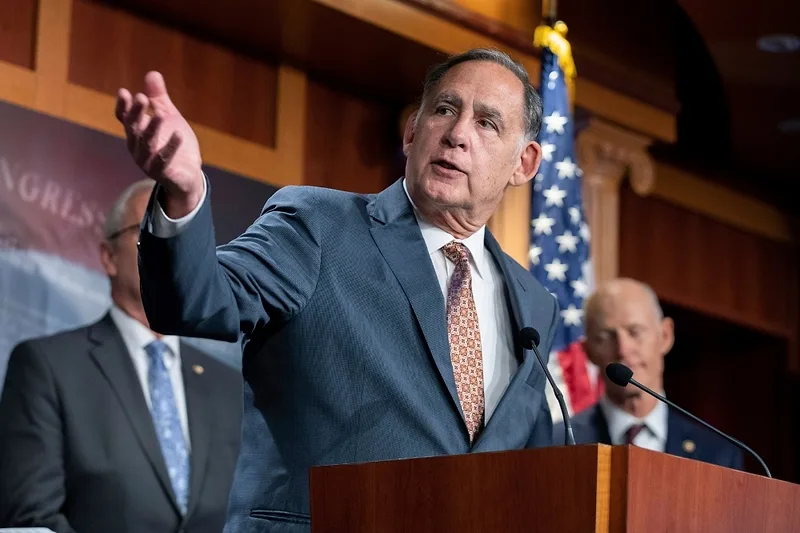
Senate Ag Committee Chair John Boozman, who has consistently said he doesn’t want to touch the state SNAP cost-sharing requirements enacted in last year's One Big Beautiful Bill Act, says he’s open to providing some relief to states working to comply.
Speaking on Agri-Pulse Newsmakers following the release of the committee's farm bill discussion draft, the Arkansas Republican acknowledged states have had more difficulty than expected reducing payment error rates below the 6% threshold that triggers cost-sharing requirements for SNAP benefits beginning in October 2027.
“We're talking about seeing if we can remedy that,” Boozman said. “We're talking to Senator [Amy] Klobuchar, who's been very helpful with all of these things, and then also the administration and our leadership to see if we can come to some sort of resolution that will take some of the pressure off as [the states] figure this out.”
The comments come after USDA reported this week that only nine states achieved full compliance with an error rate below 6% in fiscal year 2025. The national average payment error rate was 10.62%.
Asked whether the new error rate report had changed his thinking, Boozman said he anticipated many states would struggle but that the new data helped others have a “better understanding of what's going on.”
"I think it's fair for the states to say, 'Hey, look at this. We're committed to doing the right thing, but you've made it really difficult for us to get there,'" Boozman said. "I'm willing to talk about that and see if we can provide some relief."
The Arkansas Republican said governors and state administrators have raised concerns about outdated data systems and the challenge of implementing changes to both SNAP and Medicaid at the same time. As a result, he said, the new requirements would impose substantial costs on some states despite what he described as “good-faith” efforts to comply.
Cut through the clutter! We deliver the news you need to stay informed about farm, food and rural issues. Sign up for a FREE month of Agri-Pulse here.
The states are “working hard to do this, but the amount of money that we're talking about for some of our states is really substantial,” Boozman added.
A new report from the Center on Budget and Policy Priorities estimates states would have to pay about $9 billion in benefits for exceeding the error rate threshold.
Separately, Boozman defended the Senate farm bill's omission of language addressing California's Proposition 12, arguing there currently is not sufficient Democratic support in the Senate to advance the issue. He said the provision's most likely path remains through conference negotiations with the House, whose farm bill includes language aimed at limiting state regulations that affect agricultural production in other states.
On E15, Boozman said he expects language allowing year-round sale of higher ethanol-fuel blend fuel to be included in a nearly $90 billion supplemental government funding package, as called for on Wednesday by President Donald Trump.
But if that doesn’t work out, Boozman is optimistic E15 could pass the Senate as a stand-alone bill. “We're committed to getting it done, and I believe that we have an excellent chance of getting it done this Congress,” he said.
For more news, go to www.Agri-Pulse.com.

