
|
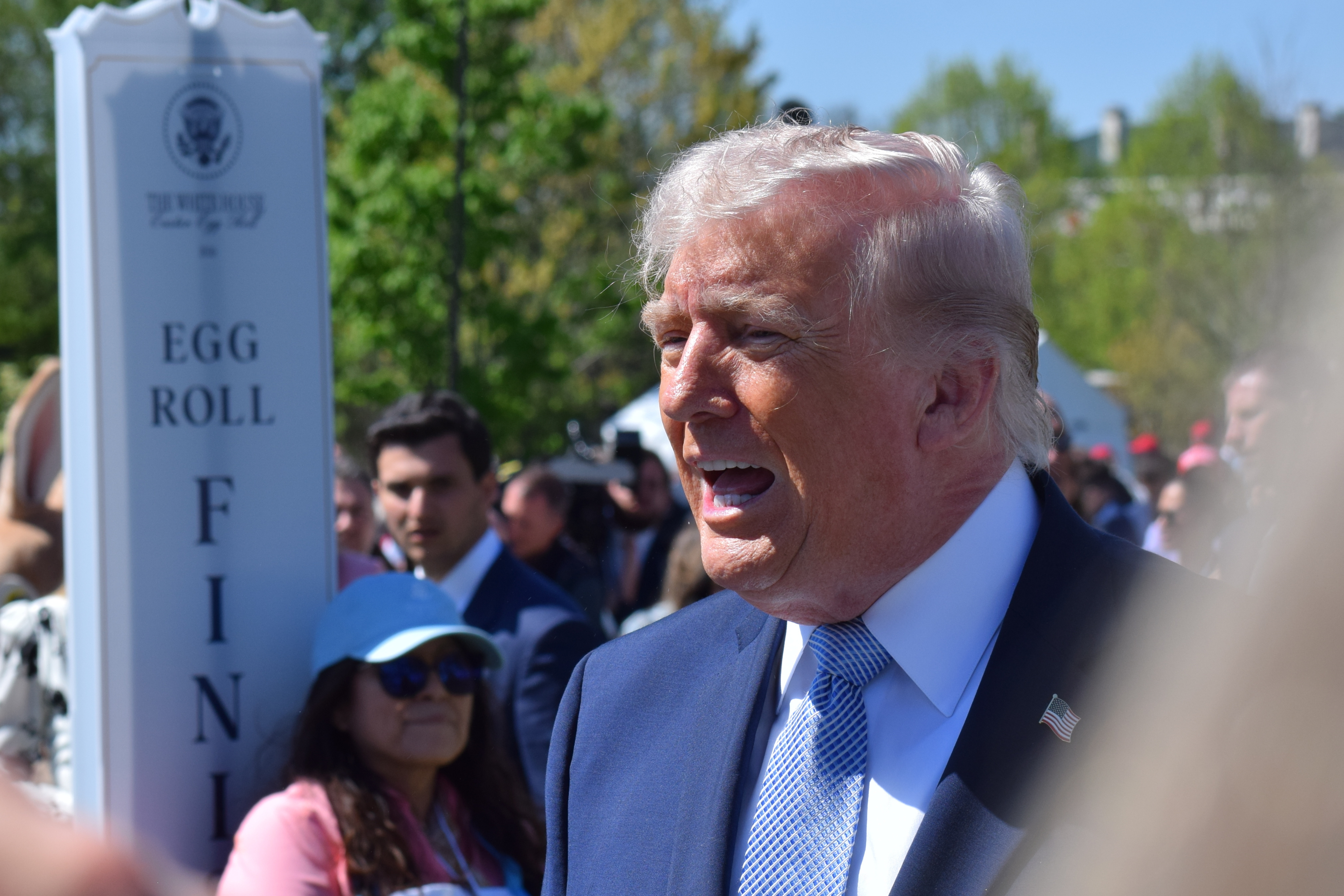
President Donald Trump is raising fresh doubts about whether the United States will extend the U.S.-Mexico-Canada Agreement, even as officials in Canada and Mexico show interest in preserving the deal for another 16 years.
Today marks the six-year anniversary of the USMCA, a milestone that triggers the trade pact’s first required joint review, which is supposed to result in a decision by the three countries on whether to extend the agreement for another 16 years. But a Reuters report suggests the Trump administration plans to declare today that it will not extend the agreement.
Trump has repeatedly suggested in recent weeks that the United States may be better off without the pact, which he negotiated during his first term to replace the North American Free Trade Agreement.
Trump told reporters June 17 that he was thinking “maybe we won’t be able to make a deal” when it comes to USMCA, according to a transcript posted by CQ Roll Call.
“I would rather not have the agreement, but I may sign it,” Trump said. But “we do better as a country if we don’t have an agreement.”
During a different press conference earlier this month, Trump told reporters that the U.S. should have trade surpluses, not deficits, with both Mexico and Canada, and that he believes USMCA was a “much better deal than NAFTA” but for one reason: “it gave us the right to terminate.”
"We don't need anything that Canada has," Trump said June 10. "We don't need anything that Mexico has. But they need everything that we have, and they have to treat us better.”
According to the USDA’s Economic Research Service, vegetables, fruits, beverages and distilled spirits represent 70.7% of Mexico's agricultural exports to the U.S.
Meanwhile, meat and animal products, grains and feeds, and oilseeds and oilseed products made up 60.9% of U.S. agricultural imports from Canada, including $4.2 billion worth of rapeseed oil, $3.1 billion in breads, pastries, and baked products, $2.8 billion in beef, $2.8 billion in cocoa, $1.9 billion in frozen potatoes, and $1.2 billion in pork and pork variety meats, according to ERS.
USMCA took effect in 2020 during Trump's first term. Among the terms Trump negotiators pushed for was a six-year sunset clause allowing the U.S. to weigh whether the agreement should be continued, according to the Congressional Research Service.
Under the agreement, a joint review of the deal is supposed to take place in early July, where participants will weigh whether to renew it for a 16-year term. If they do not reach an agreement, all parties will need to conduct annual joint reviews until they agree to an extension, or until USMCA expires in 2036.
Separately, the agreement also includes provisions that allow any party to withdraw from the agreement with six months’ written notice to other parties, according to the CRS report.
U.S. Trade Representative Jamieson Greer has so far held two rounds of bilateral negotiations with Mexico, and a third round is set to take place in Mexico City in July, according to a press release. Both parties “began conceptual discussions” on agriculture, labor and environment during the second round, which took place from June 15-17, the release said.
Greer told lawmakers in December that “a rubber-stamp of the agreement is not in the national interest,” and that “USTR will keep the President’s options open, negotiating firmly to resolve the issues identified, but only recommending renewal if resolution can be achieved.”
"As we embark on this journey together, I want to stress that the success of the Joint Review will depend on a variety of factors, including the ambition of our USMCA partners,” Greer said. "In addition, we must achieve outcomes that meet President Trump’s expectations.”
Canadian Trade Minister Dominic LeBlanc told U.S. and Mexican trade leaders in a June 1 letter that Canada supports renewal of the agreement for another 16 years, but added that his nation recognizes other countries may seek to propose changes. He said he is “willing to consider any proposal that can be beneficial to all three nations’ long term prosperity,” and added that “in parallel, discussions with the United States on addressing sectoral tariffs will be essential.”
Cut through the clutter! We deliver the news you need to stay informed about farm, food and rural issues. Sign up for a FREE month of Agri-Pulse here.
Mexican officials have also expressed an interest in preserving the agreement.
 Sandro Steinbach (NDSU photo)
Sandro Steinbach, an associate professor of agribusiness and applied economics at North Dakota State University and director of the Center for Agricultural Policy and Trade Studies, said U.S. negotiators are trying to juggle a wide range of objectives: exporting more, importing less, and keeping consumer prices low while also developing a domestic policy that advances domestic producers.
“I think that’s kind of the challenge here, is all of these moving parts,” Steinbach said. “What comes out at the end is a bit of chaos. That’s my concern right now."
Ag groups defend USMCA while seeking targeted fixes
Nancy Martinez, director of public policy, trade and biotechnology at the National Corn Growers Association, called USMCA “crucial” to the U.S. ag economy, noting that when it was enacted, the value of ag exports to Canada and Mexico grew by $20 billion, or 47%. She told Agri-Pulse ag and seafood trade related to USMCA directly contribute $64 billion to U.S. gross domestic product.
“USMCA has been absolutely vital,” Martinez said.
Mexico is the top market for U.S. corn growers, while Canada is the U.S.’s top ethanol export market, Martinez said. The U.S. also shipped over $1.3 billion in refined corn products to Mexico and nearly $700 million to Canada in 2024, according to a public comment submitted to USTR last year by Corn Refiners Association President John Bode.
However, Martinez said NCGA does have some priorities it’d like to see addressed through renewal, like clarification that Mexico cannot use “non-science reasons” to ban biotech corn and additional access in the Mexican market for ethanol.
Former Mexican President Andrés Manuel López Obrador in 2023 banned genetically engineered corn for use in dough and tortillas and planned to phase it out of animal feed and industrial uses. However, a USMCA dispute panel later ruled that the ban was not founded in science and the U.S. could retaliate. Mexico repealed the ban early last year.
Jamie Beyer, a Minnesota farmer and member of the American Soybean Association’s executive committee, said that under USMCA, U.S. soybean exports to Canada have doubled, while they have quadrupled to Mexico. According to data from USDA’s Foreign Agricultural Service, Mexico was the second-largest purchaser of U.S. soybeans after China in 2025, importing $2.3 billion worth, or around 5.4 million metric tons.
“It’s been a successful agreement,” Beyer told Agri-Pulse. While she did note that ASA would like to see a few tweaks to limit Mexican delays of soy shipments being sent by rail and Mexican phytosanitary standard requirements, she emphasized that she believes it has been a good agreement overall.
When it comes to fertilizer, Tom Lynch, senior vice president of government affairs at The Fertilizer Institute, said the agreement is important for the trade of three key ingredients: phosphate, nitrogen and potash. He said TFI believes USMCA is “a very important trade agreement,” and that the organization hopes it will remain in force.
Canada, which has one of the world’s largest potash reserves, was the source of 86% of U.S. potash imports in 2024, according to comments TFI filed with USTR. Meanwhile, the U.S. and Canada send nitrogen across the border to one another: Canada supplied around 25% of all U.S. nitrogen fertilizer imports that year, while the U.S. sent around 25% of its overall nitrogen exports to Canada.
Meanwhile, nearly 80% of U.S. monoammonium phosphate exports in 2024 were destined for Canada. Mexico, meanwhile, was the source of 12% of U.S. phosphate imports that year.
Additionally, Canada and Mexico supplied 60% of U.S. sulfur imports and 73% of U.S. sulfuric acid imports in 2024.
Lynch said curtailed shipments of products through the Strait of Hormuz, continued conflict between Russia and Ukraine, and China’s imposition of import controls have made accessing certain fertilizer ingredients, like phosphate and sulfur, more difficult. These challenges make access to Canadian products “all the more critical,” he noted.
"It's all the more critical now that we and the Canadians can continue to rely upon each other,” Lynch said. "We need their potash, we need some of their sulfur if it's available, and they need our phosphate.”
Former USDA Chief Economist Joe Glauber said that USMCA and its predecessor, NAFTA, also enabled the U.S. to import feeder pigs and cattle from Canada and Mexico.
During a House Ag Committee hearing earlier this month, Michael Schumpp, senior director of international affairs for the Meat Institute, also noted that live cattle and hog imports often move between the three nations and warned that if USMCA were disrupted, it could impact those flows. He called USMCA "the world's gold-standard trade agreement" and urged officials to avoid "a disruptive renegotiation.”
Irritants remain for U.S. dairy, specialty crop industries
Becky Rasdall Vargas, senior vice president of trade and workforce policy for the International Dairy Foods Association, said IDFA is in favor of continuing USMCA, but wants negotiators to resolve barriers U.S. producers have faced in accessing the Canadian market due to tariff-rate quota allocation rules.
“There’s some targeted issues that are certainly irritants that we think should be resolvable within the scope of the full agreement review,” she said. “So that’s kind of where we’re at — preserve, build upon, modernize, and fix the problems.”
Dairy has already been the subject of two USMCA dispute cases. In the first, a USMCA panel sided with the United States over Canada’s practice of reserving portions of dairy quotas for processors. Canada later revised its rules, but U.S. officials continued to argue that the new system still limited access for American exporters.
U.S. officials brought a second challenge in 2023, arguing that Canada’s revised dairy quota system continued to limit access for American exporters by excluding retailers, food-service operators and some other importers from receiving tariff-rate quota allocations. They also challenged Canada’s formula for dividing quotas, a 12-month activity requirement for applicants and the process for returning and reallocating unused quota. A USMCA panel majority rejected the claims.
Jaime Castaneda, executive vice president of policy development and strategy at the National Milk Producers Federation, said when it comes to USMCA, the biggest barrier dairy producers face is “how Canada is managing the distribution of TRQs." He said NMPF would like to see the agreement renewed, but would also like to see the dairy barriers addressed.
“The problem here is that despite giving a very small amount of additional market access, I mean less than 4% of their total market, they went about doing whatever possible they could do to prevent us from exporting that small amount,” he said of Canada.
A bipartisan group of 74 members of Congress also urged USTR in December to use the USMCA process to “remediate” challenges U.S. dairy producers face in accessing the Canadian market.
In a statement to Agri-Pulse, Dairy Farmers of Canada CEO Annie AcMoody said her organization “supports a ‘do no harm’ approach” to the USMCA review and believes the agreement “should be maintained in its current form.” She argued that the U.S. dairy sector has been “very successful" in accessing the Canadian dairy market, noting that exports of U.S. dairy products rose from $319 million to $756 million between 2019 and 2025.
"Canadian dairy farmers have made significant concessions under successive trade agreements, including CUSMA,” AcMoody said, using the acronym for the Canada-U.S.-Mexico Agreement, the name used in Canada to refer to the agreement. "Each time concessions are granted, they negatively impact the Canadian sector's economic contribution, stifle growth and investment, and hurt the communities and farm families who depend on the dairy sector for their livelihoods.”
Some parts of the U.S. specialty crop sector also have concerns they’d like to see addressed during the renewal process.
Chris Butts, executive vice president of the Georgia Fruit and Vegetable Growers Association, told Agri-Pulse imports of Mexican produce have increased during the marketing season for U.S. growers, and often at or below U.S. growers’ cost of production. He said this is “not sustainable” for U.S. growers, adding that if it is not addressed, “we’re going to go out of business.”
“We continue to see them increase during times of year when they didn’t use to sell into our market, where we had that market,” Butts said of Mexican produce imports. “Now they sell directly into our markets year-round.”
In comments submitted to USTR last fall, Florida Fruit and Vegetable Association President Mike Joyner pointed to a Florida Agriculture Department report suggesting that Mexican ag export expansion between 2004 and 2024 had resulted in 10% to 20% of lost sales for Florida agricultural producers, or about $570 million. He also pointed out that Florida producers’ share of the U.S. market for bell peppers, tomatoes, blueberries, cucumbers and squash fell during that period, while Mexico’s increased.
 Mike Joyner (FFVA photo)
“It’s a volume issue,” Joyner told Agri-Pulse. "They’re bringing in these volumes, it’s driving the price down, and it always seems to happen right when we’re in the prime of our season.”
Joyner said his group would like to see a seasonal tariff-rate quota established for certain products from Mexico during Florida’s marketing season, including strawberries, blueberries, bell peppers, squash, cucumber, watermelon, sweet corn and lettuce. He said there are between six and nine different Florida-produced specialty crop products that he isn’t sure will continue being produced if the trend continues.
“This six-year review is extremely critical to us, and … we just really need to get something done during this time,” Joyner said. “We are so far down this road, and we’ve been beaten and battered so badly.”
Editor's note: A previous version of this story incorrectly said the U.S. exported $219 million worth of dairy products to Canada in 2019. That total was actually $319 million.

