
Congress is out all week -- but there’s still plenty to watch in Washington.
The cost of borrowing money is in focus as the Federal Reserve is set to release details of its latest meeting on Wednesday. The minutes will provide hints on if the central bank is inclined to raise interest rates any time soon.
Why It Matters: Many farmers will start talks with lenders soon about next season. While fuel and some fertilizer prices are dropping, slumping crop values are keeping production costs high.
More Clues: USDA’s July crop report, known as the WASDE, will give fresh signals on supply and demand. Keep a close watch on the appetite for corn and soybeans. Demand is crucial as USDA projects the fourth-highest planted corn acreage since 1944 and also last week raised its prior estimate on soybean acres.
A 149-Year Low: Wheat is under major scrutiny after USDA said it sees farmers harvesting only 32.1 million acres this year. “That would be a 149-year low, the smallest harvested area since 1877,” says Karen Braun, chief market analyst at Zaner Ag Hedge.
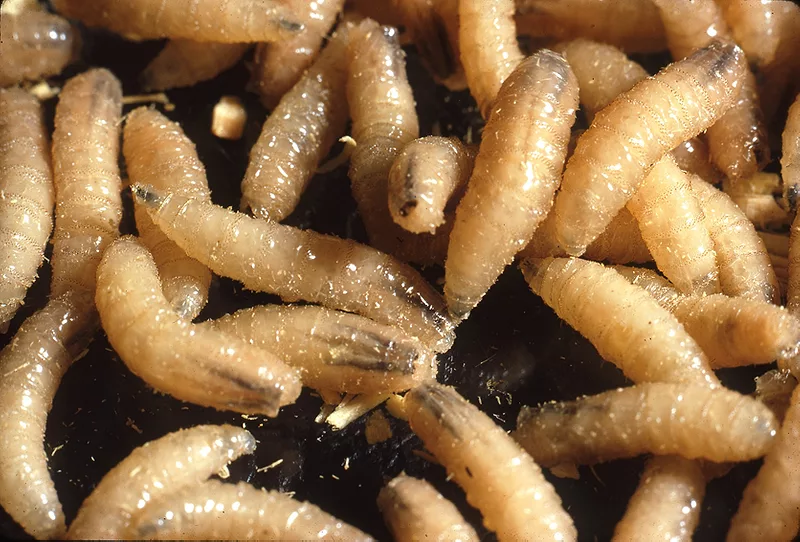
U.S. screwworm case count reaches 31
Thirty-one cases of screwworm have been found in the U.S., though only 17 are active, according to the latest data from USDA.
Nine recent cases have been detected in Crockett County, Texas, while six have been found in Edwards County and four have been found in Terrell County.
Take note: In a recent letter, USDA Research, Education and Economics Undersecretary Scott Hutchins pushed back against some of Texas Agriculture Commissioner Sid Miller’s calls for the use of fly baits, arguing that employing older versions of the technology “at this point would slow the eradication process.”
However, Hutchins did say he believes the concept “is good in principle” and that USDA researchers are developing a version specific for trapping female NWS flies without the need for a toxicant.
Summer cookouts get costlier
Americans likely paid more for July 4th backyard feasts this past weekend.
Cut through the clutter! We deliver the news you need to stay informed about farm, food and rural issues. Sign up for a FREE month of Agri-Pulse here.
A cookout for 10 guests cost $73.82, up 4% from last year, according to an American Farm Bureau Federation survey. Low cattle herds, higher labor and transportation costs, and pricier aluminum drove up prices for ground beef, hamburger buns, strawberries and pork and beans.
A bright spot is potato salad, which is down 18% as egg prices have fallen.
A reminder: “Higher prices at the grocery store don’t always translate to more money for farmers,” says AFBF President Zippy Duvall. “Farmers are dealing with natural disasters and higher supply costs while making the same - or sometimes less - money for the food they grow.”
California’s stalled E15 needs ‘common sense’ intervention, Iowa group says
The Iowa Renewable Fuels Association says an outdated requirement is blocking lower motor fuel prices in California.
Despite the sale of higher ethanol fuel blends, or E15, being legal in the state since last October, “we’re still waiting,” says Iowa Renewable Fuels Association Executive Director Monte Shaw.
That’s because the state fire marshal says E15 can’t be sold until “secondary vapor recovery systems” are certified for use with the fuel, “a lengthy regulatory process that could take two years,” according to IRFA.
The Iowa biofuel group says California is the only state still requiring such systems because they are no longer needed for modern vehicles.
“Combined with the low cost of ethanol, E15 is predicted to provide a 20-cent-per-gallon savings at the pump, or $2.7 billion per year,” IRFA says. “California also represents a major new market for ethanol use, which in turn boosts corn prices for struggling Midwest farmers. If fully adopted in California, E15 would represent a market for an additional 250 million bushels of corn.”
“IRFA hopes to see emergency action to remove this last, unjustifiable barrier to E15 in California,” Shaw says. “It’s time for common sense.”
Lawfare against farmers is subject of new MOU
USDA and the Small Business Administration have inked a memorandum of understanding supporting efforts to fight “lawfare” against farmers.
The MOU “formalizes collaboration between USDA and SBA’s Office of the National Ombudsman,” an Ag Department press release says. “It enables the resolution of complaints involving other federal regulatory agencies submitted through the USDA Lawfare Portal - in addition to analyzing resulting data to identify patterns for potential deregulation and accountability.”
Among the elements of the initiative is a “unified workflow to route, investigate, and resolve lawfare matters dealing with other federal agencies submitted through the USDA Lawfare Portal,” the release says.
Supreme Court to take up dispute over South Platte River
The Supreme Court has agreed to hear Nebraska’s challenge to Colorado’s use of South Platte River water.
The court plans to appoint a special master to oversee a case brought by Nebraska Attorney General Mike Hilgers accusing Colorado of breaching a 102-year-old compact by allowing irrigation season diversions for storage. He argued in a complaint that the agreement “effectively removed water from the river otherwise available to Nebraska during the irrigation season.”
Hilgers also claimed that Colorado is blocking the construction of a canal allowed to be built under the treaty.
Meanwhile, Colorado Attorney General Phil Weiser argues that Colorado is complying with the compact and not interfering with Nebraska’s efforts to construct the canal. He said, “Nebraska’s burden to prove those claims is incredibly high and we will vigorously defend Colorado’s full entitlements under the compact.”
Weiser is the Democratic nominee for governor, having defeated Sen. Mike Bennet in the primary last week. Bennet, an Ag Committee member, will remain in the Senate.
Florida fruit and vegetable group head touts ag labor bill
Ag labor legislation introduced in the House of Representatives is welcome news for the Florida vegetable industry, Mike Joyner tells Jeff Nalley on the latest Agri-Pulse Open Mic.
Joyner, president of the Florida Fruit and Vegetable Association, says nurseries and dairies would benefit from the bill championed by Ag Committee Chair Glenn “GT” Thompson.
The bill would essentially make the program year-round by allowing workers to stay in the U.S. for 350 days. “That alone would be so helpful to dairies, to nurseries,” Joyner says,
Joyner also would like to see the U.S. negotiate tariff-rate quotas on low-priced commodities from Mexico, “so we would curb the volumes of Mexican produce coming into the U.S.”
To listen to Open Mic, go here.
Final word
“China spends an enormous amount of money on agricultural infrastructure, but a string of exposés in State media, government crackdowns, and ‘scared straight’ meetings for rural officials reveal that spending is extremely bloated, consists mostly of showpiece projects, and nobody really knows for sure what's happening in the hinterland.” – Retired USDA economist Fred Gale in a post entitled “China's Bloated Farm Infrastructure Spending: Money for Nothing.”
.webp?t=1762183428)

