
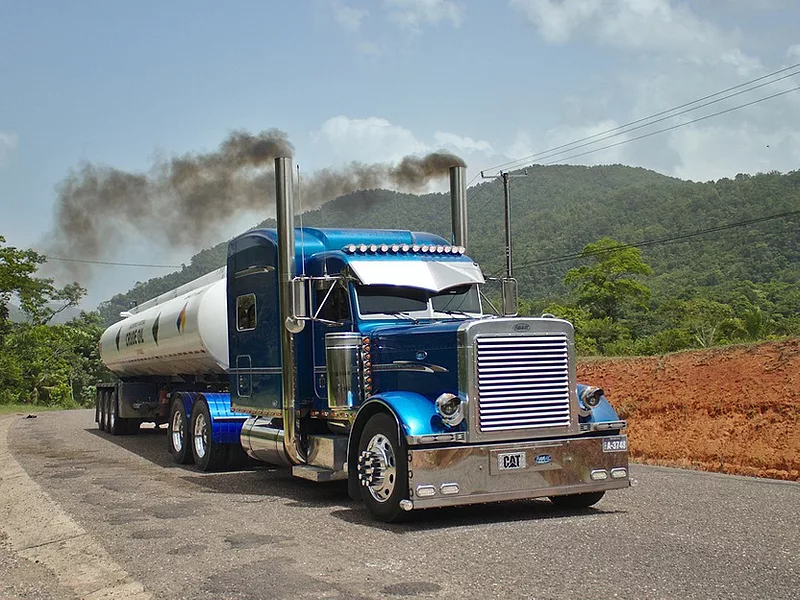
The Environmental Protection Agency plans to stop requiring that diesel trucks automatically reduce power when their emissions exceed certain limits under a proposed rule that would also do away with a Biden-era plan to increase how long manufacturers must provide warranties for emissions equipment.
Under a proposed rule, EPA would replace engine performance derates prompted by low or poor-quality diesel exhaust fluid or suspected tampering with emissions controls, with visible or audible notifications. The proposal states that vehicle operators in Iowa, Alaska and Nebraska have expressed concern with DEF-fueled slowdowns, particularly in cold conditions.
An EPA press release said savings could reach up to $6,000 per vehicle on new truck purchases “on top of the increased productivity operators are currently losing when deratements cause sudden speed loss on the road."
The proposal would also keep required warranties for emissions equipment at their current lengths of five years and 50,000 to 100,000 miles, depending on engine size, rather than extending them to 10 years and 160,000 to 450,000 miles starting with 2027 models, as a 2023 rule required.
In addition, the proposal would delay a Biden-era requirement that engines stay compliant with emissions standards for a longer portion of their lifespans, which was set to begin with 2027 models. Instead, the longer durability requirement would be pushed to model year 2030.
“Americans depend on reliable trucks to move essential goods across the country,” Administrator Lee Zeldin said in a press release. "If finalized, these changes will help manufacturers keep improving their vehicles without being forced to rush products to market before tdhey’re ready. Combined with the Trump EPA’s first proposed deregulatory action to address ongoing DEF problems, this will ease real burdens for operators.”
While the proposed rule estimates the changes will add roughly between 30,626 and 39,819 tons of NOx (a family of gases that includes nitric oxide and nitrogen ioxide) emissions per year compared to the status quo, it says that it will still “retain nearly 90% of the NOx reductions originally projected to result from the 2023 rule.”
The Truck and Engine Manufacturers Association welcomed EPA’s “continued engagement on cost-effective and achievable requirements for manufacturers, trucking fleets, and equipment operators" in a statement, which also said it would be “critical" for the rule to be finalized by the end of the year for manufacturer certainty.
In a statement, Peter Zalzal, counsel and associate vice president for Clean Air Strategies at the Environmental Defense Fund, said the proposal will “mean more health harms and higher costs in communities across the country."
“Heavy-duty diesel vehicles like freight trucks and buses emit huge amounts of smog and soot-forming pollution into the air we breathe, but truck makers are already introducing new engines that can substantially cut this pollution and meet protective standards,” he said. "EPA should abandon this proposal and instead maintain strong pollution safeguards for new heavy-duty vehicles.”
A press release from NATSO and SIGMA, groups that represent truck stops and fuel marketers, said the proposal "will invite consumer confusion and threatens to decrease DEF's availability and increase its price." It said "there is no reason to undermine the common sense measures the administration has already taken."
“While the Administration’s impatience is understandable, we believe it is counter-productive to prematurely disrupt that process when allowing it to proceed would negate the need for today’s DEF-related actions,” said David Fialkov, head of government affairs for NATSO and SIGMA.
For more news, go to Agri-Pulse.com.
Editor's note: This article has been updated with additional reaction.

