
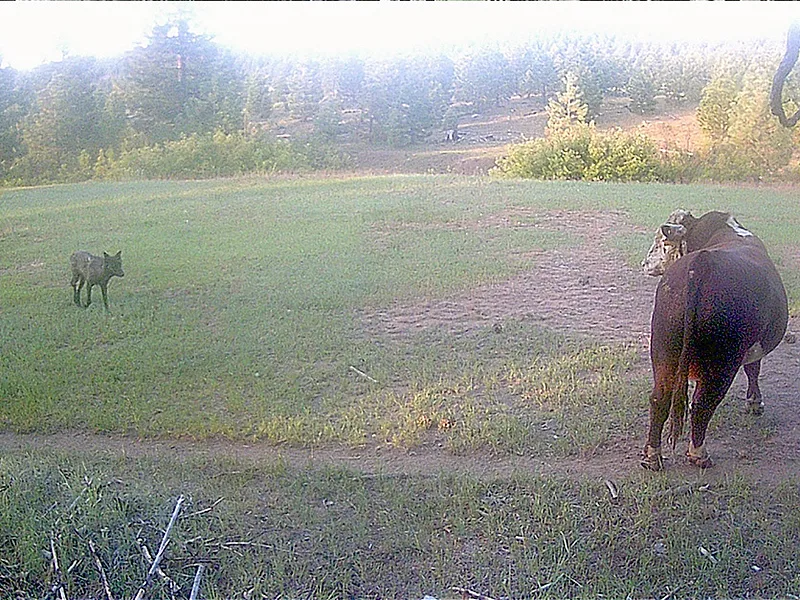
Researchers at the University of California, Davis, have found cattle made up more than half the summer diet of gray wolves studied in northeastern California, adding new evidence to ranchers’ concerns as the protected predators expand across the state.
The peer reviewed study, published in PLOS One, analyzed 98 wolf scat samples collected in 2022 and 2023 from the Lassen and Harvey pack territories. Cattle DNA appeared in 72% of the samples, compared with mule deer in 45% and small mammals in 51%. Researchers estimated cattle accounted for 55% of the biomass consumed, while mule deer contributed 12% and small mammals 15%.
“Whether it’s through scavenging or whether it’s through depredation, it’s a huge component of the wolves’ diet,” said lead author Tina Saitone, a UC Cooperative Extension agricultural economist at UC Davis. “Their conservation success is because of livestock producers in the state.”
The findings do not show whether wolves killed the cattle or scavenged animals that died from other causes, a central limitation of scat-based diet studies. But the researchers noted natural mortality is generally low among cattle grazing during the summer, and federal investigators confirmed at least seven cattle depredations by the two packs during the study period.
The study identified 20 individual wolves through genetic testing, and at least 17 had consumed cattle. Researchers said the results may reflect California’s limited supply of wild ungulates. Mule deer populations have declined for decades, while elk are relatively scarce in northeastern California. Cattle, by contrast, represented most of the available ungulate biomass within the study area.
Saitone said keeping wolves separated from livestock is especially difficult on large, open rangelands. The study area encompassed roughly 1 million acres and 10,000 cow-calf pairs, limiting the practicality of fencing or bringing animals into barns overnight.
A companion UC Davis study also found cattle grazing in wolf territories had hair cortisol levels 58% higher than herds in areas without wolves, suggesting ranchers face losses beyond confirmed kills through stress-related impacts on animal health and production.
The authors said broader research is needed because the diet analysis covered only two packs.
For more news, explore Agri-Pulse.com.

