
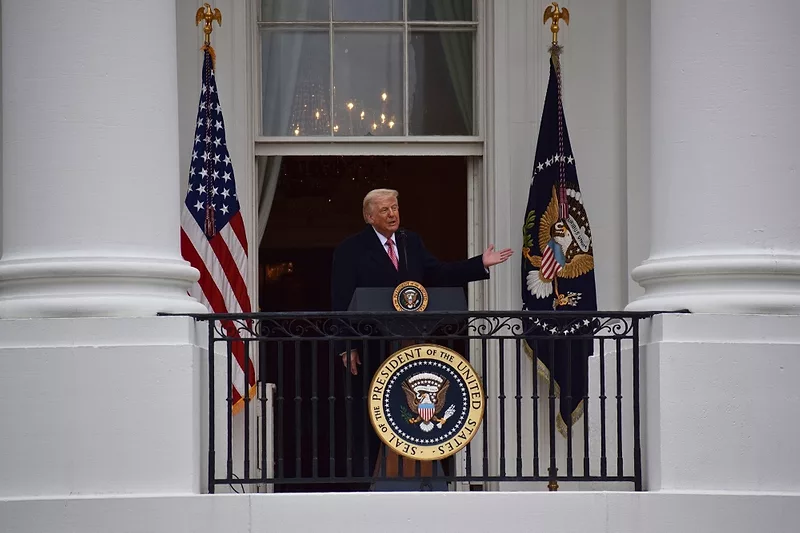
President Donald Trump called on Congress to pass the SAVE America Act and urged Americans to call Capitol Hill and demand action on the bill that would require photo identification to vote in federal elections.
“How easy is that to do? Unless you want to cheat,” Trump said in a televised address to the nation on Thursday night, referring to the ID requirement.
Agriculture Secretary Brooke Rollins thanked Trump for his speech, saying the administration was working “nonstop to right the wrongs of the last decade, whether it is inflation, the border, or our elections. We are not stopping until the fight is done.”
“A nation without food or free elections will never be secure,” Rollins said on social media.
Trump said Homeland Security Markwayne Mullin would hold a briefing Friday to discuss vulnerabilities in the country’s electronic voting systems. The administration is informing governors and federal lawmakers about potential issues in their states, according to Trump.
House Budget Committee advances reconciliation 3.0 package
The House Budget Committee has favorably reported its $95 billion reconciliation 3.0 package, which would provide up to $12 billion in farm aid, $10 billion for the GOP’s signature Save America Act and a total of $73 billion for the war with Iran.
At Thursday’s markup, Republicans rejected Democrats’ 14 proposed amendments on party-line votes. Democrats on the panel sought to reverse cuts to the Supplemental Nutrition Assistance Program and Medicaid in the one-year-old One Big Beautiful Bill Act. Another amendment targeted Trump administration tariffs and one would have made the expired Affordable Care Act tax credits permanent.
The individual authorizing committees still have to determine how the funds will be distributed.
Read more in our article here.
Related: Rep. Shomari C. Figures, D-Ala., introduced the Tariff Impacted Farmer Support Act of 2026 that would provide $15 billion in farm aid to cotton, peanuts, soybeans, corn and poultry producers. The bill would use funds from USDA’s Commodity Credit Corporation.
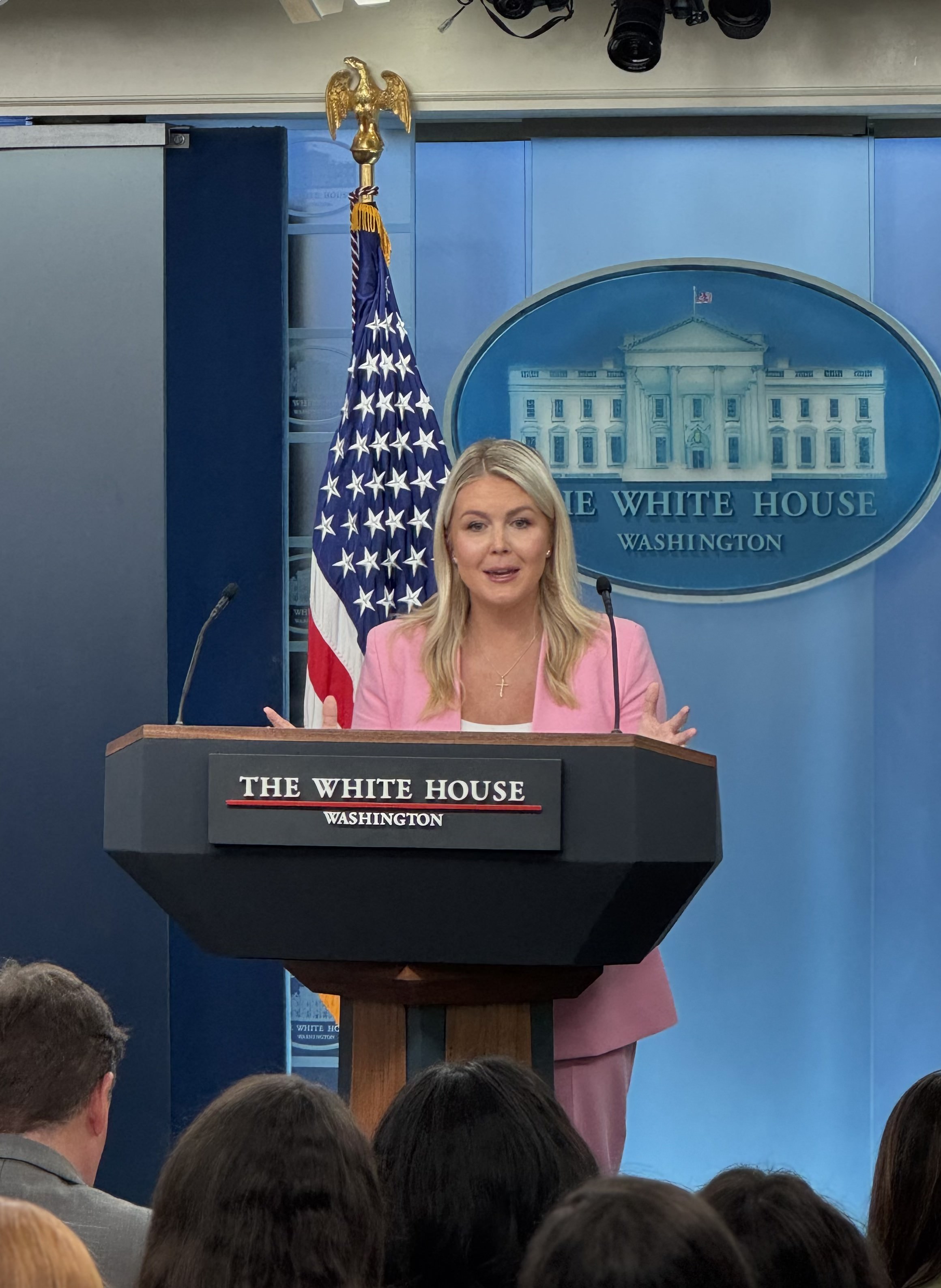 White House Press Secretary Karoline Leavitt addresses reporters in the James S. Brady Press Briefing Room Monday. She reaffirmed that President Trump remains “supportive” of the current “budget reconciliation 3.0” plan that “not only will address the SAVE America Act, but also ensures important aid for our farmers and our warfighters.” (Agri-Pulse photo)
 The time is now: Newhouse on renewed optimism for ag labor reform
Rep. Dan Newhouse says the timing may finally be right for Congress to advance agricultural labor reform after years of stalled efforts.
Speaking on Agri-Pulse Newsmakers, the Washington state Republican said the recently unveiled Securing Agriculture's Workforce Act has been introduced at a time when border security concerns that previously caused Republican pushback have eased. Now, he says, lawmakers can focus on reforming agricultural guest worker programs.
“The good thing about this is the timing,” Newhouse said, adding that support from more than 400 agricultural organizations gives him hope the bill could advance as part of a broader immigration package or year-end legislation. “I think although the legislative year is short, there's issues about our border and about immigration that are on everybody's mind, and I think we have an opportunity here to be part of perhaps a larger effort that could be happening here in the House and throughout Congress.”
Looking back: One of the few members of Congress who is an active farmer, Newhouse said increasing awareness of specialty crops and agricultural labor challenges on Capitol Hill is one of his proudest accomplishments as he prepares to retire in January after 12 years in office.
"When I started in Congress, there weren't a lot of people talking about reforms to the agricultural labor rules and laws that we have," he said. "Now it's on everybody's mind. The level of understanding and urgency on the part of members of Congress that we have to do things to help our agricultural producers is very high."
Newhouse seeks at least $5 billion in specialty crop aid
Newhouse also tells Agri-Pulse Newsmakers he's pushing for a Republican reconciliation bill to include as much financial aid as possible for specialty crop growers.
“It's tough in farm country right now,” the third-generation Yakima Valley farmer says. The House Agriculture Committee member says he wants the legislative package to include at least $5 billion for specialty crop farmers.
It’s not clear how much of the $12 billion in farmer aid in the reconciliation measure advanced by the House Budget Committee Thursday would go to growers of those crops, which include fruit, vegetables and tree nuts, versus producers of row crops such as soybeans.
Keep in mind: House Ag Chairman Glenn “GT” Thompson told Agri-Pulse this week that he’s unsure how much money he wants to provide specialty crop producers, though he previously called for $5 billion.
Biomass-based diesel hits all-time monthly record in June
U.S. biomass-based diesel output reached 494 million gallons last month, a monthly record that puts the soybean-heavy industry on track to meet this year’s Renewable Fuel Standard volumes.
Production in June was 494 million gallons, according to EPA data released Thursday.
The figure shows “undeniably that the U.S. biomass-based diesel industry has the capacity and the feedstocks to produce at the pace necessary to meet this year’s RFS volumes,” says Paul Winters, director of public affairs and federal communications at Clean Fuels Alliance America. “EPA set the RFS volumes at a level that supports U.S. investment and economic growth in rural communities -- and most importantly, supports U.S. farmers.”
National Coffee Association applauds exemptions to Brazil tariffs
The National Coffee Association thanked the Trump administration for exempting coffee products from the 25% tariffs on Brazilian products. The Office of the U.S. Trade Representative on Wednesday finalized its Section 301 investigation that was used to tariff Brazil. The tariffs will go into effect on July 22, according to the final action notice.
“The United States can’t grow coffee to meet our needs, so the administration’s strategic exemptions make critical contributions to easing cost-of-living pressures and enabling coffee’s continued enormous contributions to U.S. jobs, manufacturing, and the economy,” William “Bill” Murray, the president and CEO of NCA, said in the statement.
The original list of exempt products didn’t include unflavored instant coffee. NCA testified to USTR that it needed to be exempt because it's not easily replaceable. USTR ultimately decided to exempt unflavored instant coffee, marking a win for NCA and the coffee industry.
Read more in our article here.
 Amy France and Agri-Pulse’s Lydia Johnson in the Newsmakers studio. (Agri-Pulse photo)
Final word
"It's a win-win. A win for using U.S.-grown commodities to feed hungry people in the world, as well as securing a market for our farmers to move those bushels." – National Sorghum Producers Chairwoman Amy France discussing the first shipment of 108 railcars of sorghum for the USDA-administered Food for Peace program on Agri-Pulse Newsmakers.
.webp?t=1762183428)

