
|
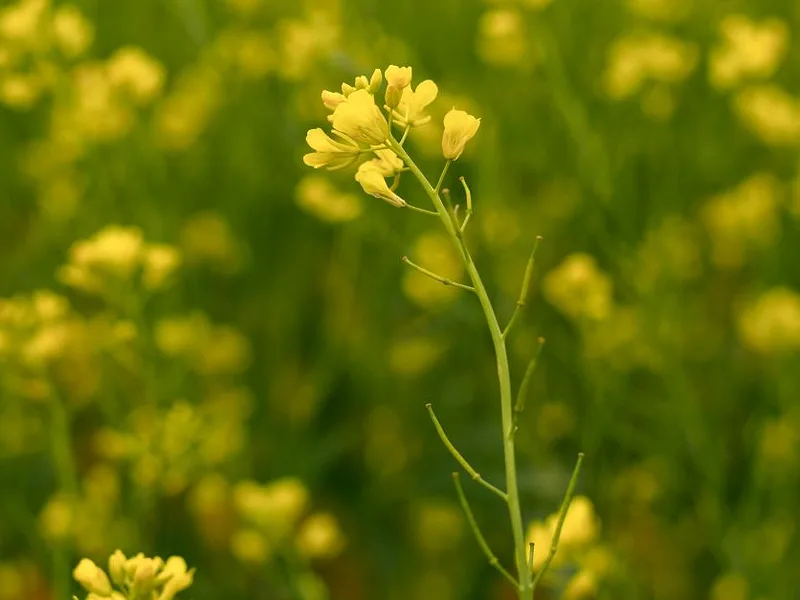
New waves of yellow are blanketing America’s cropland, thanks to a resurgence in bio-based diesel.
After a lull that had parts of the industry doubting its future, output of lower-emitting diesel reached its highest monthly level ever in June, driven by historically high U.S. quotas for blending biomass-based diesel with its petroleum counterpart.
The Trump administration’s 2026 renewable volume obligations, finalized in March, are 62% higher than last year. Energy firms are, in turn, making more fuel and the agriculture sector is continuing a push to grow and process more biofuel feedstocks, from major crops like soybeans, to newer entrants, like yellow-hued canola and camelina.
U.S. renewable diesel production is expected to reach a record high this year, with further gains in for both RD and biodiesel in 2027, according to the U.S. Energy Information Administration
“Production has responded to the rule finalized earlier this year,” Corey McCray, vice president of government relations at the National Oilseed Processors Association, told Agri-Pulse. “The result is idled capacity returning to service, which extends our fuel supply and NOPA members processing record volumes of soybeans, creating stronger demand, and importantly, cash prices, for America’s soybean farmer Corey McCray (NOPA photo)s.”
Expectation for longer-term growth of bio-based diesel, as well as full development of biofuel markets for ocean vessels and airplanes, means more ingredients, or feedstocks, are needed.
“Standing behind every physical gallon of biomass-based diesel is a corresponding requirement for feedstock — soybean oil, distillers corn oil, animal fats, used cooking oil, and canola oil,” Todd Hubbs of Oklahoma State University and Scott Irwin of the University of Illinois said in a joint study.
The Environmental Protection Agency’s 2026-2027 RVOs alone require unprecedented expansion in biomass-based diesel feedstock use, with total demand projected to increase 57% in 2026 and 81% in 2027 compared to 2025, according to the analysis.
Canola
Topping the list of new U.S. crop growth for biofuels is canola, a member of the mustard family that turns bright yellow before morphing into pods. North Dakota is by far the biggest U.S. producer, but other regions of the country — including in the South — are focusing more on canola, with significant energy and ag investment.
Bred in Canada in the 1970s as a healthier version of rapeseed, canola is named for "Canada" and "oil."
Canada produces roughly a fifth of the world’s oilseed used for cooking and making food, a high-protein ingredient in livestock feed, and producing biofuels.
The U.S. Department of Agriculture estimates 2.96 million planted acres of canola this year, nearly 30% above last year and a record if realized. That’s compared with 147,000 harvested acres in 1991 and about 2.7 million acres in 2024.
“U.S. canola acreage is growing faster than at any point in the crop’s domestic history, driven by demand that continues to outpace supply,” Albre Brown, U.S. market manager for BASF Agricultural Solutions’ InVigor canola hybrid seed that boasts high yields and disease resistance, said in a recent report on the crop. “Whether canola is already part of the rotation or just entering the conversation, the opportunity in front of U.S. agriculture today is real and accelerating."
Most U.S. canola is a variety planted in the early spring, though there are increasing efforts to produce more winter canola, especially in Southern states, as an additional product for growers of crops like soy and cotton to plant in fields that otherwise would be empty during winter months.
A U.S. winter canola initiative among crop processor Bunge, energy giant Chevron and seed company Corteva just finished its third season. The program, which guarantees a buyer of the canola, began in the U.S. Southeast and markets to farmers as a way to boost farm income, diversify operations, improve soil health and maximize field productivity.
Bunge crushes the canola into oil, used to make biofuels, and meal. Like soy, canola meal is primarily used as a feed ingredient for livestock and aquaculture.
“This dual‐product value stream — oil for food and fuel, meal for feed — is what makes canola economically resilient,” Brown said.
Canola’s acreage boost comes as all U.S. wheat plantings this year are estimated at 42.7 million acres, down 6% from 2025.
Whereas wheat has seen a recent glut globally that's weighed on prices, despite the U.S. supply decline, "canola offers farmers a higher-value rotational alternative with demand tailwinds that wheat currently lacks,” Brown said.
Omaha, Nebraska-based Scoular, a $7.3 billion agribusiness company founded in 1892, recently opened a dual oilseed crush facility in Goodland, Kansas, amid higher demand expectations for both soybeans and winter canola at biofuel feedstocks.
Canola acres in Kansas and Oklahoma have risen to over 50,000, up from roughly 15,000 acres three years ago, according to Scoular. The oilseed crop is touted in the drought-prone region as having a deep taproot that helps canola access moisture deeper within the soil, helping it hold up well in dry conditions, Jeff Frazier, Scoular market development manager, said in a statement in May.
Overall, there's been a massive addition of U.S. oilseed crush capacity over the last five years, with investment of more than $6 billion. "It's one of the biggest step function changes we've seen in a long long time in the crush industry," Matt Upmeyer, VP of commercial for Montana Renewables, said in an interview with Agri-Pulse.
A continuation of supportive government policies will drive further investment in both crush and oilseed production, he said.
"We have the beans to do it and we can expand canola acres," he said. "This is a pro-agriculture story. If we have a strong policy, people are ready, willing and able to continue to invest and grow the area, and the farmer will produce it."
Novel oilseeds
The biofuel boom has stoked increasing interest, including from oil energy giants like Exxon over the past few years, in what’s known as “novel oilseeds,” a term for plants viewed as underutilized but potentially valuable for diverse applications, including fuel.
Corteva and energy giant BP earlier this year formed a joint venture, Etlas, to produce oil from crops, including canola, mustard and sunflower, for use in making sustainable aviation fuel and renewable diesel. The new firm plans to initially focus on South America and eventually start growing oilseeds in the U.S. and Canada.
 Albre Brown (BASF photo)
Pennycress, also in the mustard family, was traditionally seen as an annoying weed. Today it’s better known as a promising biofuel feedstock. Bayer owns a majority stake of CoverCress, developed through breeding and gene editing of pennycress. Last month, a team of Illinois State University researchers said they genetically transformed wild pennycress into a cash cover crop that can help farmers and the environment used for biofuel and animal feed.
Montana Renewables, a producer of renewable diesel and sustainable aviation fuel, has produced SAF out of camelina, an oilseed plant from the mustard family, Upmeyer said. The company delivered the fuel to the Minneapolis-St.Paul airport, he said.
"We've demonstrated that it works," Upmeyer said, adding that the firm is working on projects aimed at bringing in such feedstocks on a more steady basis.
Camelina, a short-season crop known for its high oil content, has been of increasing interest in recent years, though Upmeyer notes that there currently isn't much to go around. "There's just not enough of it produced," he said.
There are also policy questions to still work out around the value of such crops in the biofuel market, given that it's not a core feedstock, he said.
"It's not like we could have that be part of our daily diet," Upmeyer said. "But we definitely want to see that growth and that transition."
.webp?t=1762183428)
