
Republicans on the Senate Ag Committee are looking to scale back the cuts to the Supplemental Nutrition Assistance Program contained in the House-based budget reconciliation bill.
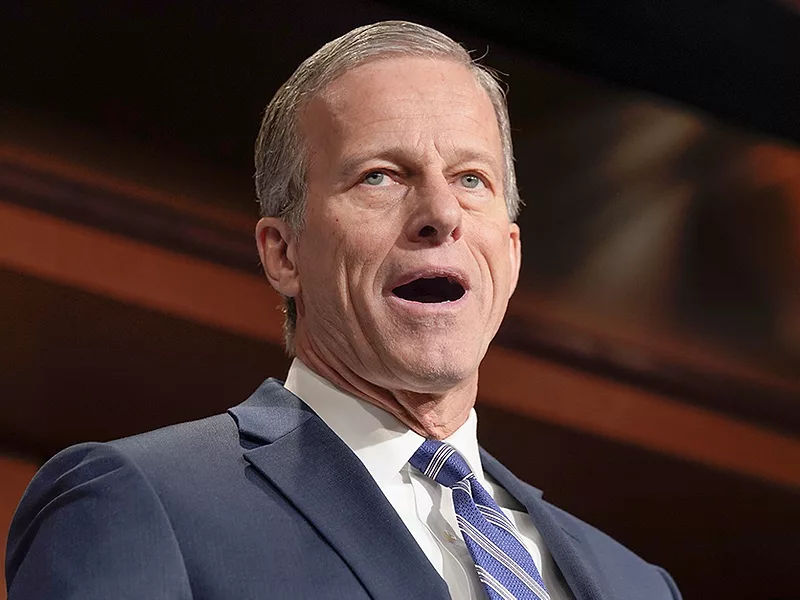
Committee Chair John Boozman, R-Ark., said Thursday the final number is still a “moving target.” But he acknowledged that Majority Leader John Thune, R-S.D., would like the committee to come up with a net reduction of about $150 billion. “I think they would like for us to be in that range,” Boozman said.
That’s well short of the net $238 billion cut that the House bill would make, after accounting for additional spending on farm bill programs. The House bill’s cut relies heavily on requiring states to start paying part of the cost of SNAP, an idea that is facing opposition among Senate Republicans.
The Senate bill is likely to include expanded work requirements for SNAP as well as increased spending for commodity programs. Boozman said the committee was still waiting on final decisions from the Senate parliamentarian on whether some farm bill provisions could be included in the bill. He didn’t elaborate.
US, China agree to meet some more after Trump, Xi talk
The United States and China have agreed to conduct more trade discussions after a lengthy phone call between President Donald Trump and Chinese leader Xi Jinping that Trump called “very positive.”
Trump said on Truth Social that the hour-and-a-half-long call, which he initiated, “resulted in a very positive conclusion for both countries.”
China recently placed export controls on rare earth minerals, which are vital to the auto industry. Trump implied there might be a resolution, writing, “There should no longer be any questions respecting the complexity of Rare Earth products.”
A statement from the Chinese Embassy in Washington said China is living up to commitments it made in Geneva last month. The U.S., it said, “should acknowledge the progress already made, and remove the negative measures taken against China.”
“The two presidents agreed that their teams should continue implementing the Geneva agreement and hold another round of meeting as soon as possible,” the statement said.
Democrats rip USDA spending bill
The House GOP’s fiscal 2026 spending bill is headed for consideration in the full Appropriations Committee next week. The Ag Appropriations Subcommittee approved the bill on a party-line vote after Democrats took turns accusing Republicans of shortchanging a wide range of programs, from the Women, Infants and Children nutrition program to Food for Peace and rural development assistance.
It’s easy to be “in the know” about what’s happening in Washington, D.C. Sign up for a FREE month of Agri-Pulse news! Simply click here
The legislation, which also includes funding for FDA and the Commodity Futures Trading Commission, would reduce total discretionary funding by 4.4%, or $1.2 billion, to $25.5 billion for FY26 for the covered departments and agencies.
“This bill sets USDA on a responsible and sustainable spending path that will make the department and our nation stronger,” said subcommittee Chair Andy Harris, R-Md.
NRCS chief hopes to streamline functions
Natural Resources Conservation Service Chief Aubrey Bettencourt says her team is looking for ways to streamline approvals, eliminate barriers to entry and provide better service.
Speaking at Field to Market’s annual meeting in Kansas City, Bettencourt also discussed the need to better arm farmers with data so they can enter markets and claim accurate credits. One potential vehicle the agency is exploring to bridge the gap between private partners and farmers is the SUSTAINS Act.
That 2023 law championed by House Ag Chair Glenn Thompson, R-Pa., allows NRCS to accept private funds to support a wider range of conservation programs, including those addressing carbon sequestration, improving wildlife habitat and protecting drinking water. The Biden administration solicited public comment on how to implement the bill in August.
“I firmly believe that it is NRCS’ role to sit in the middle and help be a partner in convening that conversation and coming up with a process for going forward,” Bettencourt said.
Also from KC: FTM, a sustainable agriculture alliance, released guidance for regenerative agriculture to address the growing popularity of the term. The group crafted a definition of regenerative ag in 2022. Since that time, members have worked to create guidance to support the adoption of regenerative practices.
The guidance demonstrates the potential environmental impact of regenerative agriculture practices, offers finance pathways to support adoption and farm profitability, and highlights potential positive impacts on farming communities.
Lawsuit challenges termination of USDA grants
Three groups are suing USDA over the termination of grants through three programs, including the Partnerships for Climate Smart Commodities, now called Advancing Markets for Producers.
Among the plaintiffs is the Washington-based Oakville Bluegrass Cooperative, which received a $4.9 million PCSC award that was terminated April 22.
The lawsuit says termination letters for the projects did not explain how they had failed to meet the new “farmer first” requirements.
The cooperative has been forced to lay off five employees and halted all soil sampling and testing, the suit said. It has returned a truck it was renting, ended a lease for a facility it used to store equipment and grass seed, and has not been able to pay a university lab that was helping with soil sampling.
Other programs named in the lawsuit include the Forest Service’s Urban and Community Forestry Program and the National Institute of Food and Agriculture’s Community Food Projects Competitive Grants Program.
Summit Carbon Solutions gets a needed win from federal court
Summit Carbon Solutions got a significant win Thursday when a federal appeals court found that ordinances passed by two Iowa counties are preempted by federal and state law.
The 8th Circuit Court of Appeals in St. Louis affirmed separate rulings by a federal district court.
Setbacks required by both counties are “safety standards” and thus preempted by the federal Pipeline Safety Act, the court said. In addition, because Summit could conceivably comply with a permit issued by the Iowa Utilities Commission but still run afoul of the county ordinances, those ordinances are preempted, the court said.
The company wants to build a 2,500-mile pipeline through Iowa, Nebraska, Minnesota, and North and South Dakota. But a law passed in South Dakota prohibiting the use of eminent domain for pipelines transporting carbon dioxide. Summit is preparing a new application for its proposed operations in that state.
Final word
"It's not a game changer. It's a life changer." – Kevin Stuckey, sow unit manager at Cooper Farms, on his optimism about what the PRRS-resistant pig genetics approved by the FDA would mean for producers if commercialized.
Hear more from Stuckey as well as Oklahoma Pork Executive Director Kylee Deniz, and Chris Ford, VP Corporate Swine Lender at Farm Credit Services of America, on Agri-Pulse Newsmakers today.
Rebekah Alvey, Philip Brasher and Noah Wicks contributed to today’s Daybreak


