
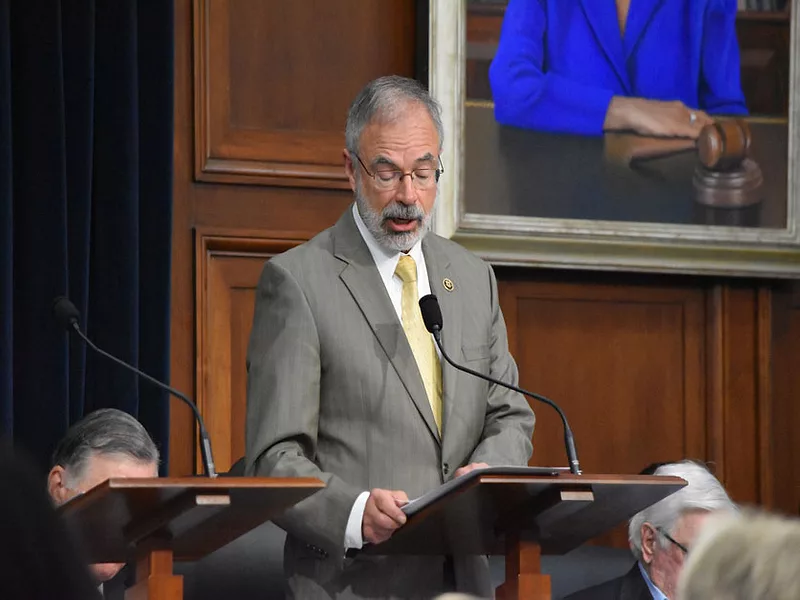
Food for Peace would not be integrated into USDA under an amendment approved by the House Appropriations Committee during a markup of the fiscal 2026 spending bill.
Appropriators marked up the fiscal year 2026 Agriculture, Rural Development, Food and Drug Administration and Related Agencies bill Wednesday. Republicans are expected to pass the bill late Wednesday night or Thursday morning. Democratic amendments, many of which related to nutrition funding and tariffs, were not adopted as of Wednesday afternoon.
The panel did adopt some changes to the original draft, including a provision in the manager’s amendment that stripped out language moving Food for Peace to USDA. The program was under the now-dismantled U.S. Agency for International Development.
An initial draft of the bill would have moved the program to USDA, which had been suggested by Republicans from farm states.
The manager's amendment cuts that provision from both the bill and the committee report and maintains appropriations for Food for Peace at $900 million, a significant cut that funds the program at its lowest level since 2002.
The amendment also increases New World screwworm preparedness funding from $5.5 million to $10 million. The updated committee report notes that continued research and developing control methods are “critical” to respond to and prevent a screwworm outbreak.
The Animal and Plant Health Inspection Service's preparedness and response plan for a screwworm outbreak was last updated in 2018; the committee said it needs to be updated in light of the current infestation in Mexico and Central America.
Under the bill, APHIS and FDA would be required to update preparedness and response capabilities and identify research and tools needed to improve NWS prevention and eradication.
One proposed amendment from Appropriations Ranking Member Rosa DeLauro, D-Conn., would have adjusted the monthly cash value benefit for WIC participants. The benefits are monthly allotments for participants to purchase fruits and vegetables.
It’s easy to be “in the know” about what’s happening in Washington, D.C. Sign up for a FREE month of Agri-Pulse news! Simply click here
The draft bill maintains overall funding levels for WIC at about $7.6 billion. However, it also cuts the cash value benefit (CVB) by 10%, which would lead to a direct $100 million decrease in 2026 and tees up an eventual $1 billion cut to the fruit and vegetable benefits.
The International Fresh Produce Association, anti-hunger groups and Democrats have raised alarm over these cuts, and argue it goes against the administration’s stated goals to Make America Healthy Again. Some House Appropriations Democrats noted that the recent MAHA Commission report actually praised WIC for its role in increasing whole fruit and vegetable consumption.
“These proposed cuts would have serious consequences for connecting farm-fresh produce to low-income women and children — populations already at increased risk for diet-related health disparities,” IFPA wrote in a statement ahead of the markup.
Subcommittee Chair Andy Harris, R-Md., said the CVB was intended to be a one-time infusion to support participants during the COVID-19 pandemic. He also noted that overall funding for the benefit remains high.
For more news, go to: www.Agri-Pulse.com

