
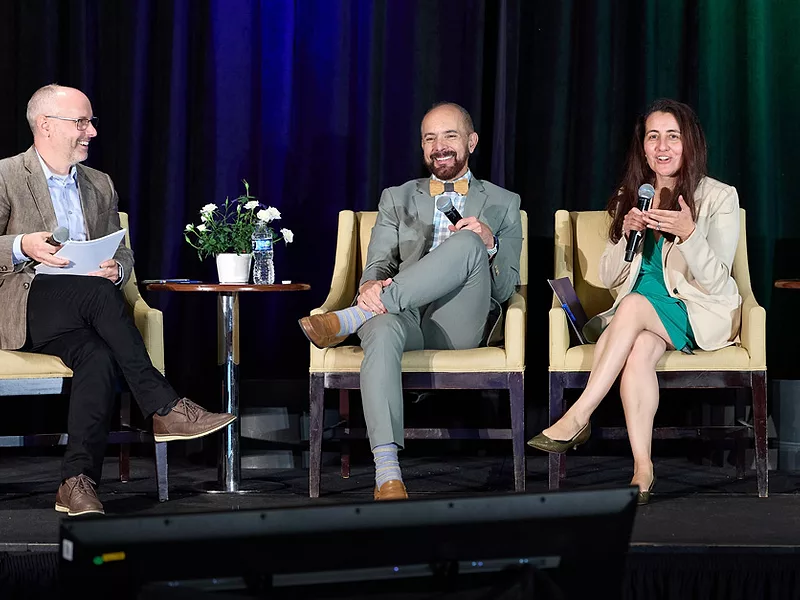
Two Democratic state senators offered a candid take on water infrastructure, agriculture investments and legislative transparency during a panel discussion at the Agri-Pulse 2025 Food & Ag Issues Summit West last week at the Sheraton Grand Sacramento.
Senator Monique Limón, D-Santa Barbara, elected just the prior afternoon as the incoming Senate president pro tempore, joined freshman Sen. Christopher Cabaldon, D-West Sacramento, for the Capitol-focused conversation.
The Legislature last week passed a $325 billion budget for the coming fiscal year, avoiding deep cuts by relying on borrowing and deferrals. Lawmakers also blocked the Newsom administration’s attempt to streamline permitting for the Delta tunnel plan through budget trailer bill language — a move that drew praise from environmentalists and Delta lawmakers.
“You don't get support for the things you want to do or the big issues you want to do by not bringing people to the table,” said Limón. “Both houses have spoken on this particular issue, and there is a pretty great level of concern.”
Cabaldon, the former mayor of West Sacramento who represents parts of the Delta and served on the Central Valley Regional Water Quality Control Board under the Gray Davis administration, criticized the tunnel’s economics.
“We have been obsessed with this single project,” he said. “It's too expensive, both for farmers and for Southern California rate payers — and it's definitely become more expensive than all the alternatives.”
Cabaldon pointed to more affordable water strategies gaining traction, including groundwater recharge, stormwater capture, desalination and water recycling.
“No smart farmer, no smart mayor in Southern California is just waiting around for this project to happen,” he added.
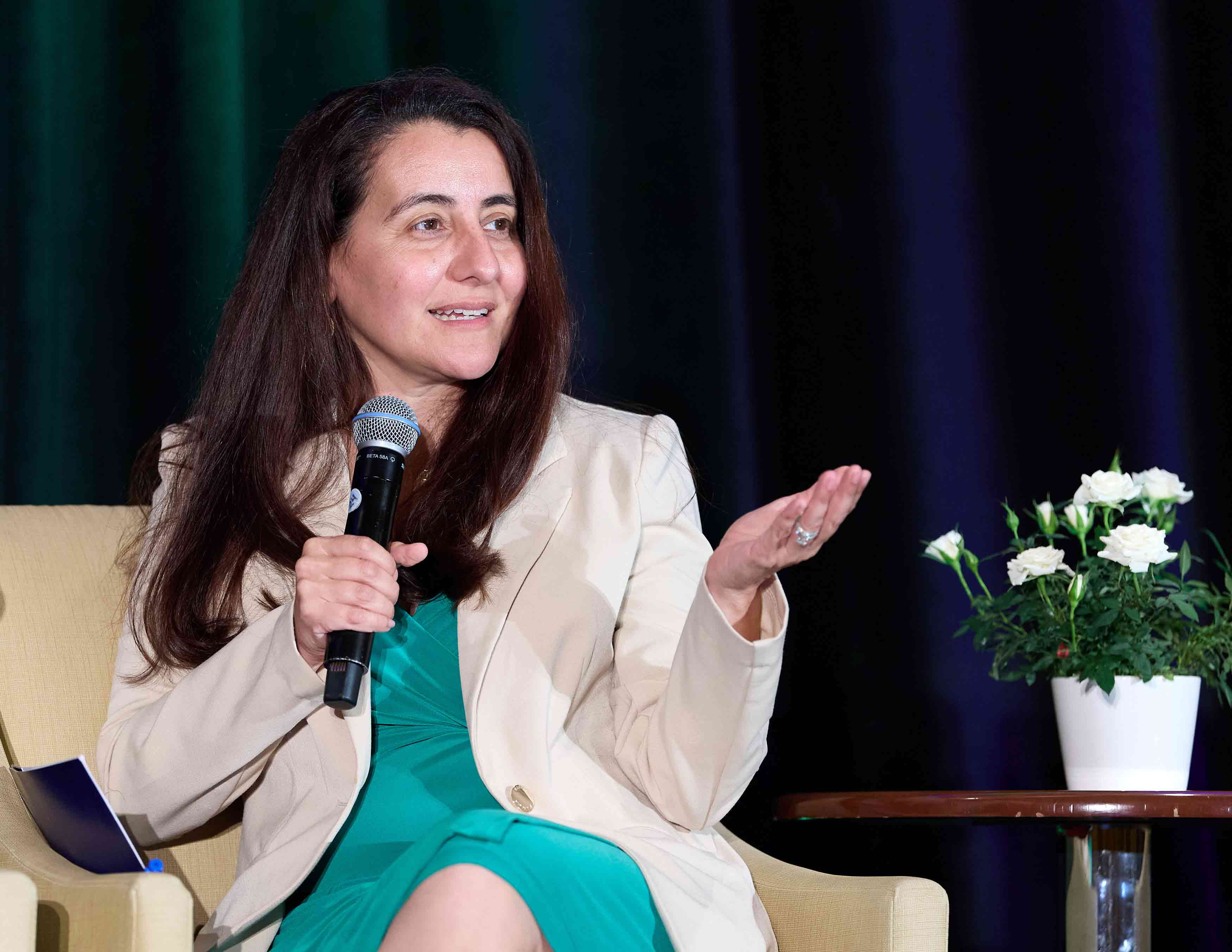 Incoming Senate president pro tem Monique Limón (photo: Fred Greaves)
 Limón, chair of the Senate Natural Resources and Water Committee, said the tunnel has created a geographic divide.
Budget accountability and climate policy priorities
The lawmakers discussed the importance of early stakeholder involvement in policymaking, particularly for agriculture and climate investments. Cabaldon, who leads a Senate budget subcommittee overseeing environmental and agricultural programs, said oversight should focus on outcomes, not politics.
"Oversight is really important, and we've not always done a great job of it, because the state government is itself so large, and there's so many activities that we're engaged in any one moment,” he said.
On cap-and-trade, Limón said lawmakers are working on reauthorization while exploring potential uses for the future revenues and are seeking input on this as well as for spending climate bond dollars.
“Speaking in a collective voice is critical,” she said, urging the agricultural representatives in the audience to engage early. “Once something is out in the universe, it goes really fast.”
Wildfire risk, land use and rural engagement
Limón emphasized the need for wildfire mitigation tools like prescribed burns and targeted grazing and explained the need for regional strategies.
“There's no policy playbook, per se, for wildfires. They are all slightly different,” she said. "You need different tools for different circumstances."
It’s easy to be “in the know” about what’s happening in Washington, D.C. Sign up for a FREE month of Agri-Pulse news! Simply click here
Cabaldon is advancing legislation to standardize assessments of community wildfire preparedness.
"As more places are doing these practices and we're able to assess how are they functioning in the world, how do we better standardize — not necessarily the practices themselves — but our way to see them?” he asked.
He previewed two other bills as well: One to expand California State University admissions for Northern California high school students and another to block a Silicon Valley-backed development on Solano County farmland, an ambitious urban development initiative titled California Forever.
“If this were to happen, it would essentially say the Williamson Act is now a flag to private equity to buy first if you see a designation,” he said, noting that would be the opposite of the act's intent.
Limón highlighted her Central Coast district’s diverse agriculture — strawberries, avocados, grapes, citrus — and water constraints in regions like the Cuyama Valley, while applauding state investments in healthy soils, groundwater recharge and on-farm renewable energy.
“They are a way to bring different policy interests together in a line to help us move forward and work together,” she said.
Asked what agriculture should watch this year, the senators answered in unison: “The budget.” The governor is set to approve a budget framework by the end of the month, but the debates will continue to play out in the form of trailer bills throughout the rest of the legislative session.
The panel capped a day of policy discussions on pesticide regulations, skyrocketing compliance costs and navigating trade hurdles.
For more news, go to Agri-Pulse.com.

