

States in the upper and lower Colorado River basin have spent the last few months negotiating how water cuts should be divvied up after current agreements expire in 2026, but they are still at odds over how much water each region owes under a 103-year-old compact.
At issue is whether Lower Basin states — Arizona, California and Nevada — should continue to bear the brunt of cuts in times of severe shortage or if more burden should be extended upstream.
The debate centers on whether the upper basin has an obligation to ensure 8.25 million acre-feet of water is passed downstream annually under a 1922 treaty, the Colorado River Compact. Representatives of the three Lower Basin states believe so, but Upper Basin negotiators contend that isn’t the case since their states don’t use all the water to which they’re entitled.
“There’s this big disconnect in approaches,” said Chuck Cullom, executive director of the Upper Colorado River Commission. “Since February, the seven basin states have been trying to find a way to set aside those arguments. Is there a way to operate the system so that we don’t have to go to court to find out, ultimately, what the compact says?”
For the past few months, representatives from all seven states have been searching for an agreement while federal officials work to analyze the environmental impacts of planned post-2026 operations for the river’s two main reservoirs — lakes Powell and Mead — and negotiate new water-sharing agreements with Mexico. Cullom told Agri-Pulse that Bureau of Reclamation officials have given state negotiators until this month to find a compromise.
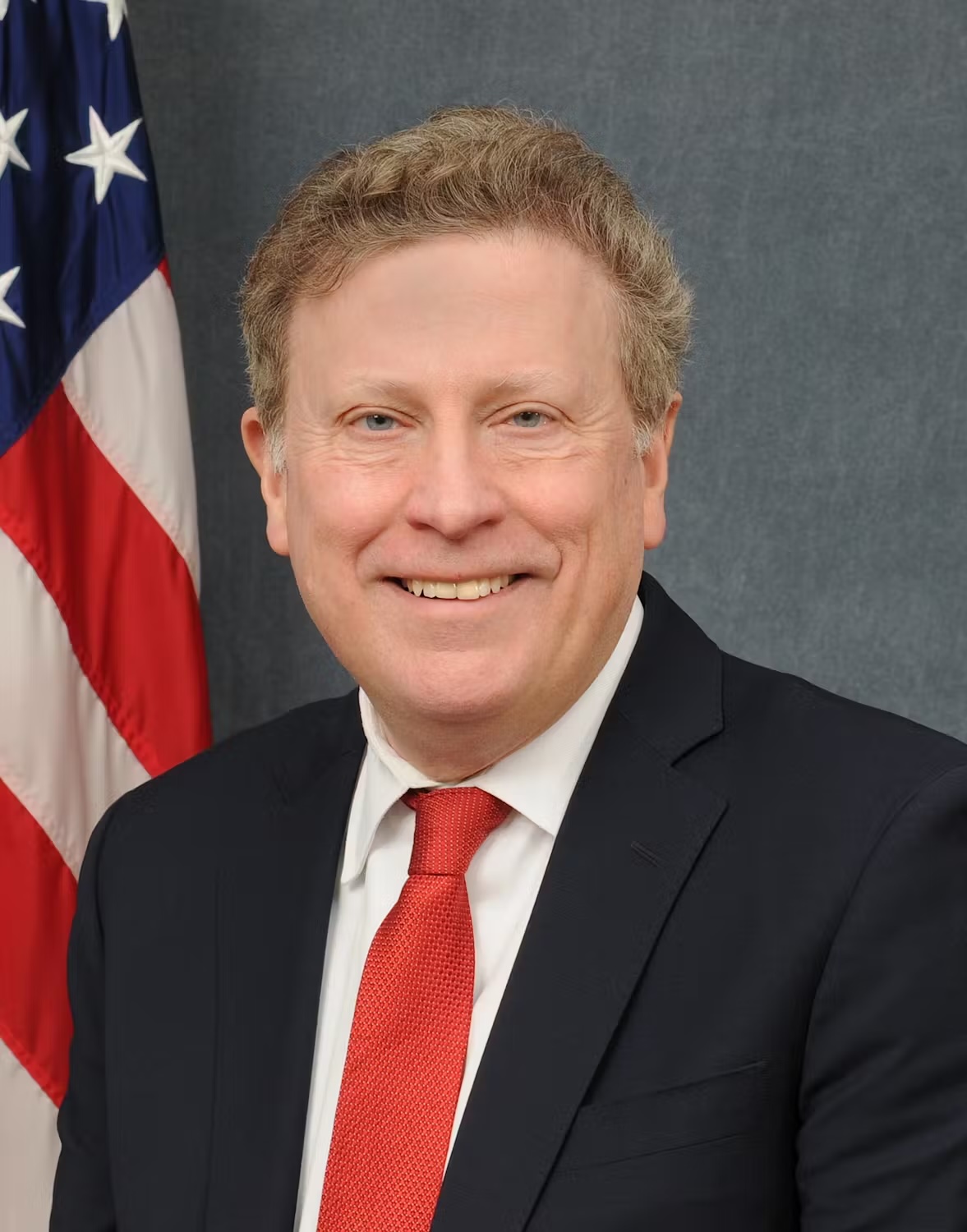 Scott Cameron (LinkedIn photo)
Scott Cameron, the Interior Department's acting assistant secretary for water and science, said in early June that Reclamation wants to release a draft environmental impact statement for post-2025 operations by the end of the year. That would allow finalized guidance to be released in early 2026.
Cameron said he and other Interior Department leaders are "encouraged by the progress the states have made thus far and are optimistic about the path ahead," but added that Interior Secretary Doug Burgum will use his authority as the river's water master to force action if a deal is not reached "on a timely basis."
"He's not looking forward to that, but in the absence of a seven-state agreement, he will do it," Cameron said.
A basin divided
The Colorado River is governed by complex, long-standing agreements, federal laws and court decisions collectively called the “Law of the River.” The Colorado River Compact, one of the foundational governing documents, formally split apart the upper and lower basins and allocated 7.5 million acre-feet of water to each.
The four Upper Basin states — Colorado, New Mexico, Utah and Wyoming — have historically used less water each year than their Lower Basin counterparts. In 2023 states in the Upper Basin collectively used around 4.7 million acre-feet, while lower basin states used around 5.7 million, according to Reclamation data.
Gene Shawcroft, Utah’s Colorado River commissioner, told Agri-Pulse last year that Upper Basin water users rely heavily on snowpack and runoff; their half of the basin is less reliant on reservoirs and if they aren’t able to make use of the water they get, it heads downstream. Lower Basin users’ water allocations are initially stored in major reservoirs upstream, leaving them with a firmer picture of how much water they will have in the following year.
It’s easy to be “in the know” about what’s happening in Washington, D.C. Sign up for a FREE month of Agri-Pulse news! Simply click here
Last year, Lower Basin negotiators suggested cuts of up to 1.5 million acre-feet annually if the basin’s “total system contents” — the amount of water in the Flaming Gorge, Blue Mesa and Navajo reservoirs and lakes Powell, Mead, Mohave and Havasu — drop below 58% full.
In offering 1.5 million acre-feet, the Lower Basin seeks to address its "structural deficit," the difference in the way uses are accounted for between basins, Arizona Department of Water Resources Director Tom Buschatzke said at a conference last month. While evaporation losses are considered in measurements for upper basin water use, they are not factored into lower basin totals.
If the system were to fall below 38% of normal capacity under the proposal, states would be subject to a combined curtailment of up to 3.9 million acre-feet annually, though 1.5 million acre-feet would come from the lower basin. Any additional reductions would be split, with Lower Basin states and Mexico responsible for 50% and the Upper Basin states responsible for 50%.
“We thought this was a very large give to the Upper Basin,” Butzchatzke said, but added that the plan was "rejected outright."
The Upper Basin's plan, on the other hand, proposed the Lower Basin states take up to 1.5 million acre-feet of cuts in years when lakes Powell and Mead — the system’s two primary reservoirs — sink below 70% of their combined 8.5-million-acre-foot capacity. The proposal would require Arizona, Nevada and California to take up to 2.4 million acre-feet of additional reductions on top of the 1.5-million-acre-foot cut if both reservoirs were less than 20% full.
Hybrid proposal draws critics — as does 'compact call' idea
In the final days of the Biden administration, Reclamation officials folded ideas from both proposals into one of five possible frameworks for post-2026 guidelines, which the agency planned to consider in a draft Environmental Impact Statement expected to come out later this year. Under a proposed “hybrid” alternative detailed in a Reclamation report, Lower Basin states would take up to 2.1 million acre-feet of cuts while Upper Basin states would provide up to 200,000 acre-feet based on hydrological conditions.
Still, this idea frustrated Lower Basin negotiators. Buschatzke, California Colorado River Commissioner JB Hamby and Southern Nevada Water Authority General Manager John Entsminger argued in February that the agency failed to adequately apply “the Law of the River” in its analysis.
 JB Hamby (Imperial Irrigation District photo)
In correspondence with Burgum, the three Lower Basin negotiators also said the analysis failed to consider the possibility of a “compact call,” which could theoretically force Upper Basin states to curtail their water use and send more downriver. The law surrounding such an action is untested, since a compact call has never occurred.
Hamby warned Reclamation's post-2026 program manager, Carly Jerla, in December that Lower Basin states will likely make a compact call if “deliveries at Lee Ferry fail to satisfy the compact requirements,” according to an email obtained by Agri-Pulse through a California Public Records Act request.
“We recognize that strict implementation of compact compliance may not lead to the best results for any of us,” Hamby said, but noted that analysis of the prospect "can help everyone better understand the real-world implications of any alternative, as well as the mutual benefits of a consensus alternative."
Under the Trump administration, Reclamation officials are more willing to amend the proposed alternatives and "maybe show some more risk to the Upper Basin," Buschatzke said.
Interior's Cameron said the department is working to create alternatives for a draft EIS that are broad "so that as a group, their elements are likely to capture any realistic seven-state agreement." While Trump administration officials are aware of the alternatives floated in January, "we do not feel bound by them," he added.
"We are approaching the selection of draft EIS alternatives with fresh eyes and open ears, actively soliciting feedback from the states, tribal nations and a wide variety of stakeholders," he said.
Cullom, with the Upper Colorado River Commission, said the Lower Basin negotiators' compact call argument ignores the fact that the upper basin does not use all of the 7.5-million-acre-feet of water it is entitled to under the Law of the River.
“The only way the Lower Basin can assert that we have to leave water in the river is to assert that their rights are superior to the upper basin,” Cullom said. "And the Upper Basin rejects that argument.”
If negotiators can't find an agreement, the feud may spill into the courts.
“The only way to determine what the compact says is through a trip to the Supreme Court,” Cullom said. “We all have our theories, but they’re just theories until a court decides so."
For more news, go to Agri-Pulse.com.

