
President Donald Trump and his top economic official are now eying Aug. 1 as the new deadline for when reciprocal tariffs will snap back into place on some U.S. trading partners.
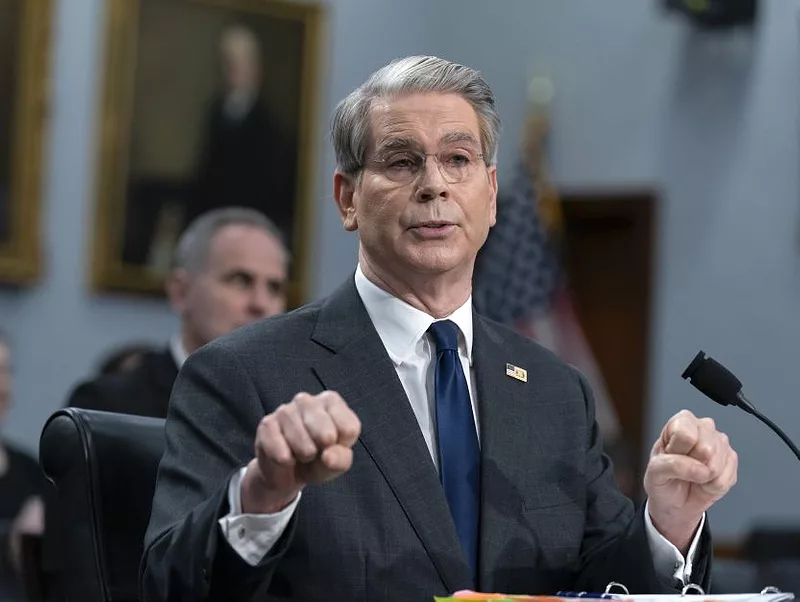
On CNN on Sunday, Treasury Secretary Scott Bessent echoed comments from Trump last week that indicated he would be sending letters to trading partners this week to spur trade talks along.
“President Trump's going to be sending letters to some of our trading partners, saying that, if you don't move things along, then, on Aug. 1, you will boomerang back to your April 2 tariff level,” Bessent told host Dana Bash.
“So, I think we're going to see a lot of deals very quickly,” he added.
Take note: Trump told reporters Thursday he expects “a couple” more trade pacts to land before his self-imposed Wednesday deadline for trade talks.
An economist’s viewpoint: AgResource founder Dan Basse says producers are right to be concerned about the lack of trade deals.
“Today, just having the UK in our back pocket is not enough for me to feel comfortable in making some forecasts for the farm economy or U.S. ag trade going forward,” he tells Agri-Pulse’s Lydia Johnson on the latest Agri-Pulse Newsmakers, referring to a trade deal with the United Kingdom.
Read more on Agri-Pulse.com and watch on Newsmakers.
USDA takes over now
Now for the implementation. The historic infusion of $66 billion in new farm program spending from Trump’s landmark budget bill is now in USDA’s hands to implement.
Keep in mind: The increase in Price Loss Coverage reference prices and other enhancements to the PLC and the Agriculture Risk Coverage program take effect for the 2025 crop year. But farmers don’t have to worry if they think they signed up for the wrong program earlier this year. The Senate added a provision to the bill ensuring farmers will automatically get paid from whichever program offers them the most money.
Unfinished business. Due to a parliamentarian’s ruling, Senate Republicans had to delete from the bill a provision that would trigger permanent price-support laws if PLC and ARC are allowed to lapse after 2031. Look for lawmakers to add that to later legislation.
What they’re saying. “More than half of farmers are losing money, so an increase in reference prices is desperately needed, and tax tools will help farmers and ranchers plan for the next season and the next generation” – American Farm Bureau Federation President Zippy Duvall.
“Making Section 199A permanent ensures that farmer-owned cooperatives and the producers who rely on them are treated fairly in the tax code” – National Council of Farmer Cooperatives President and CEO Chuck Conner.
“At a time of great uncertainty for the agriculture economy, the support of Congress to enhance key programs and vital domestic markets for our farmers is critical” – American Soybean Association President Caleb Ragland.
“The bill strengthens the farm safety net, supports biofuels and conservation, and extends key tax incentives that help keep family farm operations viable. … However, these gains are paired with harmful tradeoffs. Cuts to SNAP divide the farm bill coalition and reductions in Medicaid will have harmful effects on millions of Americans. Farm policy should unite us” – NFU President Rob Larew.
Resumption of cattle imports faces some industry pushback
USDA’s decision to gradually reopen the southern U.S. border to live cattle imports from Mexico has split the industry, with some warning the decision has come too soon.
Interested in more news on farm programs, trade and rural issues? Sign up for a four-week free trial to Agri-Pulse. You’ll receive our content - absolutely free - during the trial period.
USDA said last week that the U.S. would begin accepting cattle imports from a single border entry point in Arizona starting today. Imports had been suspended since May to stem the northward spread of New World screwworm. USDA plans to open four additional border crossings in the coming months.
The National Cattlemen’s Beef Association welcomed the phased-in approach to reopening the border in a statement.
But last week, 19 livestock industry groups led by R-CALF USA wrote to Ag Secretary Brooke Rollins to urge her to reconsider. “There is no justifiable reason to knowingly relax current protective measures that will result in increasing the risk of NWS introduction into the United States,” R-CALF CEO Bill Bullard wrote.
Take note: Privately Mexico’s Ag Secretary Julio Berdegué has warned Rollins current screwworm eradication efforts may be insufficient to curb its spread, as Agri-Pulse reported last month.
Also in the news: Trump on farm labor; Tyson strike averted
Trump is doubling down on his position that farmers need to be protected from ICE raids that result in their employees being “thrown out pretty viciously.”
In a speech at the Iowa State Fairgrounds in Des Moines the night before July 4th, Trump returned to the subject of deportations on a stage that also featured Rollins and Homeland Security Secretary Kristi Noem.
Speaking directly to Noem, Trump said, "If a farmer is willing to vouch for these people in some way. Kristi, I think we're going to have to just say that's going to be good, right? We're going to be good with it, because we don't want to … take all of workers off the farms. We want the farms to do great, like they're doing right now."
Trump was in an ebullient mood following passage earlier in the day of the One Big Beautiful Bill. He exaggerated the bill’s impact on Social Security taxes and admitted he “hates” Democrats.
“I cannot stand them because I really believe they hate our country,” he said.
Republican Iowa Sens. Chuck Grassley and Joni Ernst also spoke. Grassley touted the OBBB’s funding to build “a tremendous number of detention facilities so we can keep people that have come here on the terrorist watch list, come here with criminal records, come here as human traffickers, sex traffickers, peddling fentanyl to our young people, we're going to make sure that they aren’t walking the street.”
By the way: In Amarillo, Texas, Tyson Foods reached an agreement with Teamsters members that will raise their pay 32%. The agreement averted a strike at the nation’s largest beef processing plant.
Final word
“John was a pioneer in the development and production of healthy food products that made the Harris Ranch Beef one of the most respected food producers in America. His love of horses and agriculture defined his life. I had the good fortune to know John for over 40 years - he was my friend; he will be deeply missed, but his legacy will live on forever” – Rep. Jim Costa, D-Calif., on the death of rancher John Harris. Read more in our obituary.
Philip Brasher and Oliver Ward contributed to today’s Daybreak.


