
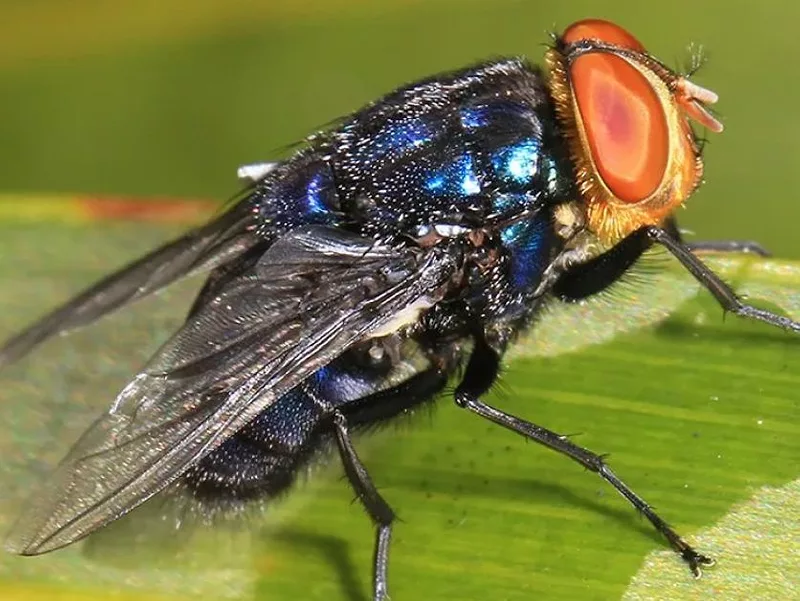
Not enough sterile flies are being dropped in Mexico to reverse New World screwworm’s northward spread, Mexico’s top agriculture official warned Agriculture Secretary Brooke Rollins last month, according to documents obtained by Agri-Pulse.
While past eradication efforts required the production of around 450 million sterile flies per week, only around 90 million are currently being dropped, Mexican Secretary of Agriculture and Rural Development Julio Berdegué told Rollins in a May 8 letter.
The USDA is aiming to bolster sterile fly production through the $21 million renovation of a fruit fly production facility in Metapa, Mexico. When completed, an additional 60 to 100 million sterile flies are expected to be produced. Another $8.5 million facility has been announced for south Texas, which would allow as many as 300 million flies to be dropped in northern Mexico.
However, the Texas facility is expected to take six months to complete, while the Matapa renovation will likely take 18, according to a USDA fact sheet.
"Time is running out and the infestation is advancing," Berdegué warned.
Letters from Berdegué to Rollins dating back to last November offer a glimpse into Mexico’s ongoing fight to contain screwworm, and suggest tensions that arose between President Claudia Sheinbaum's government and the U.S. at various points in the effort. The series of communications, obtained by Agri-Pulse through the Freedom of Information Act, culminate in Berdegué's request for a teleconference meeting with Rollins sometime this week to discuss “future steps with regard to the suspension of cattle exports from Mexico.”
Credentialing snags and miscommunications over aircraft needed to drop sterilized flies served as the source of some friction. In April, Rollins told Berdegué that Mexican aviation authorities had “imposed restrictions” that hindered USDA contractor Dynamic Aviation’s efforts to release flies in Mexico, and she threatened to halt the importation of live animals from Mexico if these restrictions continued.
In an April 26 letter, Rollins said Mexican authorities had limited Dynamic Aviation to flying under a temporary 60-day permit that did not “give the necessary assurance that our current activities can be sustained.” She also said the company had been limited to flying only six days per week, despite successful operations requiring consistent, seven-day flights.
She went on to say that Mexican customs authorities were imposing "substantial import duties" on aviation parts, dispersal equipment and sterile fly shipments, “despite the fact that all materials and operations are being funded entirely by the U.S. Government to support our shared goal of stopping the northward spread of NWS and pushing the pest back toward the biological barrier at the Darién Gap.”
It’s easy to be “in the know” about what’s happening in Washington, D.C. Sign up for a FREE month of Agri-Pulse news! Simply click here
“We do not understand how our official efforts to stop a common pest can be subject to such burdensome customs duties,” Rollins wrote.
Berdegué responded later that day in a letter, charging that Dynamic Aviation had not obtained a permit from the U.S. Federal Aviation Administration for dispersing live insects, “despite having committed to doing so, and despite APHIS and USDA representatives in Mexico telling us they will.” Still, he said the Mexican government would give the company a special permit that would be valid until May 9.
When Dynamic Aviation aircraft arrived in Mexico carrying around $400,000 worth of spare parts, equipment and consumables, neither the company nor APHIS gave "advance notice to any Mexican authorities,” he said. As a result, he argued, Mexican Customs gave the aircraft “the normal legal treatment because we lacked prior information,” though he added that the agency took “the necessary steps to resolve the matter within a few hours.”
“All of this would have been avoided if the company, or APHIS, had had the courtesy to inform us in advance of these aircraft’s arrival,” he said.
On April 28, Berdegué told Rollins in another letter that Mexico would grant all APHIS-funded operations full clearance for at least 44 flights per week with adjustments as necessary, as well as full import clearances and duty waivers for all screwworm-related aircraft parts, sterile flies and containment equipment provided by the U.S. agency.
“With this, I believe we have reached a full agreement, and we can continue implementing our joint New World Screwworm program,” Berdegué wrote. “I also expect that Mexican exports of cattle to the United States under the existing protocol can continue uninterrupted.”
A day later, he told Rollins that Mexico’s Federal Civil Aviation Authority had issued a one-year permit to Dynamic Aviation to fly six aircraft.
USDA has since suspended live cattle, horse and bison imports across the southern border, citing cases detected in Oaxaca and Veracruz as evidence of the parasite’s northern spread.
“The last time this devastating pest invaded America, it took 30 years for our cattle industry to recover,” Rollins tweeted on May 11. "This cannot happen again.”
Oliver Ward contributed to this report.
For more news, go to www.agri-pulse.com.

