
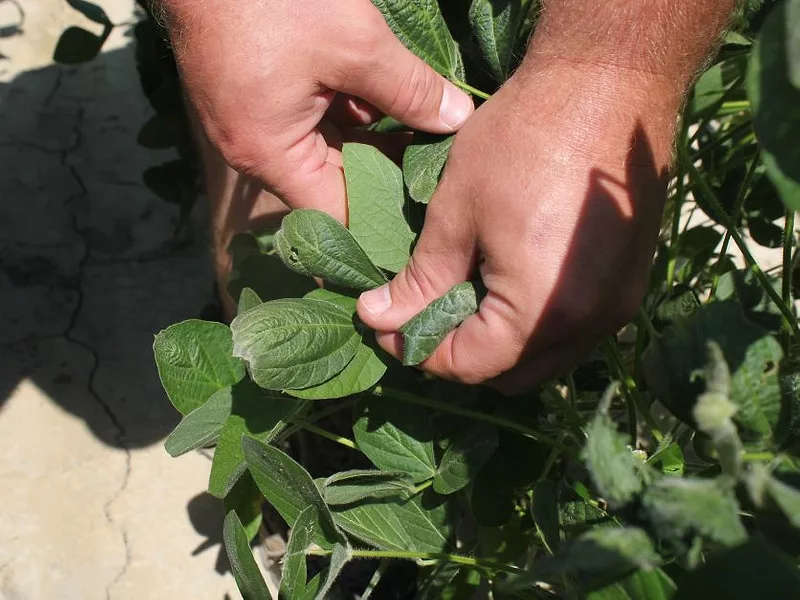
EPA is proposing to re-register dicamba herbicide for over-the-top application to cotton and soybeans, with restrictions intended to limit ecological harm.
Dicamba has been blamed for significant off-target damage to crops and other vegetation, and federal courts have vacated registrations for the herbicide twice, in 2020 and 2024, most recently after finding that EPA did not comply with notice-and-comment requirements. The February 2024 decision prevented the product from being used on soy and cotton in the past two growing seasons.
The agency said it was imposing new mitigation requirements for the herbicide to address ecological impacts. Among them:
- A single use maximum application rate of 0.5 lb. acid equivalent (a.e.) dicamba per acre.
- No more than two applications allowed with a maximum annual application of 1 lb. a.e. dicamba per acre from all combined dicamba-containing products.
- Prohibition of aerial applications.
- Maintaining a 240-ft downwind buffer.
- The spray solution must include an approved drift reduction agent and pH buffering volatility reduction agent added to the tank in higher percentages as temperatures increase.
- Temperature-dependent application restrictions to manage volatility. Users have flexibility to implement temperature-dependent restrictions by reducing the percent of field treated, including by using precision agriculture techniques, or prohibiting certain tank mixes at higher temperatures.
- No applications at temperatures above 95 degrees Fahrenheit.
- Three points of mitigation required based on the runoff/erosion mitigation menu.
Bayer, which makes Xtendimax, one of three dicamba products (the other two are Syngenta's Tavium and BASF's Engenia), said, "We’re pleased to see that the EPA has made significant progress and opened a public comment period for low-volatility dicamba herbicides to be used over the top of dicamba tolerant cotton and soybeans."
It’s easy to be “in the know” about what’s happening in Washington, D.C. Sign up for a FREE month of Agri-Pulse news! Simply click here
The technology "provides tremendous value to soybean and cotton farmers across the U.S. Helping growers safely and successfully raise healthy crops is what we do, and we are confident that low-volatility dicamba herbicides, when used according to the label, can be used safely and successfully on-target. We know how important this technology is for so many growers, and we will continue working diligently to help ensure these low-volatility dicamba herbicides remain available for over-the-top use in 2026 and beyond."
The Center for Biological Diversity, which has challenged past registrations, immediately criticized the decision to move forward with registration.
“Trump’s EPA is hitting new heights of absurdity by planning to greenlight a pesticide that’s caused the most extensive drift damage in U.S. agricultural history and twice been thrown out by federal courts,” said Nathan Donley, environmental health science director at the center. “This is what happens when pesticide oversight is controlled by industry lobbyists. Corporate fat cats get their payday and everyone else suffers the consequences.”
For more news, go to Agri-Pulse.com.

