
As the dust begins to settle on new tariff rates and industries parse through how the duties will affect their sectors, some widely used agricultural inputs seem particularly exposed to the tariff hikes while impacts on agri-food imports have been more muted.
President Donald Trump added to his patchwork of tariffs earlier this month when he hiked the rates applied to most U.S. trading partners under his so-called “reciprocal” tariff plan and slapped new duties on Brazil and India.
Almost every U.S. trading partner has faced a 10% baseline tariff since April, but the president postponed higher country-specific duties to let negotiations play out and secure some concessions. Some countries ended up cutting deals to mitigate tariff hikes – the European Union, Japan and South Korea all secured 15% tariff rates. But many saw their exports hit with steep new duties, with more than two dozen countries now facing tariffs above 15%.
The administration also raised tariffs on Canada earlier this month, which were originally imposed in March to stem the flow of illicit drugs and migrants, Trump said at the time.
While tariffs on specific agri-food products – including coffee from Brazil – have faced sharp increases since Trump took office, imported food overall has been insulated from tariff hikes by the president’s web of exemptions, according to researchers at North Dakota State University.
Trump’s decision to exempt products covered under the U.S.-Mexico-Canada Agreement from tariffs blunted some of the biggest impacts for food importers. The U.S. imports around 43% of its agri-food products from Mexico and Canada, but much of that is covered by the USMCA.
A further 17% of U.S. agri-food imports come from the EU, which now faces a tariff cap of 15%. Many food products the U.S. buys from the EU, like wines and cheeses, already faced high duties and have seen only small bumps to bring them up to the 15% cap.
Even Brazil, recently hit with new 40% duties in addition to its 10% baseline duty, saw a raft of food and drink products spared when the administration exempted some 700 products.
Before Trump began his second term, U.S. agri-food imports faced an average tariff rate of 4% -- once adjusted for the trade volumes from each trading partner. They now face an average tariff rate of 15%, the study finds.
Some farm inputs have seen significant tariff increases
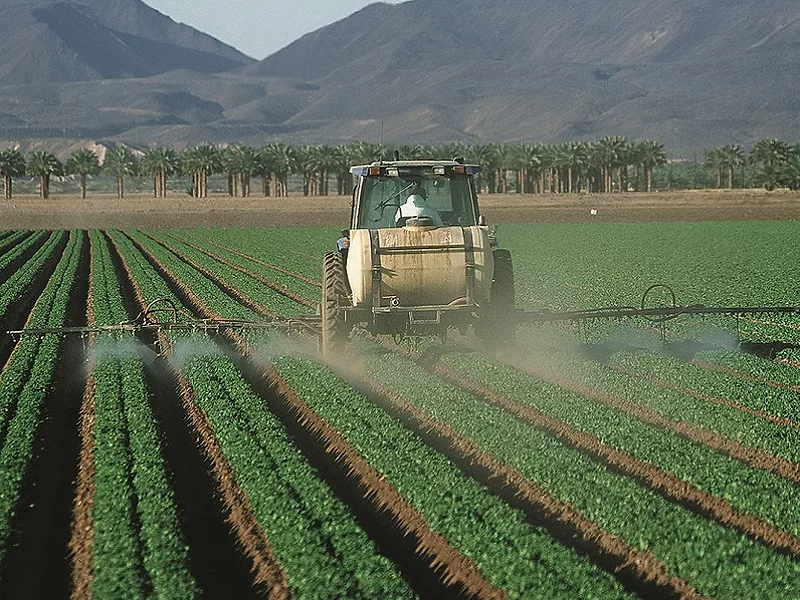
Overall, farm inputs face similar tariff increases. The average effective tariff rate across all inputs jumped from just 0.9% when Trump took office in January to 12.2% today. But some widely-used farm inputs, including pesticides, have seen steeper tariff hikes.
The average effective tariff rate applied to herbicides, insecticides and other pesticides is now 20% or higher. Tractors and other ag machinery and parts saw average effective tariff rates hiked from zero — or close to — to 16% and 13%, respectively. Phosphate and nitrogen enjoyed tariff-free trade before Trump took office but are now subject to average effective rates near 10%.
Cut through the clutter! We deliver the news you need to stay informed about farm, food and rural issues. Sign up for a FREE month of Agri-Pulse here.
“A lot of these tariffs are really only now starting to kick in,” Shawn Arita, an associate professor at NDSU and one of the study’s authors, told Agri-Pulse. As a result, it is still not clear whether, or by how much, the tariffs will be passed along to consumers.
So far, U.S. consumer price inflation has stayed below 3% over the last year. But Arita said that price hikes on agricultural inputs could still materialize.
“It's still early on in this sense,” Arita said. While companies begin paying tariffs on new products immediately, Arita said it often takes some months for them to show up in consumer prices.
Companies may have frontloaded imports to get ahead of the tariffs, he argued, so they can draw down existing inventory before importing more at the higher rate. July was the busiest month in the Port of Los Angeles’ 117-year history, suggesting extensive frontloading before the latest tariff hoist.
Arita said companies will also want to assess how their competitors respond before adjusting their prices and gather data on what price hikes consumers are willing pay before demand falls.
“There's a fair amount of a delay,” Arita said, between the tariff hike and “how that gets relayed down the line.”
Some economists, however, argue that the latest data on wholesale prices is pointing to impending price hikes for consumers. The producer price index, which measures the value producers receive for their products, showed wholesale prices for July were up 3.3% from last year. Notably, this data was gathered before the August tariff hikes.
If wholesale prices rise faster than consumer prices, “U.S. corporate margins are going to thin,” Joseph Brusuelas, chief economist at RSM US, a consulting firm, said in a post to X this week. Thinning margins, he said, “creates the conditions for inflation to be passed along downstream.”
Wholesale prices of agricultural machinery fell in July, according to the Bureau of Labor Statistics. But nitrogen and phosphate fertilizer prices jumped by 5.3% and 8.6% in a single month, and agricultural chemicals and chemical products rose almost 3%, bringing the 12-month price increase to almost 9%.
“It's still hard to say anything definitive,” Arita said. But with some tariff rates seemingly more rigid following negotiations, the second half of the year, Arita added, will give a clearer picture.
Karen Hansen-Kuhn, director of trade and international strategies at the Institute for Agriculture and Trade Policy, told Agri-Pulse that she is certain that input prices eventually rise.
 Shawn Arita (LinkedIn)
From Russia with uncertainty
One potential wild card in the tariff landscape remains how the U.S. will handle countries continuing to buy Russian commodities. Earlier this month the U.S. imposed an additional 25% tariff on India due to its continued Russian oil purchases. Treasury Secretary Scott Bessent has suggested that the duties could go even higher if peace efforts are unsuccessful.
If the president goes after additional countries over trade ties to Russia, it could upend global fertilizer markets, Matt Simpson, chief executive officer of Brazil Potash Corp, told Agri-Pulse.
Russia accounts for almost 20% of global potash trade and 14% of urea trade. Simpson pointed out that during the early days of the invasion of Ukraine, when traders weren’t sure how or whether the international community would sanction Russian fertilizer exports, markets were rattled.
“Prices went crazy,” Simpson said. He said there is a risk of a similar mindset taking hold if Trump ratchets up pressure on countries trading with Russia.
Even if the U.S. decides not to target countries buying Russian potash but further raises duties on India or goes after other countries buying Russian oil, Russian President Vladimir Putin could retaliate by limiting potash exports and pushing Belarus to do the same, Simpson said. The two countries account for around a quarter of global potash production, according to the U.S. Geological Survey.
“We don't know whether potash will get caught up in these tariffs also, but if it does, it's going to have a pretty dramatic impact globally on the price of potash,” Simpson said.
“If Putin decided to wake up and cut off fertilizer supply,” he added, “It would be catastrophic.”
The U.S. gets around 80% of its potash from Canada, according to USGS, but buys around 11% from Russia. Accordingly, it would not be immune from market turmoil.
“We are super exposed,” Simpson said, referring to global potash importers. This “has been a bit of a wake-up call.”
For more news, go to Agri-Pulse.com.

